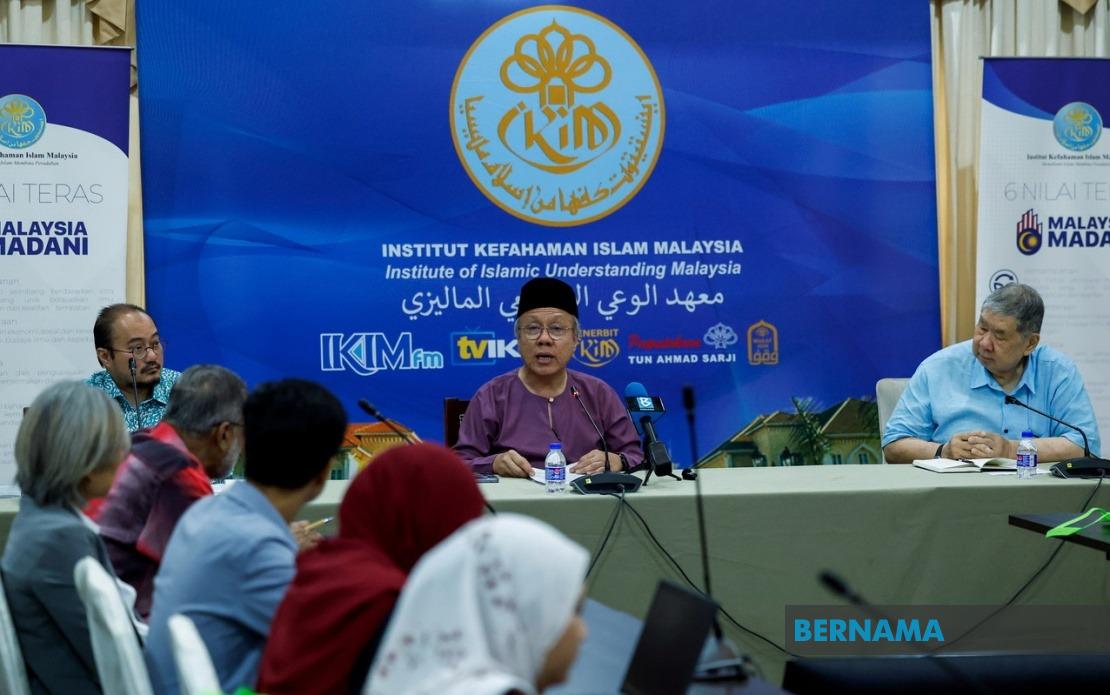
Three major Malaysian institutions came together yesterday to address growing concerns about the Tabung Haji Royal Commission of Inquiry through a dedicated media education programme. The session, convened at the headquarters of the Institute of Islamic Understanding Malaysia in Kuala Lumpur, brought together representatives from the Malaysian Press Institute, IKIM and Tabung Haji Group with more than twenty media practitioners to discuss the ongoing inquiry and its implications for the Islamic pilgrimage fund.
Tabung Haji Group Managing Director and Chief Executive Officer Mustakim Mohamad delivered a comprehensive briefing to journalists during the closed-door session, which extended for nearly two hours. Rather than employing prepared statements alone, Mustakim engaged directly with media representatives by responding to their questions about the scope of the RCI, the management decisions that prompted its establishment, and how the inquiry's findings might shape future operations at the institution. This interactive format reflected a deliberate shift toward transparency and dialogue rather than defensive posturing.
The collaborative initiative underscores the pivotal role of accurate media reporting in shaping public perception of institutions managing sensitive national assets. Datuk Yong Soo Heong, president of the Malaysian Press Institute, characterised the programme as a crucial opportunity for journalists to access verified information about the concrete steps Tabung Haji is implementing to rebuild depositor and investor confidence. Yong stressed that the briefing session would help ensure the public receives factually grounded coverage of the fund's trajectory and reform agenda, moving beyond speculation and unsubstantiated claims that might undermine institutional credibility.
Yong acknowledged the symbolic importance of the partnership between MPI and IKIM, noting that the collaboration demonstrated commitment to responsible journalism on matters of national significance. He indicated that this model could be replicated across Malaysia's states through additional dialogue sessions and town hall meetings, suggesting that the initiative represents a template for constructive engagement between media institutions and government-linked organisations facing public scrutiny.
A particularly notable contribution came from IKIM Director-General Associate Professor Datuk Dr Mohamed Azam Mohamed Adil, who sought to reframe the Tabung Haji RCI narrative away from sectarian or ethnic dimensions. Mohamed Azam contended that portraying the inquiry as a religious or racial controversy would be fundamentally misleading, as the core issues centre on management integrity and institutional accountability. This framing is strategically important in Malaysia's multiethnic context, where any suggestion of religious or communal discord can rapidly inflame public sentiment and erode institutional legitimacy across diverse populations.
Mohamed Azam further emphasised that the Tabung Haji RCI should be understood as a question of public trust in an institution specifically entrusted with managing contributions toward the Islamic pilgrimage, widely regarded as the fifth pillar of Islam. By elevating the discourse beyond management failings to encompass the sacred trust placed in the institution, Mohamed Azam appealed to both the emotional and institutional dimensions of depositor concerns. His statement implicitly acknowledged that the RCI touches not merely on financial management practices but on the relationship between Malaysian Muslims and an institution designed to facilitate one of Islam's foundational obligations.
The literacy programme itself represents a measured institutional response to media coverage of the RCI. Rather than attempting to suppress critical journalism or manage the narrative through restricted information channels, the three organisations opted for transparency and education. This approach suggests recognition that sustainable confidence restoration depends on informed public understanding rather than information control, a principle increasingly accepted by Malaysian institutions navigating reputational challenges in an era of rapid information dissemination.
For Malaysian journalists, the significance of such briefing sessions extends beyond immediate reporting deadlines. Access to authoritative sources and detailed background information enables more nuanced coverage that distinguishes between substantiated institutional failings and speculation. In an environment where social media amplifies unverified claims, such formal education programmes can help anchor media narratives to factual foundations while maintaining appropriate critical distance and editorial independence.
The involvement of IKIM alongside MPI and Tabung Haji also signals institutional alignment on the proper framing of the inquiry's significance. IKIM's mandate encompasses Islamic understanding and interfaith dialogue, suggesting that the institute views the RCI as an opportunity to demonstrate how Islamic institutions can embrace accountability and reform without compromising religious legitimacy. This positioning could influence how the inquiry is perceived within Malaysia's Islamic scholarly and institutional communities, potentially mitigating concerns that reform measures represent capitulation to secular pressures.
Moving forward, the success of this literacy initiative will likely be measured not only by immediate media coverage but by the durability of public confidence in Tabung Haji following the RCI's conclusions. The programme represents a proactive effort to shape the information environment in which those findings will be received and interpreted, attempting to establish common understanding among media gatekeepers about what constitutes responsible reporting on institutional reform and accountability. How effectively this approach translates into sustained public trust remains to be seen, particularly among the millions of Malaysian Muslims whose retirement savings and pilgrimage aspirations depend on the institution's continued viability.

