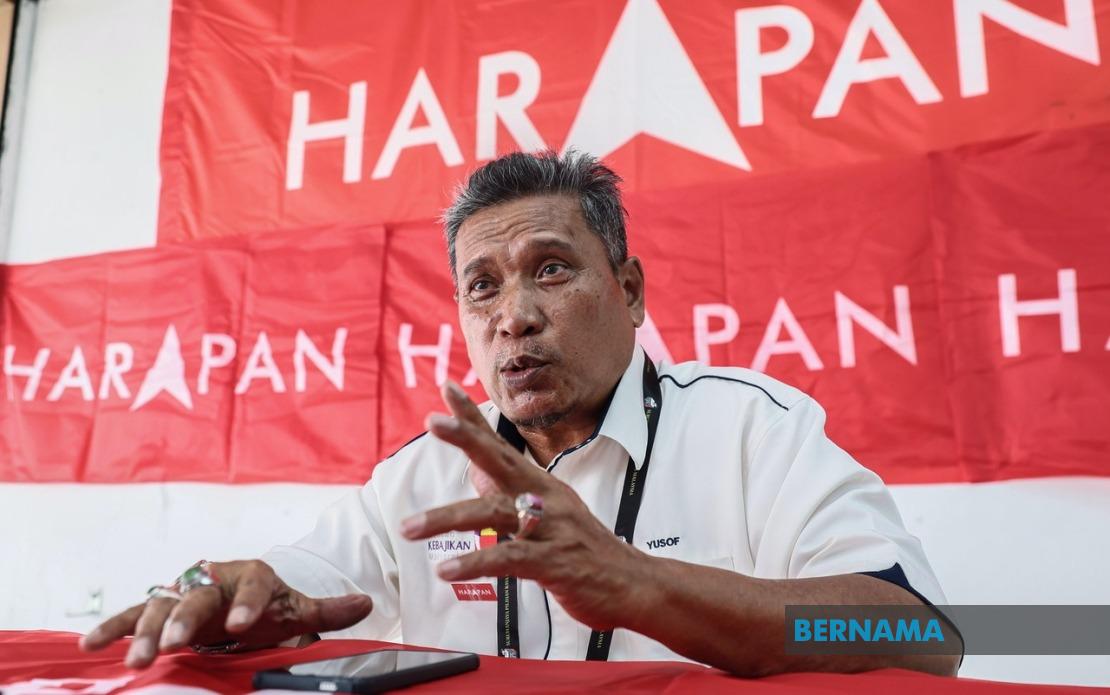
The Pakatan Harapan candidate for Tenggaroh in the Johor state election, Md Yusof Dawam, has unveiled a comprehensive development agenda centred on addressing persistent challenges facing the Federal Land Development Authority (Felda) settlement. The 64-year-old retired educator is positioning himself as a voice for younger residents struggling with housing affordability and limited economic opportunities, issues he says have triggered a steady exodus to urban centres that threatens the long-term viability of the Felda model.
The crux of Md Yusof's platform addresses a demographic crisis within Tenggaroh: the absence of structured planning for second-generation settlers, who find themselves unable to establish independent households despite growing up in the scheme. He articulated this challenge as one of the most pressing concerns raised during his campaign engagement with residents' children. Rather than viewing this purely as a housing shortage, Md Yusof frames it as a foundational issue affecting agricultural sustainability and community cohesion, since young people who cannot afford their own homes either remain dependent on ageing parents or abandon the settlement entirely.
To tackle this housing predicament, Md Yusof has proposed securing 10 to 20 acres within the Tenggaroh Felda scheme for a dedicated second-generation settlement with comprehensive planning and modern infrastructure. This approach reflects an understanding that piecemeal solutions have failed to stem youth migration. By creating an intentional settlement zone, he argues, the scheme could retain younger families while maintaining the tradition of family-managed oil palm plantations—a critical consideration in an era when unsustained land parcels risk being sold to external investors or falling into disuse.
Beyond housing, Md Yusof has turned his attention to the retail and commercial landscape of Tenggaroh, which he contends has stagnated since the 1980s without meaningful modernisation. His proposal involves issuing temporary land grants to facilitate the construction of contemporary business premises, effectively transforming the settlement into a more dynamic "small town" ecosystem. He illustrates the problem with a telling example: residents seeking basic local delicacies such as keropok lekor must currently drive approximately 70 kilometres to Mersing town, a distance that diverts spending away from the Felda community and diminishes local economic circulation.
The economic rationale underlying Md Yusof's retail vision extends beyond convenience. By creating a viable local commercial hub, he contends that economic activity can be captured and retained within the Felda system rather than bleeding to external urban centres. This reflects a broader understanding that infrastructure deficiencies are not merely lifestyle inconveniences but structural barriers to wealth accumulation and entrepreneurial development for Felda residents. A revitalised retail sector could catalyse small-business formation and provide employment pathways for younger generations.
Tourism represents another dimension of Md Yusof's economic strategy, particularly leveraging Mersing's renowned island attractions including Pulau Besar, Pulau Tinggi, and Pulau Aur. He observes that these islands have attracted considerable international film production activity, yet local youth have captured minimal economic benefit from this exposure. The underlying problem, he argues, is the absence of locally-owned tourism and maritime transport enterprises that could position young residents as direct beneficiaries of visitor spending.
Md Yusof's observations about tourism underutilisation reflect a wider challenge in Malaysian development policy: the distinction between economic activity occurring within a region and genuine economic benefit accruing to local communities. International production companies generate ancillary spending on logistics, accommodation, and services, but without structured local participation, these opportunities remain extractive rather than developmental. His proposal implicitly calls for enterprise development frameworks that build local capacity in tourism and hospitality sectors.
The candidate's campaign methodology reflects his background as an educator and his four-decade residence in Mersing. Rather than rallying large constituencies, Md Yusof has opted for granular, small-group engagement designed to understand specific community aspirations and concerns. This approach contrasts with more conventional campaign models and arguably positions him as invested in dialogue rather than broadcast messaging. His 16 years of service within the Felda Nitar educational system provided direct exposure to settler families and community dynamics, establishing a foundation of credibility with the constituency.
The Tenggaroh contest occurs within the broader context of the 16th Johor state election, in which 172 candidates are competing for 56 state seats. The election encompasses larger political narratives around Pakatan Harapan's performance and positioning within Johor, a state traditionally dominated by Barisan Nasional and where opposition gains have been incremental. Tenggaroh itself, as a Felda-based constituency, represents a specific demographic profile—agricultural workers, smallholders, and their descendants—whose economic conditions directly reflect governance priorities and development policy effectiveness.
Felda constituencies occupy particular significance in Malaysian electoral politics due to their historical importance in national development narratives and their concentration of voter populations with relatively cohesive economic interests. Parties have long competed for Felda support through promises of scheme development, credit facilities, and commodity pricing protections. Md Yusof's agenda extends beyond traditional scheme benefits to address second and third-generation sustainability, suggesting an evolution in how opposition parties conceptualise Felda development beyond the original settler generation.
The polling date for the 16th Johor state election is scheduled for July 11, with early voting for security personnel held on a preceding date. The outcome in constituencies like Tenggaroh will indicate whether Pakatan Harapan can expand its footprint in rural agricultural areas through development-focused messaging or whether traditional voting patterns persist. Md Yusof's platform, centred on generational transition and economic diversification rather than subsidy promises or scheme restructuring, represents a distinct narrative within the broader election discourse.

