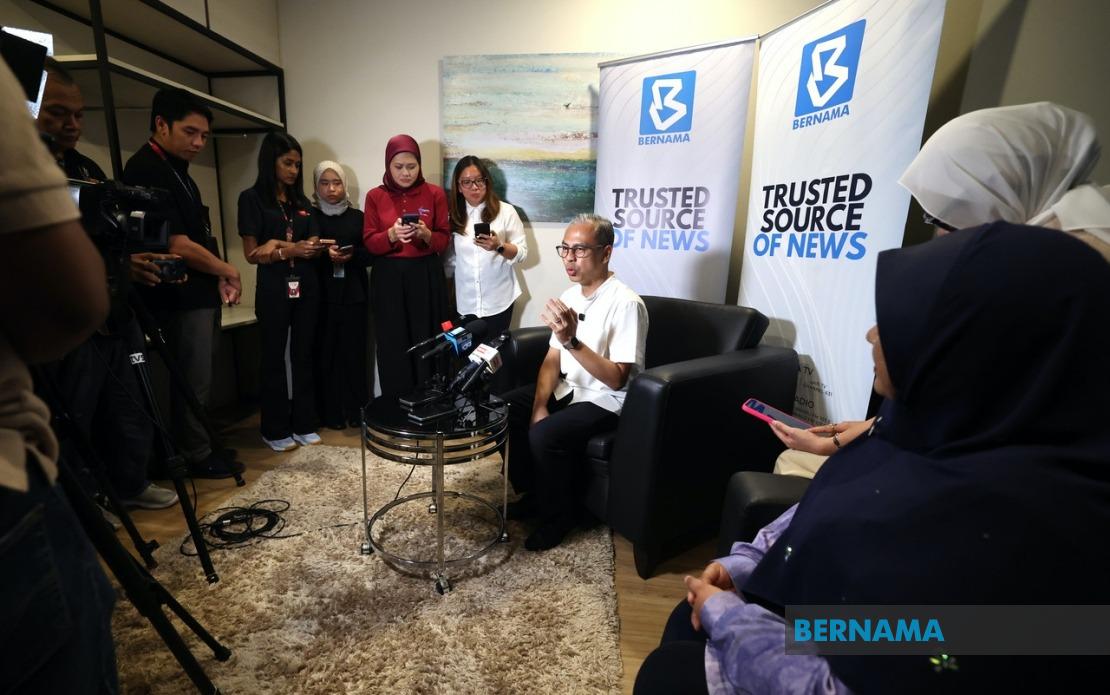
Malaysia's Communications Minister Datuk Fahmi Fadzil has tasked the Malaysian Communications and Multimedia Commission (MCMC) with establishing full mobile network coverage at the upcoming Johor Bahru-Singapore Rapid Transit System Link stations before the service opens on January 1, 2027. The directive comes as part of a broader government commitment to deliver a frictionless digital environment for commuters using the new cross-border rail connection from its very first day of operation.
The four-kilometre RTS Link, which will connect Bukit Chagar in Johor Bahru with Woodlands North in Singapore, represents a significant infrastructure undertaking with pronounced digital connectivity requirements. Speaking during a visit to the Malaysian National News Agency (Bernama) in Johor Bahru, Fahmi underscored that comprehensive 4G and 5G access at both stations ranks among the ministry's core operational priorities. The infrastructure demands of a high-traffic international transit hub necessitate robust telecommunications support to accommodate the payment systems, ticketing platforms, and real-time information services that modern rail commuters expect.
The emphasis on digital readiness reflects ongoing challenges across Malaysia's telecommunications landscape, particularly concerning QR code-based payment systems in underserved regions. Fahmi acknowledged that weak internet coverage remains a persistent obstacle in numerous rural areas, disrupting the seamless adoption of digital financial transactions that the government has been actively promoting. However, he expressed confidence that most connectivity gaps will narrow considerably through Phase Two of the National Digital Network (JENDELA), the government's flagship infrastructure development programme designed to expand telecommunications reach across the country.
The timeline for telecommunications infrastructure expansion reveals practical constraints that policymakers must navigate. Tower construction typically demands between 12 and 24 months, encompassing land acquisition, regulatory approvals from municipal authorities, and equipment installation. This extended development cycle underscores why Fahmi and the MCMC require an aggressive timeline to complete the RTS Link connectivity project before the railway launches. The geographical and bureaucratic complexities of border-adjacent infrastructure add further layers of planning difficulty, necessitating coordination between Malaysian and Singapore telecommunications standards and regulatory frameworks.
Where new tower construction proves infeasible, government agencies are exploring alternative approaches to accelerate coverage expansion. Passive infrastructure strategies utilising existing telecommunications towers offer one pathway, though Fahmi noted that many such structures currently lack the necessary active equipment from service providers. The ministry is simultaneously investigating emerging technologies, including satellite internet services such as Starlink, to deliver rapid connectivity to geographically challenging areas where traditional infrastructure proves commercially unviable or technically impractical.
Regional variations in connectivity challenges demand differentiated responses rather than standardised solutions. Northern Johor and the east coast face particular difficulties rooted in terrain characteristics, the prevalence of extensive oil palm plantations, and dispersed settlement patterns that complicate conventional tower placement strategies. Building telecommunications infrastructure across sparsely populated terrain or land dedicated to commercial agriculture presents inherent commercial challenges; tower installation costs may exceed projected revenue from servicing limited populations. These economic realities compel the government to evaluate alternative technologies that can deliver adequate coverage without requiring extensive ground-based infrastructure.
Fahmi's acknowledgment that the MCMC should examine technological alternatives reflects a pragmatic shift in Malaysia's approach to the final-mile connectivity problem. Rather than insisting on uniform infrastructure deployment regardless of cost-effectiveness, the ministry is delegating solution selection to telecommunications regulators equipped with technical expertise and market knowledge. This devolution of authority permits flexible, locally appropriate responses to distinct regional circumstances while maintaining accountability for measurable coverage outcomes.
The RTS Link project holds particular significance for Malaysian-Singapore relations and cross-border commerce. Functional digital infrastructure at both terminus stations enhances the utility of the connection for business travellers, daily commuters, and tourists, generating positive spillovers for both economies. Conversely, inadequate connectivity would undermine confidence in the service's reliability and competitiveness relative to existing transportation alternatives, potentially limiting ridership and economic benefits. This high-stakes dimension reinforces why Fahmi has prioritised network readiness in the pre-launch period.
The January 2027 operational target establishes a firm deadline that should focus government resources on completing telecommunications preparations concurrently with physical railway construction. The MCMC inspection that Fahmi mentioned intends to verify that coverage meets operational requirements across both stations and potentially along the rail corridor itself, accommodating passenger communications during transit. This verification process represents the tangible checkpoint for assessing whether governmental directives have translated into functional infrastructure.
Beyond the immediate RTS Link context, this initiative illustrates broader Malaysian telecommunications policy tensions. The government recognises that digital inclusion drives economic participation, financial inclusion, and social development across diverse regions and demographics. Yet achieving universal coverage confronts commercial realities, geographical challenges, and budgetary constraints that frustrate comprehensive solutions. The exploration of satellite internet, passive infrastructure leverage, and alternative technologies signals official acknowledgment that conventional approaches alone cannot bridge Malaysia's remaining connectivity gaps.
The success or failure of MCMC efforts to deliver optimal coverage at RTS stations by January 2027 will carry lessons applicable to broader rural and remote connectivity initiatives. Demonstrated competence in this high-profile project could strengthen government credibility regarding JENDELA Phase Two implementation and future telecommunications commitments. Conversely, network shortfalls at the RTS Link would underscore persistent governmental capacity constraints and reinforce scepticism about promised rural connectivity improvements. The project thus functions as both a practical infrastructure milestone and a symbolic test of Malaysia's ability to execute complex digital development objectives within defined timeframes.

