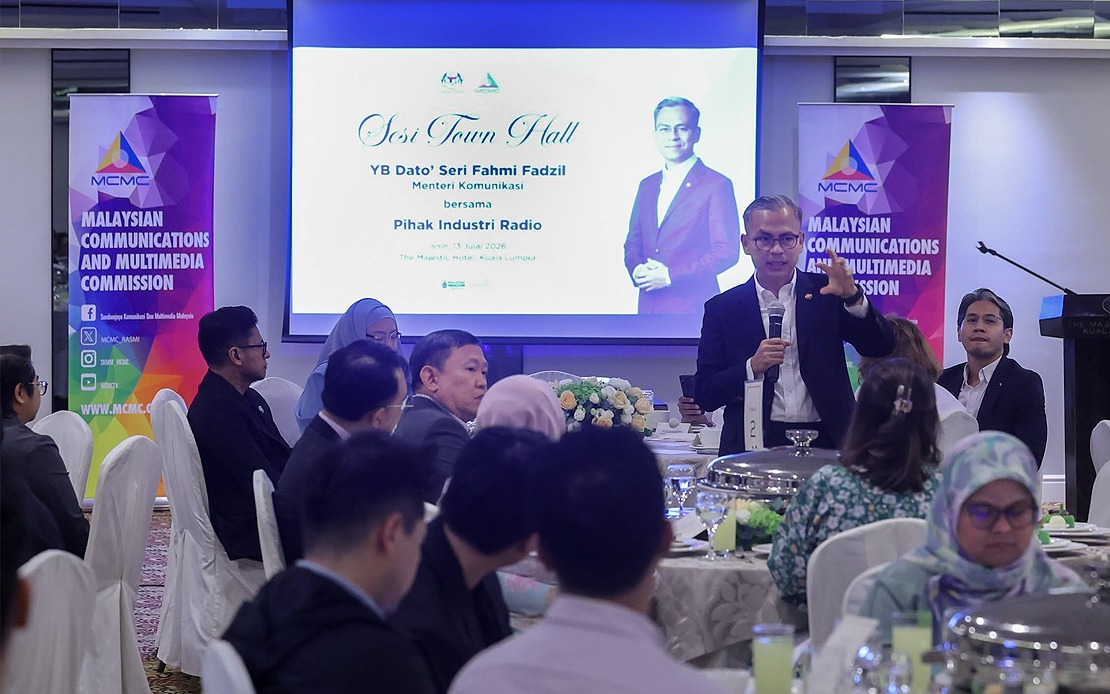
The Malaysian government is moving forward with a strategic review of the radio broadcasting industry, with Communications Minister Datuk Seri Fahmi Fadzil announcing that the Malaysian Communications and Multimedia Commission (MCMC) will undertake a comprehensive examination of the sector through a study of the National Broadcasting Policy. The initiative reflects growing recognition that Malaysia's radio industry requires fresh policy frameworks to remain viable and competitive in an increasingly digital media environment where traditional broadcasting faces significant disruption.
Fahmi outlined the review during a town hall session convened specifically to engage with radio station management and industry stakeholders, signalling the government's commitment to collaborative policymaking in the broadcasting space. The forum provided a platform for sector representatives to articulate their most pressing concerns, operational challenges, and constructive proposals for industry improvement. This consultative approach underscores an acknowledgment that effective media policy cannot be developed in isolation from the practitioners who understand market realities and audience behaviour intimately.
The policy review aligns with two broader governmental frameworks: the National Creative Industry Policy and the Orange Economy Council's strategic agenda. This positioning suggests that policymakers view radio not merely as a traditional broadcast medium but as a component of Malaysia's creative economy with potential for growth and innovation. The linkage to the Orange Economy framework particularly indicates government recognition that cultural and creative sectors can drive economic development, entrepreneurship, and employment creation—particularly in content production and digital adaptation.
During the consultation, several critical issues emerged as central to industry sustainability and development. Enhancement of local music content ranked prominently, reflecting both industry anxiety about competition from international content and government interest in nurturing domestic talent and cultural expression. Radio's role as a platform for Malaysian musicians—particularly emerging and independent artists—has traditional importance, yet increasingly faces pressure as listeners fragment across streaming platforms like Spotify, Apple Music, and YouTube. Any credible policy framework must address how terrestrial radio can remain a meaningful venue for local music discovery and promotion.
Licensing models constituted another major discussion point, indicating that current regulatory structures may require modernisation. Malaysia's radio licensing regime reflects historical broadcasting assumptions about spectrum scarcity and market concentration, yet digital transmission technologies and online streaming have fundamentally altered the competitive landscape. Stakeholders likely pressed for licensing frameworks that are both flexible enough to accommodate new business models—such as internet radio and podcast integration—while maintaining safeguards for quality, local content, and media plurality.
Industry sustainability emerged as a central concern, with radio operators facing revenue pressures as advertising migration to digital platforms accelerates. Unlike countries where public broadcasting funding mechanisms provide institutional stability, Malaysia's radio sector has relied predominantly on commercial revenue models. The government's explicit acknowledgment of sustainability challenges signals awareness that market forces alone may be insufficient to maintain a diverse, locally-oriented radio ecosystem. Policy responses might include advertising tax incentives, content production subsidies, or hybrid funding mechanisms that blend commercial and public support.
The rapid evolution of digital media consumption patterns formed the implicit backdrop for discussions. Young Malaysians increasingly access audio content through on-demand streaming, podcasting platforms, and social media rather than scheduled broadcast radio. Traditional radio stations have begun adapting by establishing streaming presence and podcast networks, yet the transition requires capital investment and expertise that smaller operators may lack. Policymakers must balance protecting incumbent broadcasters' interests against facilitating entry by new digital-native audio platforms and independent producers.
Fahmi's commitment that the government will continue collaborating with industry partners reflects understanding that the broadcasting sector's future depends on adaptive regulation rather than static rulebooks. The MCMC review will likely examine international best practices from markets like Singapore, Australia, and European nations that have successfully navigated radio's digital transition. Such comparative analysis could inform Malaysian policy development, potentially including frameworks for digital radio standards, mobile app distribution, and hybrid broadcast-streaming business models.
For Malaysian audiences and the broader economy, this policy review carries significant implications. Radio remains a mass medium with penetration levels exceeding digital platforms in rural Malaysia and among older demographics, making it valuable for public information, emergency broadcasting, and cultural representation. A thriving radio industry supports diverse employment—from on-air talent to technical engineers, music producers, and advertising professionals. Additionally, local radio's role in community engagement and regional language content helps preserve linguistic and cultural diversity amid globalisation pressures.
The initiative also reflects Malaysia's competitive positioning within Southeast Asia's media landscape. Neighbouring countries like Indonesia, Thailand, and the Philippines similarly grapple with radio industry evolution, and Malaysian regulatory innovation could establish regional precedent. A forward-thinking policy framework might position Malaysian broadcasters advantageously if they can balance heritage strengths—intimate local connection, personality-driven programming—against digital natives' agility and data analytics capabilities.
The timing of this review—as Malaysia's digital economy continues expanding and as younger cohorts shift media consumption patterns—suggests policymakers recognise the window for proactive adaptation is narrowing. Rather than waiting for continued audience erosion and advertiser defection to force reactive crisis responses, the government is positioning itself to shape the sector's transition deliberately. Success will depend on whether the MCMC can develop policy frameworks that preserve radio's cultural and informational value while enabling genuine innovation and business model diversification.

