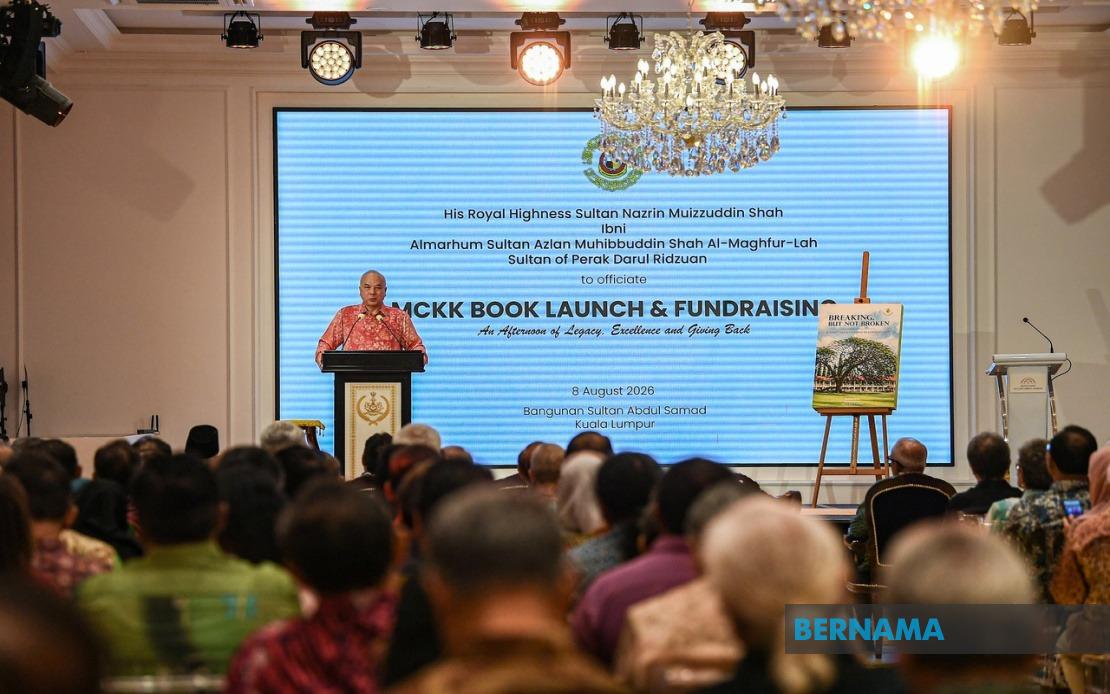
The Malay College Kuala Kangsar and other prestigious heritage institutions across Malaysia can reclaim their former standing by fundamentally reimagining their educational mission to align with contemporary challenges, according to Sultan Nazrin Shah of Perak. Speaking at an event in Kuala Lumpur, the Royal Patron of MCKK's Board of Governors outlined a vision in which elite boarding schools cease viewing tradition and modernity as opposing forces and instead harness their historical strengths to address emerging societal needs shaped by artificial intelligence and accelerating technological disruption.
The Sultan's intervention comes at a critical juncture for Malaysia's premier residential schools, which have long occupied a privileged position in the nation's education hierarchy yet increasingly face questions about their relevance and effectiveness. These institutions, historically celebrated as "power schools" for their ability to nurture leaders and scholars of exceptional calibre, have witnessed a marked decline in their perceived influence and output quality. Graduates from these colleges are now sometimes criticised for deficiencies in fundamental competencies—command of language, analytical reasoning, and a genuine commitment to public service—attributes that once defined their reputation across generations.
Sultan Nazrin articulated a sophisticated argument that contemporary educational transformation must operate on two parallel tracks, neither subordinate to the other. On one level, schools must equip students with practical skills and adaptive capacities essential for navigating an economy increasingly reshaped by automation and AI-driven innovation. This pragmatic dimension cannot be dismissed as mere technical training; rather, it represents a genuine responsibility to ensure that the next generation can harness emerging technologies to improve their circumstances and contribute meaningfully to economic development. Yet the Sultan emphasised with particular force that this instrumental function must never eclipse education's deeper purpose: the cultivation of character, moral discernment, and the intangible qualities that distinguish a genuinely educated person from a merely credential-bearing one.
The challenge Sultan Nazrin identified strikes at the heart of institutional identity for schools like MCKK, which were established in an earlier era when educational excellence was measured through classical metrics—eloquence, erudition, and ethical formation. Modern pressures, including competitive university entrance requirements and parental obsession with measurable outcomes, have inadvertently narrowed the educational mission. The Sultan's call for simultaneous attention to both dimensions reflects a recognition that Malaysian heritage schools cannot succeed by simply replicating their past formulas or, conversely, by abandoning their distinctive character in pursuit of vocational relevance. Instead, they must demonstrate that the rigorous ethical and cultural foundations embedded in their traditions provide precisely the ballast needed to navigate an uncertain future intelligently and responsibly.
This reframing carries particular significance for Malaysia's educational ecosystem and broader development trajectory. The nation's elite residential schools have historically served as incubators for political and professional leadership, shaping not merely individual careers but the character of public institutions and national discourse. If these schools continue to decline in effectiveness and prestige, the consequences will extend far beyond their immediate constituencies. The vacuum left by diminished elite education could be filled by international institutions or parallel private systems, potentially fragmenting the shared experience that once bound together generations of Malaysian leaders across different communal and regional backgrounds. Alternatively, excellence in education might increasingly become accessible only to families capable of affording overseas schooling, deepening existing inequalities.
The authors whose work Sultan Nazrin commended—Ghazally Ismail, Ahmad Ibrahim, and Hisham Badrul Hashim—undertook a notably courageous examination of institutional decline, the Sultan noted, precisely because addressing such matters directly risks offending alumni networks and challenging cherished nostalgias. Their unflinching analysis apparently extends beyond MCKK to the broader ecosystem of selective residential schools, institutions that once functioned as gatekeepers to prestige and power but have seen their gatekeeping authority substantially eroded. This collective decline represents not merely an educational problem but a crisis of institutional confidence that reverberates through multiple sectors of Malaysian society.
Meanwhile, concrete efforts to rehabilitate MCKK's infrastructure and financial position have yielded measurable results. The MCKK Foundation, established in 2008, has accumulated over RM36 million in donations and contributions from supporters including multinational corporations and foreign sovereigns, reflecting continued faith in the institution's potential despite acknowledged challenges. Approximately RM19 million has been deployed toward new capital infrastructure, including modern facilities such as an International Baccalaureate Complex and the Auditorium Tun Abdul Razak, while RM3.5 million has supported renovation and restoration projects addressing both heritage preservation and contemporary comfort standards. These investments signal recognition that physical environment profoundly shapes educational experience and institutional morale.
Beyond visible infrastructure, the Foundation has cultivated an endowment exceeding RM16 million, generating annual investment income now exceeding RM7 million cumulatively. This financial base provides crucial flexibility for resource allocation beyond routine operational expenses. Scholarship and financial assistance programmes supported by endowment income ensure that entry to MCKK remains accessible to talented students regardless of family wealth, a critical consideration in Malaysia's context where socioeconomic stratification threatens to hollow out the meritocratic principles upon which these institutions were ostensibly founded. Professional development for teaching staff, funded from these resources, addresses a persistent challenge in Malaysian education: the adequacy and quality of educator preparation for emerging pedagogical demands.
The integration of endowment income into broader institutional functioning demonstrates how heritage schools might modernise without abandoning their character. Rather than treating tradition and innovation as mutually exclusive, MCKK's leadership appears positioned to leverage historical reputation and accumulated institutional assets as foundations for genuine reinvention. The challenge will lie in translating Sultan Nazrin's vision into concrete curricular and pedagogical changes capable of persuading Malaysian parents and students that elite heritage schools offer distinctive value in an era when information and educational credentials are increasingly democratised through digital platforms.
Sultan Nazrin's emphasis on cultivating well-rounded individuals equipped with both practical competence and ethical grounding reflects a philosophical position increasingly marginalised in global education discourse, which tends toward either technical training or liberal arts aestheticism. Yet this integration may prove particularly essential for Malaysia's future. A nation navigating complex regional geopolitics, managing diverse multicommunal societies, and seeking to advance economically requires leaders and professionals who combine technological literacy with cultural sensitivity, economic acumen with ethical judgment. If heritage schools like MCKK can successfully reposition themselves as spaces where such integration occurs intentionally and systematically, they may discover that their apparent decline contains latent possibilities for renewed relevance and influence.

