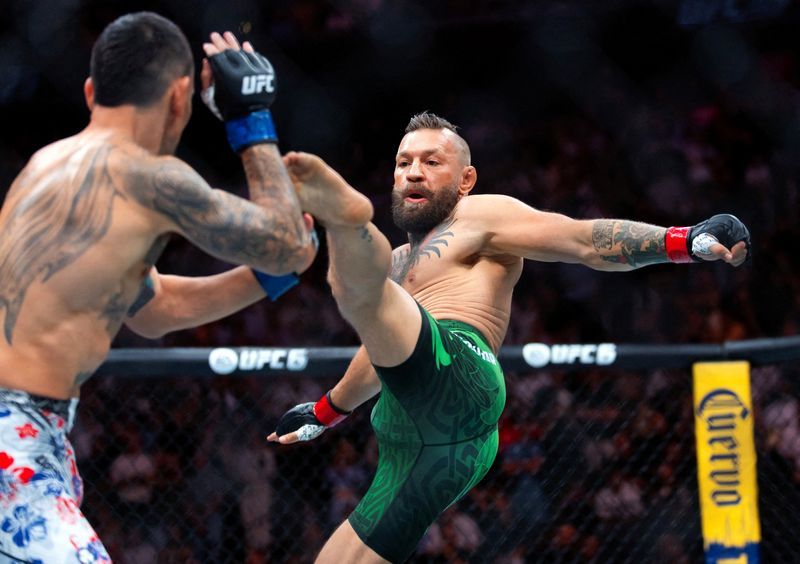
Conor McGregor's long-awaited comeback turned into a nightmare when a catastrophic knee injury halted his fight with Max Holloway after just 69 seconds on Saturday in Las Vegas. The former two-weight UFC champion has since declared his intention to pursue surgical treatment and make another attempt at fighting, posting a defiant message on Instagram that emphasized his belief in overcoming adversity.
The injury occurred in the opening seconds of the contest when McGregor attempted a jump kick but landed awkwardly, immediately compromising his left knee. Despite the obvious severity of the damage, the Irishman initially tried to continue fighting briefly before gesturing to the referee that he could no longer compete. The premature conclusion marked yet another frustrating chapter in what has become an injury-plagued final phase of his career.
McGregor's statement on social media reflected characteristic determination mixed with spiritual conviction. He declared that "all things work out for my good" and outlined a recovery pathway comprising surgery, pre-rehabilitation work, and a gradual return to martial arts training. The fighter specifically referenced completing his final contracted bout, suggesting he remains committed to fulfilling his UFC obligations despite the mounting physical toll his body has sustained.
For Malaysian sports fans and regional MMA enthusiasts, McGregor's plight illustrates the brutal nature of combat athletics at the highest level. The fighter's inability to string together consecutive competitive appearances has significantly diminished his marketability and relevance in a sport that demands consistent performance. Southeast Asian audiences, who have witnessed the region's growing MMA talent pool develop through organisations like ONE Championship, can appreciate how injury interruptions undermine even the most star-studded careers.
McGregor's recent setbacks extend well beyond the octagon. Five years prior to Saturday's disaster, he suffered a broken leg during his encounter with Dustin Poirier, an injury that compounded his long absence from active competition. This previous fracture demonstrated how serious leg injuries can derail athletes' momentum, making the current knee damage particularly concerning given the proximity to his previous lower-body trauma.
The 37-year-old Irish fighter's troubles intensified when a scheduled June 2024 matchup against Michael Chandler was cancelled after he sustained a broken toe during training—a relatively minor injury that nonetheless prevented his carefully planned return. This incident exemplified how even peripheral injuries can disrupt promotional calendars and fighter momentum, especially for athletes attempting to reclaim relevance after extended absences.
Beyond physical challenges, McGregor has navigated significant personal and legal complications that have overshadowed his athletic endeavours. An Irish civil court jury determined in a lawsuit brought by Nikita Hand that the fighter was liable for a 2018 sexual assault allegation, a verdict with serious reputational implications regardless of criminal proceedings. For international observers, including Malaysian audiences accustomed to different cultural standards around athlete accountability, such findings inevitably colour public perception and sponsorship viability.
McGregor's disciplinary struggles with sports governance bodies have added another layer of complications to his comeback attempts. Combat Sports Anti-Doping officials attempted three times during 2024 to collect biological samples from the fighter for testing purposes, but McGregor failed to provide himself for collection. This compliance failure resulted in an 18-month suspension handed down in October 2025, though the ban was retroactively applied from an earlier date and technically expired by March, clearing the way for his recent fight with Holloway.
The accumulation of these obstacles—injuries ranging from leg fractures to toe breaks, legal liability findings, and anti-doping violations—has created a perfect storm that has severely constrained McGregor's ability to maintain an elite-level fighting schedule. Regional MMA observers watching through platforms that carry UFC content to Southeast Asia have witnessed a once-dominant champion reduced to a fighter struggling to complete basic competitive obligations. The contrast between McGregor's peak years and his current circumstances offers a sobering reminder of how quickly athletic supremacy can erode when compounded by external pressures.
Now, as McGregor faces another substantial recovery period following knee surgery, questions linger about whether his body can sustain the demands of elite-level combat sports competition. At 37 years old, with an extensive injury history and unresolved legal matters, his pathway back to championship contention appears increasingly unlikely. Nevertheless, his public commitment to returning suggests he may pursue remaining contractual obligations, potentially setting up lower-stakes matchups against fellow veteran competitors rather than aspiring challengers.
The McGregor situation resonates differently across Southeast Asian markets where MMA continues expanding. While the region's emerging fighters build careers through consistent competition and championship progression, established international stars like McGregor serve as cautionary tales about the importance of injury management, regulatory compliance, and maintaining focus on sporting excellence. McGregor's situation underscores how multifaceted pressures can undermine even transcendent talent.

