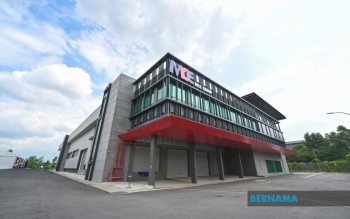
Malaysian tier-1 automotive electronics supplier MCE Holdings Bhd has officially inaugurated the MCE Auto Hub, a RM50 million advanced manufacturing facility at the UMW High Value Manufacturing Park in Serendah, signalling a major expansion that will significantly enhance the company's capabilities in designing, engineering, manufacturing and research and development. Investment, Trade and Industry Minister Datuk Seri Johari Abdul Ghani officiated the launch, underscoring the government's commitment to strengthening Malaysia's automotive sector amid the global transition towards electric vehicles and advanced mobility solutions.
The 5.52-hectare facility represents the foundation of MCE's ambitious long-term growth strategy, with management planning additional investments totalling up to RM200 million in subsequent phases. This phased approach signals confidence in Malaysia's manufacturing ecosystem and reflects broader industry trends towards consolidating high-value automotive production domestically. The expansion is particularly significant given the intensifying competition among Southeast Asian nations to attract automotive electronics investment, with Thailand, Vietnam and Indonesia all pursuing similar strategies to capture a share of the region's burgeoning EV supply chain.
The MCE Auto Hub has been designed as an Industry 4.0-compliant manufacturing centre, incorporating climate-controlled clean rooms and sophisticated production environments necessary for manufacturing cutting-edge automotive electronics destined for both traditional internal combustion engine vehicles and next-generation electric vehicles. This technological sophistication reflects the evolving demands of global automakers, who increasingly expect their Malaysian suppliers to meet stringent quality and innovation standards. The facility's capability to serve dual platforms—ICE and EV—positions MCE strategically as Malaysia navigates its automotive future, where both technologies will coexist for the next decade before the sector fully electrifies.
With the new hub now operational, MCE's headcount has grown to 680 employees, including 90 engineers distributed across facilities in Johor Bahru, Port Klang and Serendah. This engineering-focused expansion is particularly noteworthy, as it addresses a persistent skills gap in Malaysia's manufacturing sector. The concentration of engineering talent within MCE suggests the company is moving beyond contract manufacturing towards higher-value original design and equipment manufacturing services, where profit margins are substantially higher and technology ownership resides with the Malaysian company rather than foreign customers.
MCE group managing director Dr Goh Kar Chun traced the company's evolution from its inception in 1990, when it secured its first domestic contract supplying remote alarms and central locking systems. Over three decades, the company has progressively upgraded its technological portfolio, transitioning from basic automotive components into sophisticated electronics and mechatronic solutions. This trajectory mirrors Malaysia's broader manufacturing ambitions—moving up the value chain from labour-intensive assembly towards knowledge-intensive design and development. Today, MCE's customer base spans Malaysia, ASEAN member states and the United States, demonstrating the international competitiveness Malaysian suppliers have achieved.
Minister Johari's remarks at the launch ceremony emphasised the interconnection between MCE's expansion and Malaysia's competitive positioning in global automotive markets. He stressed that local suppliers must continuously pursue manufacturing excellence whilst cultivating engineering expertise and fostering innovation—a clear acknowledgment that cost alone can no longer sustain Malaysia's advantage, particularly as wage differentials with competing nations narrow. The minister's presence alongside officials from the Malaysian Investment Development Authority and Malaysia Automotive, Robotics and IoT Institute underscored the whole-of-government approach now being applied to automotive sector development.
Dr Goh articulated a vision of Malaysia becoming a regional hub for automotive electronics through enhanced collaboration between original equipment manufacturers, tier-1 suppliers and ecosystem players in semiconductors, electrical components and electronics. This ecosystem approach reflects recognition that no single company or sector component can succeed in isolation. The integration of Malaysian semiconductor companies and electronics manufacturers with automotive suppliers creates the possibility of vertically integrated supply chains operating entirely within Southeast Asia, reducing supply chain vulnerability and enhancing regional economic interdependence.
The MCE Auto Hub's positioning as the company's primary manufacturing and engineering centre signals strategic intent to consolidate operations around this facility. Rather than maintaining dispersed manufacturing operations, MCE is concentrating its advanced capabilities in Serendah, potentially allowing for more efficient knowledge transfer and quality control. This consolidation also reflects the reality that high-value automotive electronics manufacturing requires significant infrastructure investment that smaller, distributed operations cannot justify economically.
The timing of MCE's expansion coincides with accelerating EV adoption across Southeast Asia and globally. Electric vehicles require substantially different electronic architectures than conventional cars, with battery management systems, power electronics, motor controllers and advanced driver assistance systems representing entirely new categories of component demand. By investing heavily in EV-capable manufacturing now, MCE positions itself to capture market share as original equipment manufacturers like Proton, Perodua and imported brands ramp up electric vehicle production. Malaysia's automotive industry, long dominated by assembly and light manufacturing, now has an opportunity to compete in the higher-margin electronics and software components that will define next-generation vehicles.
The RM50 million initial investment and RM200 million total commitment also reflects MCE's assessment of market opportunity and growth trajectory. These figures suggest the company anticipates significant demand growth beyond current levels, likely driven by the EV transition and potential new customer wins among regional and international automakers establishing manufacturing operations in Southeast Asia. The phased investment approach provides flexibility—the company can adjust subsequent phases based on market conditions, customer demand and technological evolution without committing the full RM200 million upfront.
For Malaysian policymakers, MCE's expansion validates the government's automotive sector strategy. The company demonstrates that Malaysian enterprises can compete at tier-1 supplier level globally, and that manufacturing excellence combined with engineering capability can drive value creation. However, the case also highlights ongoing challenges: maintaining competitive advantage requires continuous investment in talent development, technological infrastructure and research capabilities. The concentration of 90 engineers across three facilities suggests MCE remains constrained by the availability of skilled automotive engineering professionals in Malaysia, a bottleneck that could limit growth if not addressed through enhanced technical education and training programmes.
The broader implications extend beyond MCE's individual success. The auto hub's establishment in Serendah positions Hulu Selangor as an emerging automotive manufacturing cluster, potentially attracting related suppliers and service providers. This clustering effect can generate spillovers—knowledge dissemination, labour market deepening and infrastructure improvements that benefit the entire region. Over time, concentrated automotive manufacturing clusters develop competitive advantages that attract successive waves of investment, creating a self-reinforcing economic dynamic. Malaysia's success in building such clusters will significantly influence whether the country can maintain and expand its share of regional and global automotive supply chains.

