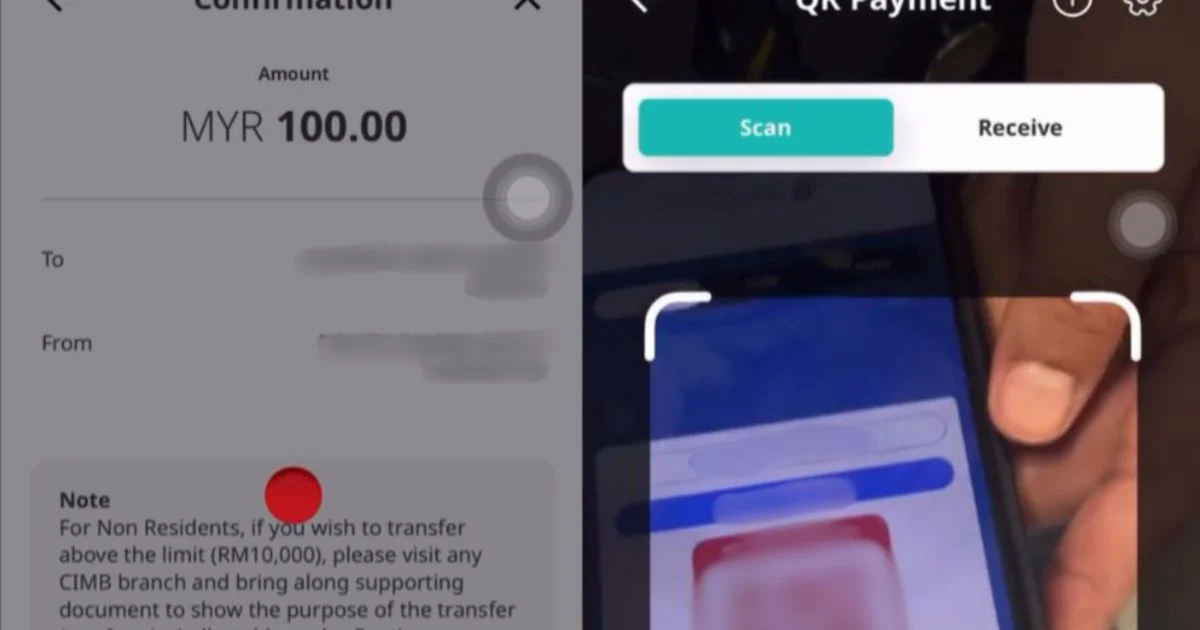
The Malaysian Border Control and Protection Agency (MCBA) has initiated a formal internal investigation into serious allegations of improper conduct involving one of its officers stationed at Kuala Lumpur International Airport's Terminal 2. The inquiry centres on claims that the official accepted an unauthorized RM100 payment processed via a personal Quick Response code, raising concerns about potential corruption and breach of protocol at one of Malaysia's primary international travel hubs.
The incident highlights a growing vulnerability in airport operations where officers may exploit digital payment mechanisms to circumvent official financial channels and detection systems. The use of personal QR codes—increasingly common for peer-to-peer transactions in Malaysia—appears to have been leveraged as a method to obscure the nature and origin of funds, circumventing standard institutional oversight mechanisms that would typically flag suspicious financial activity.
Kuala Lumpur International Airport serves as Malaysia's busiest and most strategically important international aviation gateway, processing hundreds of thousands of passengers monthly and generating substantial revenue flows. The integrity of customs and border protection operations at KLIA is therefore fundamental to Malaysia's international reputation, national security protocols, and the public's confidence in institutional accountability. Any breach of professional standards by border control personnel carries implications that extend well beyond individual misconduct.
The MCBA's decision to formally investigate demonstrates institutional responsiveness to allegations, yet raises questions about systemic vulnerabilities that may have enabled such an occurrence. Border agencies across Southeast Asia have increasingly grappled with the challenge of regulating informal payment channels, particularly as digital transaction methods proliferate faster than corresponding oversight frameworks can adapt. Malaysia's regulatory architecture has historically concentrated enforcement attention on formal corruption channels, potentially leaving blind spots in emerging digital transaction ecosystems.
Internal investigations of this nature typically examine whether the officer acted independently or as part of a broader practice, whether supervisory controls functioned adequately, and what opportunities exist for institutional reform. The inquiry will likely scrutinize whether similar incidents have occurred undetected, whether the individual possessed authority to solicit payments, and whether adequate training regarding professional conduct standards had been provided.
The case also underscores tension within Malaysian enforcement agencies between rapid digitalization of transaction methods and the capacity of traditional oversight mechanisms to respond proportionately. QR code technology was designed to facilitate legitimate commerce, yet its accessibility and minimal documentation requirements create opportunities for misuse when combined with regulatory gaps. Other major airports across the region—particularly in Singapore, Thailand, and Indonesia—may observe Malaysia's handling of this matter as indication of institutional accountability standards.
Passengers transiting through KLIA often perceive informal payment requests as unofficial fees rather than explicit extortion, creating ambiguity that enables such behaviour to persist. The relatively modest amount involved—RM100—suggests either a low-level opportunistic transgression or potentially the tip of a larger pattern where officers systematically extract small sums from countless travelers. Understanding the scale of the problem depends substantially on the thoroughness of the MCBA's investigation and its willingness to pursue systemic analysis beyond the single documented incident.
The investigation assumes heightened importance given Malaysia's commitment to international aviation standards and regional competitiveness. Transparency in border operations represents a significant factor in global airport rankings and traveler perceptions of Malaysian hospitality and professional standards. International carriers and business travelers make routing decisions partly based on perceived efficiency and integrity of border processes, making institutional credibility a tangible commercial asset.
Stakeholders including tourism operators, airline associations, and the broader business community have expressed interest in outcomes, as trust in border procedures directly affects Malaysia's attractiveness as a travel and business destination. The MCBA's response will signal whether institutional mechanisms can effectively address emerging forms of misconduct in real-time or whether regulatory frameworks require modernization to address digital-era challenges.
The investigation also provides opportunity for the MCBA to reassess training protocols, implement enhanced digital literacy regarding emerging payment methods among personnel, and strengthen supervisory oversight at high-traffic facilities. Beyond this specific incident, Malaysian border agencies may need to develop comprehensive strategies addressing informal payment solicitation across digital platforms, establishing clearer protocols for financial transactions and establishing whistleblower channels that protect travelers reporting improper conduct.
Regional observers will monitor whether the MCBA's investigation yields meaningful consequences that establish genuine deterrence, or whether outcomes prove sufficiently mild as to suggest institutional tolerance of low-level misconduct. The agency's response carries implications extending beyond internal management to broader questions of whether Malaysia's institutions can effectively self-regulate in an increasingly complex digital environment where traditional enforcement approaches may prove inadequate.

