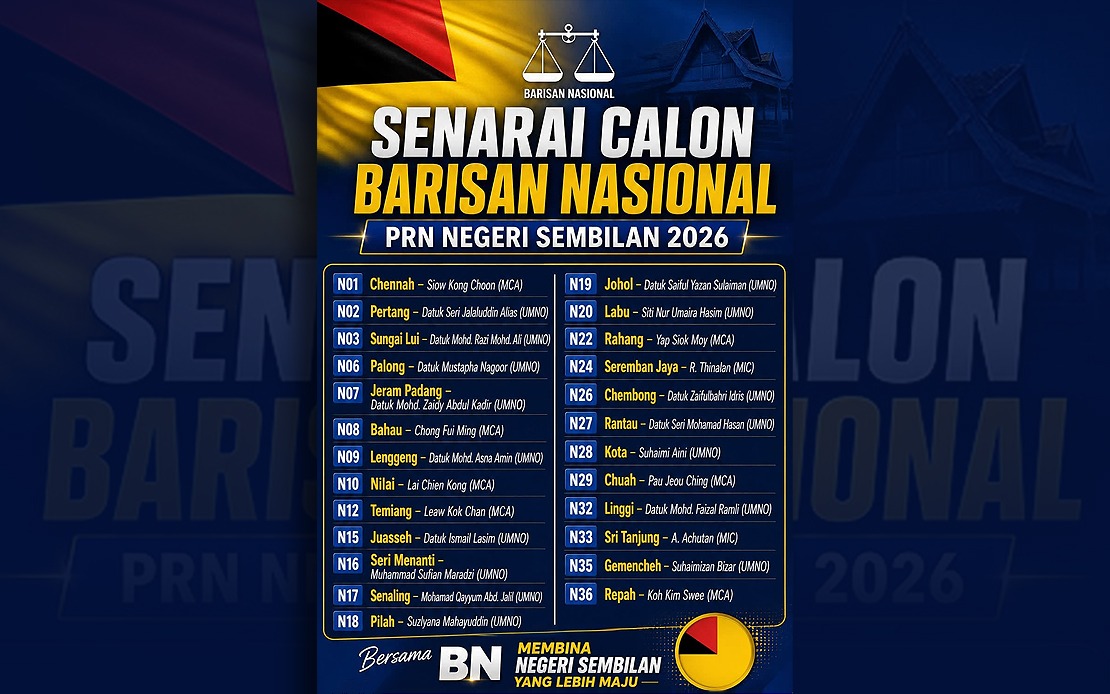
Barisan Nasional's leadership has finalized the party allocation for the upcoming Negeri Sembilan state election, with the MCA set to contest seven seats while the MIC will field candidates in four constituencies. The announcement came from BN chairman Datuk Seri Dr Ahmad Zahid Hamidi, who also serves as Deputy Prime Minister, during a meeting with prospective candidates at Wisma UMNO Negeri Sembilan in Seremban on July 15.
The seat distribution process reflected a calculated approach to coalition politics, with BN deliberately assessing the electoral viability of individual candidates across their designated constituencies. Ahmad Zahid emphasized that the allocation methodology hinged on evaluating each candidate's realistic prospects for securing victory in their respective areas, ensuring that party resources were directed toward competitive races. This strategic assessment typifies the formula employed by BN during state elections, by-elections, and general elections, where component parties receive seat numbers proportionate to their perceived strength and organizational capacity within given regions.
Ahmad Zahid underscored the formality of the candidate selection process by noting that all prospective nominees had signed undertakings and personally pledged their allegiance to him as BN chairman. This ritualistic element serves multiple purposes within the coalition framework: it reinforces hierarchical party discipline, establishes clear accountability chains, and signals to grassroots supporters and party members that candidates have been vetted and approved through established procedures. Such ceremonies, while routine within Malaysian electoral practice, carry symbolic weight in demonstrating organizational cohesion ahead of a competitive election.
The candidate announcement was scheduled for the evening of July 15 at Stadium Tuanku Abdul Rahman Paroi, where the full slate of BN nominees would be unveiled to the public and media. This formal presentation marks the penultimate stage of campaign preparations, allowing the coalition to control the narrative surrounding its electoral strategy and personnel choices before the Election Commission's nomination process commenced.
The Election Commission has established a tight electoral calendar for the Negeri Sembilan contest. Nomination day was set for July 18, providing candidates with a final deadline to register their nominations and complete formal requirements. Early voting subsequently occurs on July 28, accommodating voters unable to participate on the main polling day. The general election itself takes place on August 1, condensing the campaign period and intensifying competitive activity across all three weeks.
Negeri Sembilan represents strategically important terrain for BN's broader political rehabilitation. In the previous state election, the coalition experienced significant losses, securing only 14 of the 36 state legislative assembly seats. Pakatan Harapan emerged as the dominant force with 17 seats, while Perikatan Nasional captured five seats. The results reflected voters' shifting preferences and dissatisfaction with BN's governance record during that period. Recapturing lost ground in this state election carries implications extending beyond Negeri Sembilan itself, potentially signaling whether BN's recent strengthening at the federal level translates into renewed support at the state level.
The allocation of seats to component parties reveals the internal dynamics and negotiated balances within the coalition. MCA's seven-seat allocation reflects its historical presence in Negeri Sembilan and its importance within BN's broader multiethnic framework, particularly regarding mobilization among Chinese-majority and mixed communities. The MIC's four seats similarly acknowledge the party's role in engaging Indian and minority community voters, though the smaller allocation reflects its comparatively diminished organizational footprint relative to MCA. UMNO, Malaysia's dominant coalition member, implicitly receives the remaining constituencies, underscoring its overwhelming numerical dominance within BN.
For Malaysian voters, particularly in Negeri Sembilan, this election presents a choice between competing visions for the state's future governance. The BN coalition presents itself as offering stability and experience rooted in its long tenure in power, while the incumbent Pakatan Harapan government defends its recent track record. Meanwhile, Perikatan Nasional continues attempting to expand its foothold in state politics, competing for votes from constituencies where it performed credibly previously.
The Negeri Sembilan election occurs within a broader context of Malaysia's evolving political landscape. The state has become a bellwether for coalition performance, and its results will be closely analyzed by national political observers assessing BN's capacity to reverse losses and rebuild electoral competitiveness. The outcome will provide early indications of whether voters across different regions remain committed to the current federal government's direction or whether dissatisfaction with specific policies, economic conditions, or governance issues remains sufficiently intense to produce surprising electoral shifts.

