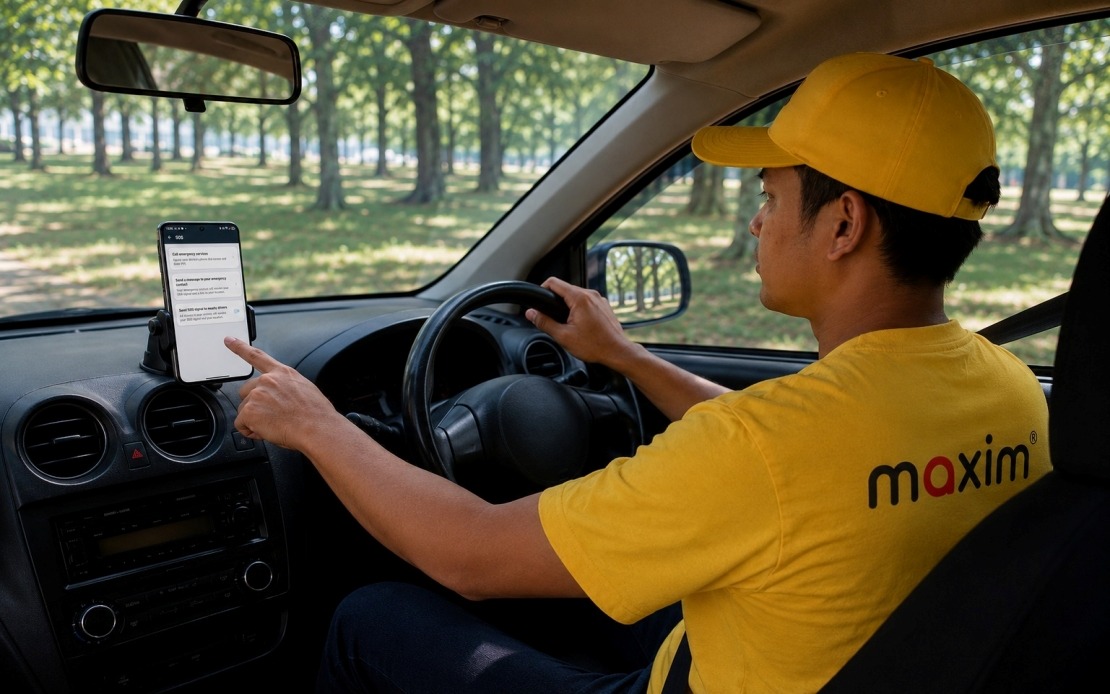
Ride-hailing platform Maxim Malaysia has moved to strengthen its emergency response capabilities by rolling out a comprehensive upgrade to its SOS safety architecture, making it faster and more accessible for both passengers and drivers to summon help during critical situations on Malaysian roads. The enhancements represent a recognition that the speed and reliability of emergency communication can mean the difference between a minor incident and a serious tragedy, particularly in a sprawling metropolitan area like the Klang Valley or during trips through less densely populated regions.
At the core of the upgrade is a redesigned SOS button that now operates with improved responsiveness across the platform's ecosystem. Rather than forcing users to rely on a single communication channel, the system now permits individuals to alert up to three pre-registered emergency contacts simultaneously, fundamentally changing how assistance can be mobilised during unexpected crises. The flexibility embedded in this design acknowledges that different emergencies may require different responses—a mechanical breakdown might be best handled by a friend with a spare tyre, while a health crisis demands professional medical intervention.
When activated, the SOS function transmits critical information to alert recipients through SMS messages that include the user's precise GPS coordinates and a live tracking link showing the vehicle's real-time location. Crucially, this functionality maintains reliability even when internet connectivity deteriorates, a practical consideration for Malaysian drivers navigating areas with patchy mobile data coverage. This offline capability ensures that emergency alerts remain functional regardless of whether a user's data plan is exhausted or network congestion occurs during peak hours.
A distinctive feature of the upgrade targets ride-sharing drivers specifically through the Driver Alert System, which broadcasts emergency notifications to other Maxim partner drivers operating within a three-kilometre radius of an incident. This peer-assistance network creates an informal first-responder layer before professional emergency services arrive, potentially enabling neighbouring drivers to provide physical assistance, call for help, or simply ensure that an affected driver is not alone during a traumatic moment. The system addresses a vulnerability in ride-hailing ecosystems where isolated incidents on secondary roads might otherwise go unwitnessed for extended periods.
Mohd Hazwan Musli, the director overseeing Maxim Malaysia's operations, emphasised that the philosophy underpinning these improvements centres on granting users genuine choice during crises. Rather than implementing a one-size-fits-all approach to emergency response, the platform now recognises that different situations demand different resources. A passenger experiencing harassment may benefit from alerting family members, whilst a driver suffering chest pains requires the 999 emergency hotline. The ability to make this distinction and activate the appropriate response within seconds represents a meaningful evolution in how technology can support vulnerable road users.
The standardisation of SOS functionality across both passenger and driver accounts eliminates previous inconsistencies that might have confused users during high-stress moments. Both cohorts can now either directly contact emergency services at the 999 hotline or dispatch alerts to designated contacts with identical ease and reliability. This equalisation of safety tools reflects a platform-wide commitment to treating driver security with equivalent seriousness to passenger protection—an often-overlooked element in ride-hailing discourse that tends to focus predominantly on passenger safeguarding.
Complementing the SOS and Driver Alert mechanisms, Maxim Malaysia has fortified its broader safety architecture through integrated features designed to prevent fraud and maintain operational visibility. An encrypted in-app messaging system isolates communication between users and drivers from external interception, while continuous internal trip monitoring records essential journey parameters including GPS coordinates and timing data. Passengers gain the ability to activate Trip Sharing on demand, immediately generating a shareable real-time tracking link that allows family members or trusted friends to monitor a journey as it unfolds, providing reassurance and creating an external witness to the passenger's whereabouts.
The technical implementation of these safety features incorporates encryption standards aligned with contemporary cybersecurity best practices, ensuring that sensitive location data and emergency alerts cannot be accessed by unauthorised individuals. The platform specifies that only designated security personnel and relevant authorities operating under established legal procedures can access this encrypted information, establishing guardrails against potential misuse of safety data by bad actors or overly zealous enforcement agencies.
For the Malaysian context, where traffic incidents and road emergencies claim thousands of lives annually, and where ride-hailing services now represent a significant component of urban mobility, these enhancements address a genuine gap in existing infrastructure. The ability to immediately alert nearby commercial drivers transforms accident scenes from isolated incidents into potential clusters of mutual assistance. This peer-support mechanism complements rather than replaces professional emergency response, creating a hybrid safety net that acknowledges the reality that paramedics and police cannot instantaneously reach every location across the country simultaneously.
The upgrade also carries implications for driver-partners themselves, who face distinct vulnerabilities including aggressive passengers, traffic accidents, and mechanical failures in remote areas. By providing direct access to driver networks and emergency services, Maxim Malaysia signals recognition that its driver workforce constitutes a legitimate constituency deserving protective features rather than simply being treated as service-delivery nodes.
As Malaysian cities continue experiencing traffic growth and ride-hailing services expand beyond urban cores into suburban and semi-rural areas, the reliability and responsiveness of in-app safety systems become increasingly consequential. These enhancements position Maxim Malaysia to compete on safety grounds alongside rival platforms, whilst establishing safety infrastructure that may eventually become industry standard as regulators increasingly scrutinise ride-hailing operations.
The practical impact of this upgrade will ultimately be measured through incident response outcomes rather than feature announcements. Whether passengers and drivers actually utilise these tools effectively, whether emergency contacts respond appropriately to alerts, and whether driver networks can coordinate meaningful peer assistance will determine whether this represents a genuine safety advancement or merely sophisticated window-dressing. Nonetheless, the technical foundation is now in place for a more resilient and responsive emergency infrastructure within Malaysia's ride-hailing ecosystem.

