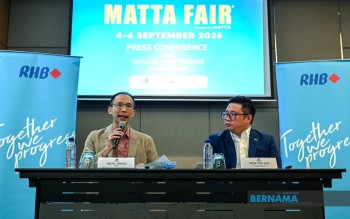
The Malaysian Association of Tour and Travel Agents has outlined an ambitious agenda for the coming national budget, positioning tax reform and infrastructure spending as critical drivers for revitalising the country's tourism sector. Speaking ahead of the MATTA Fair, association president Nigel Wong articulated a vision where strategic government support could unlock significant growth in international visitor arrivals and bolster Malaysia's competitive standing within the Southeast Asian tourism marketplace. The proposals reflect broader industry concerns about profitability and promotional capacity, even as Malaysia prepares to host the Visit Malaysia 2026-2027 campaign, a flagship initiative intended to position the nation as a premier regional destination.
At the heart of MATTA's submission lies a straightforward economic argument: enhanced tax deductions for tour operators will provide the financial breathing room necessary to escalate overseas marketing activities. Wong emphasised that tour operators currently operate within tight margins, limiting their ability to invest substantially in international promotional campaigns without additional fiscal relief. By allowing these businesses to retain more revenue through improved tax treatment, the association contends that operators could redirect capital toward targeted marketing in key source markets across Europe, East Asia, and the Middle East. This approach treats tax incentives not merely as giveaways but as catalysts for private-sector driven tourism development, aligning commercial interests with national tourism objectives.
The infrastructure dimension of MATTA's request speaks to a longstanding frustration within the hospitality and travel sectors: that Malaysia's tourism offerings, while diverse, have not kept pace with regional competitors in terms of maintenance and modernisation. Wong cited the restoration of the Sultan Abdul Samad Building as exemplary of how strategic government investment in heritage assets can generate magnetic appeal for international visitors. The iconic colonial structure, once refurbished, has become a centrepiece of Kuala Lumpur's urban tourism narrative. However, Wong notes that Malaysia possesses numerous heritage and natural sites that remain underinvested, with ageing infrastructure and deferred maintenance undermining their potential to attract premium visitor spending. A comprehensive infrastructure refresh, the argument goes, would enhance Malaysia's tourism product quality and justify premium pricing in international tourism markets.
Beyond tax measures and capital spending, MATTA is pressing for a sharper focus on urban amenities and public safety as integral components of tourism competitiveness. Wong's call for municipal councils to prioritise walkability and security reflects an understanding that modern travellers evaluate destinations not merely on iconic attractions but on the everyday experiential quality of visiting cities. Safe, clean, pedestrian-friendly urban environments have become decisive factors in destination choice, particularly among European and developed-market tourists accustomed to high urban standards. By framing municipal improvements as tourism infrastructure, MATTA is attempting to broaden the conversation beyond traditional hospitality sectors to encompass local government, law enforcement, and urban planning agencies whose actions materially affect visitor satisfaction and repeat visitation rates.
The promotional budget component of MATTA's submission directly targets the execution capacity of the Visit Malaysia 2026-2027 initiative. Current allocation levels, the association suggests, are insufficient to generate the international awareness and travel intention necessary to meet ambitious visitor arrival targets. A more robust promotional budget would permit expanded digital marketing, increased presence at international travel trade shows, strategic partnerships with global travel influencers, and coordinated campaigns across multiple markets simultaneously. Without adequate funding, MATTA contends, the Visit Malaysia campaign risks becoming a domestic marketing exercise rather than a genuine international pull strategy capable of competing with Thai, Indonesian, and Vietnamese tourism promotions.
The timing of MATTA's advocacy is strategically significant. The Finance Minister is scheduled to table Budget 2027 in Parliament on October 9, providing a defined window for industry lobbying and government consideration. This timeline allows tourism stakeholders to mount coordinated advocacy efforts, submit detailed proposals to Finance Ministry officials, and build political consensus within government regarding the tourism sector's budget priorities. For Malaysian policymakers, the MATTA submission represents quantified input from the private sector regarding investment needs and policy preferences, providing economic rationale for budgetary allocations that might otherwise be perceived as discretionary spending.
The broader context for MATTA's requests involves Malaysia's evolving position within global tourism hierarchies. While the nation has traditionally attracted steady visitor flows, particularly from Singapore, Indonesia, and Thailand, international competition for high-value tourism spending has intensified. Thailand's aggressive marketing, Vietnam's emergence as a trendy destination, and Indonesia's diverse offerings mean Malaysia cannot assume visitor growth without deliberate strategic positioning. Enhanced tax incentives and infrastructure investment represent Malaysia's tools for differentiating its tourism offering and capturing market share among affluent international travellers. For Southeast Asian readers, Malaysia's tourism development strategy carries implications for regional competition, as government choices in one country influence visitor distribution patterns across the region.
The "whole-of-tourism approach" that Wong advocates represents a maturation of Malaysia's tourism policy thinking. Rather than confining tourism development to hospitality and attraction operators, this framework recognises that tourism outcomes depend on coordinated action across municipal governments, transportation authorities, heritage agencies, and security services. Implementing this approach requires budget allocations across multiple government departments and demonstrated political commitment to prioritise tourism in municipal planning and spending decisions. For local councils, this may necessitate reorienting budget priorities toward visitor-facing infrastructure and services, a potential tension with other municipal priorities.
MATTA's submission also implicitly addresses competitiveness within the region. Thailand's tourism ministry commands substantially larger budgets than Malaysia's counterpart agencies, and Singapore's integrated approach to tourism, hospitality, and urban development generates visitor spending levels far exceeding Malaysia's totals. By requesting enhanced budgetary support, MATTA is essentially arguing that Malaysia has historically underinvested in tourism relative to regional competitors and that budget parity or improvement would yield proportionate returns in visitor arrivals and foreign exchange earnings. This comparative framework positions tourism investment as economically rational spending rather than discretionary allocation.
The economic implications of MATTA's requests extend beyond the tourism sector itself. International visitor spending generates employment across hospitality, transportation, retail, food services, and entertainment industries, with employment multiplier effects throughout local economies. Enhanced tourism activity supports currency earnings, improves balance-of-payments positions, and generates tax revenues that can offset initial government investments. For policymakers evaluating competing budget demands, tourism presents a distinctive case where strategic public investment can stimulate substantial private-sector activity and employment creation without requiring large-scale subsidies or ongoing government transfers.
Implementing MATTA's agenda would require coordination across Finance Ministry officials responsible for tax policy, Works Ministry personnel overseeing infrastructure investment, Tourism Ministry administrators managing promotional budgets, and local government bodies. This institutional complexity means that budgetary approval alone may not guarantee effective implementation if coordination mechanisms are weak or departmental priorities conflict. Wong's emphasis on a whole-of-tourism approach acknowledges this implementation challenge implicitly, suggesting that MATTA recognises that budget allocation must be accompanied by institutional mechanisms ensuring coordinated execution.
Looking toward the October 9 budget tabling, tourism sector stakeholders will monitor Finance Ministry responses to MATTA's specific requests, particularly regarding tax incentive structures and infrastructure allocation. The budget outcome will signal government commitment to tourism development as a strategic priority and reveal the relative weight afforded tourism spending compared to other policy objectives. For Malaysian businesses, international observers, and regional competitors, the 2027 budget will communicate Malaysia's positioning within evolving global tourism markets and its willingness to invest resources in capturing market share within increasingly competitive Southeast Asian tourism landscapes.

