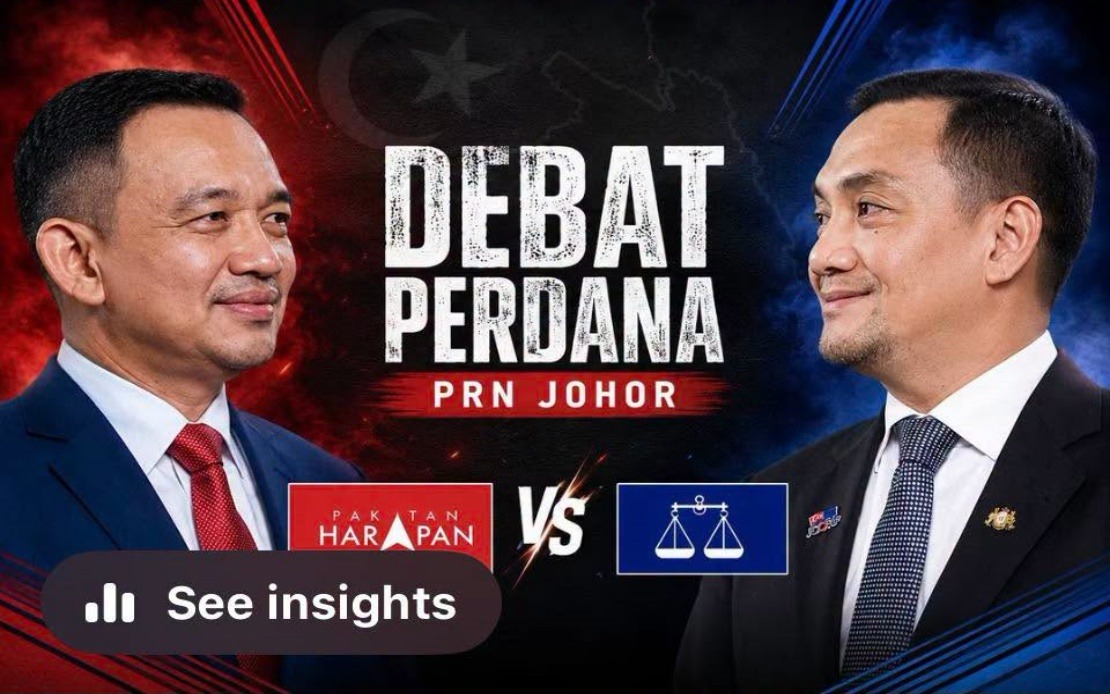
The political temperature in Johor is rising as former Education Minister Maszlee Malik publicly committed to a televised debate confrontation with incumbent Menteri Besar Onn Hafiz Ghazi in the lead-up to the state election. The challenge, which has captured public imagination across the peninsula, marks a significant moment in the campaign as Pakatan Harapan seeks to reclaim ground in Malaysia's second-largest state through direct engagement with the ruling administration.
Maszlee's acceptance of the debate proposal represents a calculated political gambit by PH to energise its campaign machinery and connect with voters through substantive discussion rather than the typical stumping and rally appearances. The former minister, now flying the PH flag as the candidate for Puteri Wangsa, framed his participation in terms of democratic principle and civic responsibility. His willingness to step into the arena reflects broader PH strategy to position itself as the party willing to defend its record and vision through open discourse rather than relying solely on organisational machinery.
The genesis of this debate proposal reveals how digital activism and social media influence have become legitimate drivers of political engagement in Malaysia. Muhamad Harris Nasril, described as a social media influencer, initiated the concept of a "Johor State Election Grand Debate" which subsequently gained traction through the Redaksi.com platform. This grassroots momentum forced political actors to respond seriously to what might have been dismissed as a social media stunt in earlier electoral cycles, indicating how voter expectations around transparency and direct politician engagement have shifted.
Maszlee's statement emphasised that the debate would serve educational purposes and contribute to developing Malaysia's political culture towards greater maturity and sophistication. His invocation of democratic values and respect for public discourse positioned acceptance of the challenge as consistent with PH's broader reform agenda that emerged from the 2018 election cycle. By framing the debate as an opportunity to elevate political standards, Maszlee attempted to establish moral high ground before the actual confrontation occurs.
The timing of this challenge carries strategic significance within the broader Johor electoral context. The Election Commission's tight schedule—with nomination day falling this Saturday, early voting on July 7, and polling day on July 11—compresses the campaign window considerably. A high-profile debate would dominate the campaign narrative during the most critical final weeks, potentially reaching audiences that traditional campaign events might miss. For PH, which is attempting to rebuild after the 2023 state election reversal, such visibility could prove invaluable.
Packatan Harapan's campaign strategy for Johor reflects internal coalition mathematics that have required careful balance. The coalition is fielding 56 candidates across the state, distributed among its three component parties: 20 from PKR, 19 from Amanah, and 17 from DAP. This arrangement signals both the diversity PH seeks to project and the internal negotiations necessary to maintain coalition cohesion. Maszlee's Puteri Wangsa candidacy and his prominence in the debate challenge underscore PH's intention to deploy experienced, recognisable figures who can articulate the coalition's policy platform effectively.
Onn Hafiz, as the sitting Menteri Besar, enters any debate from a position of administrative record and incumbent legitimacy, though also vulnerable to criticism regarding governance performance. The comparison between the two figures—Maszlee as a former minister with educational reform credentials and Onn Hafiz as a contemporary administrator—sets up a substantive framework for discussion about different visions for Johor's development and trajectory. The debate format should theoretically allow voters to assess which vision resonates more strongly with their priorities.
The public response to the debate proposal, evident from various stakeholders contacting Maszlee for confirmation, suggests genuine voter interest in direct politician-to-politician discourse during elections. This appetite reflects broader frustration with campaign communication that often relies on rhetorical grandstanding rather than substantive policy discussion. Malaysian voters, particularly in urban and semi-urban areas where Puteri Wangsa sits, increasingly expect politicians to defend their positions against informed questioning rather than delivering pre-packaged messaging.
For the broader Malaysian political landscape, the Johor election carries implications beyond the state itself. Johor remains a political bellwether, and any significant shifts in voter sentiment or coalition performance reverberate through national calculations. The result will influence how BN and PH position themselves ahead of any potential federal realignment, and could signal whether PH is successfully rebuilding momentum after the 2023 setbacks or whether the ruling coalition's dominance remains structurally entrenched. A visible, substantive campaign featuring high-profile debates contributes to voter engagement that might increase turnout and shake established patterns.
The debate challenge also reflects evolving expectations around political professionalism and communication standards in Malaysia. Rather than deflecting or dismissing the proposal as distraction, political figures increasingly recognise that accepting such challenges demonstrates confidence and commitment to democratic values. Maszlee's explicit framing of debate participation as consistent with democratic principles and respect for public opinion establishes a precedent that may encourage future electoral discourse to incorporate more direct politician-to-politician engagement.