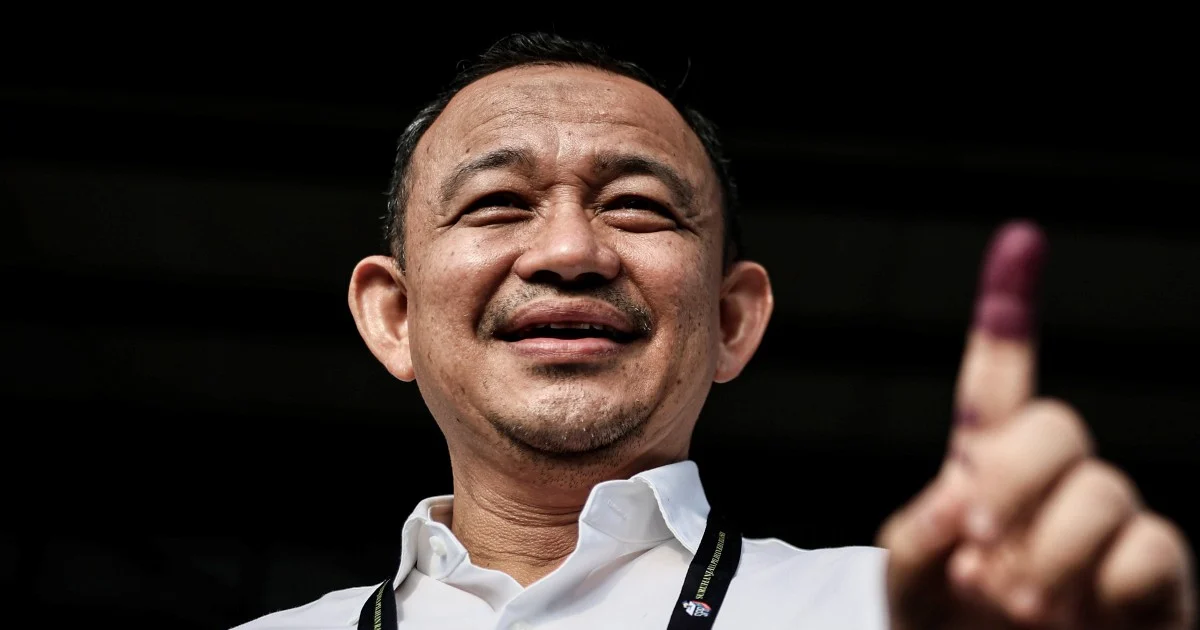
Former education minister Dr Maszlee Malik is on course to secure a breakthrough victory for Pakatan Harapan's component party PKR in the Johor state election, marking what would be a symbolic milestone for the opposition coalition in a state where it has previously struggled to gain legislative representation. Based on tallies emerging from polling stations across the state, Maszlee appears positioned to win the Puteri Wangsa seat, a constituency that has become a focal point in assessing the broader political dynamics affecting Johor's competitive electoral landscape.
The apparent strength of Maszlee's candidacy in Puteri Wangsa is particularly noteworthy given PKR's limited success in securing seats during previous Johor state elections. His profile as a former education minister under the Pakatan Harapan federal government from 2018 to 2020 lends him considerable name recognition and perceived credibility among voters seeking change in state governance. The constituency's demographic composition, which includes significant urban and suburban populations, has traditionally favoured candidates emphasizing education policy and social development—precisely the areas where Maszlee has built his political reputation.
Simultaneously, the election results reflect a more troubling trend for the coalition opposition: Barisan Nasional has successfully penetrated several constituencies that Pakatan Harapan had previously regarded as secure bases of support. This strategic breakthrough suggests that BN's organizational machinery and resource advantages have enabled it to mount competitive challenges even in areas where PH enjoyed prior electoral dominance. The ability to contest effectively in traditionally opposition-held seats represents a significant shift in Johor's political competitive balance.
The implications of BN's territorial expansion merit careful consideration for opposition strategists across Malaysia. State elections routinely serve as rehearsals for federal contests, and a demonstration of BN's capacity to compete in PH strongholds signals that the ruling coalition retains considerable grassroots mobilization capacity. For Johor specifically, a state governed by Pakatan Harapan since 2022 through the coalition's control of state assembly seats, BN's advances into previously safe territory could foreshadow challenges to the current administration's legislative majority in future electoral contests.
Maszlee's potential victory, while significant as PKR's first state win in Johor, must be contextualized within the broader electoral narrative. A single-seat triumph for an opposition component party, even one achieved by a recognizable political figure, does not fundamentally alter the structural dynamics of Johor politics. Rather, it represents a symbolic achievement—a beachhead that PKR can use to expand its organizational presence and build toward larger ambitions in future elections. The party has long sought to establish itself as a substantial force in Johor state politics, a region where Umno's historical dominance and more recent BN challenges have left limited space for PKR expansion.
The electoral dynamics in Puteri Wangsa also reflect broader trends in Malaysian urban politics. Constituencies with mixed demographics comprising young professionals, established middle-class families, and growing subcommunities have become increasingly contested terrain where neither BN nor PH can claim assured support. Maszlee's apparent strength in such an environment demonstrates that policy-oriented candidates with substantive governance credentials can resonate with voters prioritizing effectiveness over partisan affiliation.
From a Southeast Asian perspective, Johor's elections carry significance beyond state boundaries. As Malaysia's most populous state and the third-largest economy in the region, Johor's political direction influences regional investment confidence and serves as a bellwether for Malaysian federal political trends. Any substantial shift in the state's political complexion inevitably reverberates through ASEAN's largest economy, affecting everything from infrastructure policy to intra-regional trade relationships administered through Johor's ports and commercial hubs.
BN's penetration into PH strongholds should prompt the opposition coalition to undertake comprehensive analysis of voter sentiment shifts and organizational vulnerabilities. The fact that constituencies previously considered safe have become competitive suggests either declining voter loyalty to opposition coalitions or superior BN campaign execution—or conceivably both. For Malaysian voters monitoring political developments, such shifts indicate that electoral geography remains fluid even in an era of seemingly entrenched partisan divisions.
The Johor election's most consequential lesson may involve BN's demonstrated capacity to rebuild competitive capability in regions where it had appeared to be in durable decline. This organizational resilience, coupled with Maszlee's apparent achievement, suggests that Malaysian electoral politics remains genuinely competitive at the state level. The balance of forces in Johor—whether measured through legislative seat distribution, resource control, or organizational penetration—continues evolving in ways that neither coalition can take for granted.

