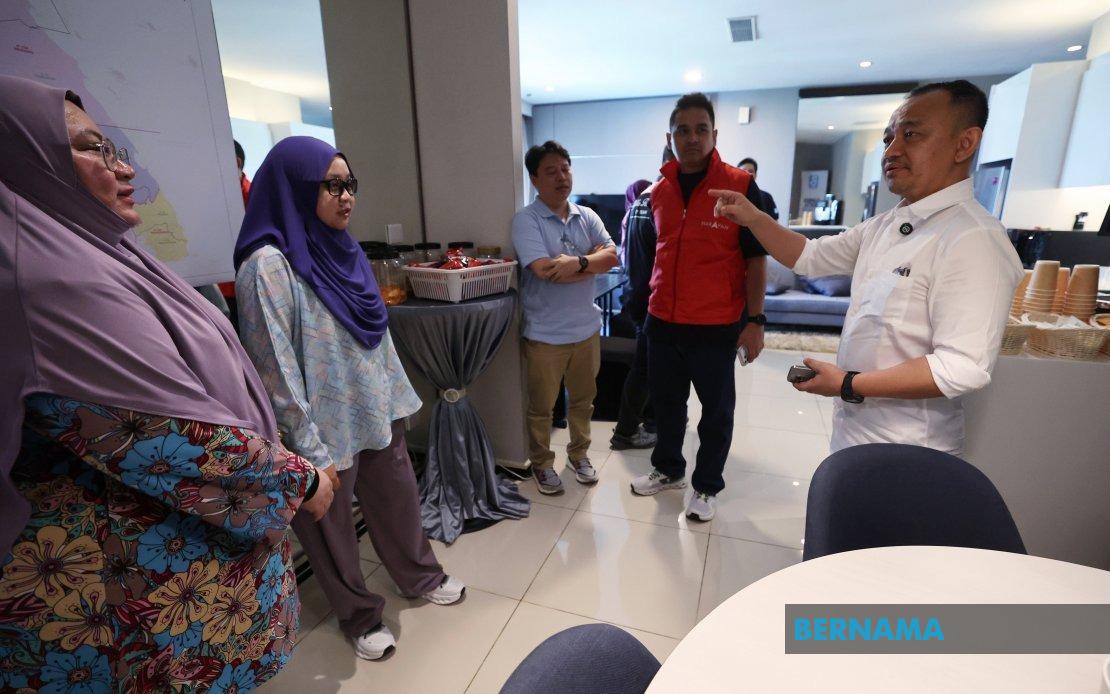
Dr Maszlee Malik, the Pakatan Harapan candidate contesting the Puteri Wangsa seat in Johor's upcoming state election, has outlined an ambitious digital strategy to enhance constituent services if he wins the July 11 contest. At the heart of his campaign platform is a bespoke mobile application designed to enable residents to report municipal problems and lodge complaints with greater ease and efficiency than traditional bureaucratic channels. This technology-first approach reflects Maszlee's recognition that Puteri Wangsa presents distinct governance challenges requiring innovative solutions.
The proposed app represents more than a simple digital convenience for voters. Maszlee articulated a deeper problem that the application would address: the disconnect between vulnerable populations and available government assistance programmes. Single mothers, persons with disabilities, and other marginalised groups often remain unaware of entitlements or face structural barriers when attempting to access support. By creating a centralised digital platform, Maszlee argues that his constituency office can proactively identify and reach these overlooked communities, circumventing the administrative friction that typically prevents outreach from succeeding. This reflects an understanding that digital tools in contemporary politics serve not merely as communication channels but as mechanisms for expanding access to state resources.
The Puteri Wangsa seat itself presents the practical context for this strategy. The constituency encompasses a geographically expansive and socially diverse population, ranging from affluent residential areas such as Austin Heights to the more rural Felda Ulu Tebrau communities. Managing constituent expectations and service delivery across such heterogeneous terrain demands approaches that traditional door-to-door campaigning cannot effectively sustain. Maszlee has been transparent about this reality, suggesting that a "practical and sophisticated" methodology combining digital tools with conventional engagement represents the only viable model for the seat's complexities.
Maszlee has cited international precedents to legitimise his technological orientation. He specifically referenced Zohran Mamdani, the New York City Mayor, as an exemplary figure whose community engagement model merits emulation. Mamdani's use of dedicated applications alongside social media platforms to solicit direct resident feedback demonstrates that technology-driven constituent services need not feel impersonal or distant from voters. Rather, when implemented thoughtfully, digital channels can democratise access to elected representatives by removing temporal and geographical constraints that limit participation in conventional town halls or walkabouts. This international framing situates the Puteri Wangsa campaign within broader global trends toward digitised governance.
Beyond the app itself, Maszlee has articulated a complementary engagement framework combining multiple touchpoints with constituents. His campaign envisions sustained collaboration with non-governmental organisations, residents' associations, and relevant government agencies, alongside periodic town hall meetings that maintain direct dialogue about pressing local issues. This multi-channel approach suggests that technology represents one component of a broader constituency management philosophy rather than a wholesale replacement for face-to-face interaction. The former education minister appears cognisant that electoral politics in Malaysia remains grounded in personal relationships and community trust, necessitating hybrid strategies that leverage digital efficiency without abandoning interpersonal dimensions.
Maszlee's campaign strategy has also evolved to address the reality that significant voter cohorts cannot be effectively reached through conventional campaign mechanics. Young voters, Malaysian professionals working across the border in Singapore, and residents in non-urban areas often lack availability for traditional walkabouts and public events. Social media and targeted digital communication represent, in his calculation, the only practical mechanism for engaging these geographically dispersed or time-constrained voters. This recognition aligns with broader patterns across Southeast Asian electoral politics, where migrant workers and diasporic populations constitute increasingly significant voting constituencies whose preferences cannot be ignored by competitive candidates.
However, the former minister has demonstrated strategic awareness of the limitations inherent in digital campaigning. Algorithmic filtering on social media platforms can inadvertently create echo chambers where campaign messages reach only pre-disposed audiences, potentially limiting persuasion among undecided or sceptical voters. To counter this dynamic, Maszlee's team has adopted a deliberately granular approach to messaging, developing tailored content for specific localities and demographic cohorts. The campaign consciously considers socio-economic backgrounds, ethnic composition, and generational characteristics when crafting digital communications, recognising that Gen Z voters, Chinese diaspora professionals in Singapore, and suburban working families harbour distinct concerns and policy priorities.
This differentiated messaging strategy reflects sophisticated political analysis. Rather than attempting to broadcast uniform campaign narratives across all demographic groups, Maszlee's approach acknowledges that heterogeneous electorates require customised persuasion strategies addressing their particular circumstances and anxieties. For affluent urban professionals, messaging might emphasise efficient governance and transparency in constituency development funds. For residents of rural Felda communities, communications could foreground agricultural policy and rural infrastructure investment. For young workers abroad, emphasis might fall on how constituent services support migrant families left behind. This granularity demands significant campaign resources and strategic sophistication but potentially yields superior electoral returns by demonstrating that the candidate genuinely understands and respects each community's distinct interests.
The Puteri Wangsa contest has become notably crowded, with five candidates now competing for the seat. Beyond Maszlee, the ballot includes Rashifa Aljunied representing Malaysian United Democratic Alliance (MUDA), Teow Chia Ling standing for Barisan Nasional, Nicholas Paul Vincent from Parti Bersama Malaysia, and independent candidate Wang Wee Siong. This fragmentation suggests that the election outcome may hinge on which candidate most effectively mobilises their core supporters and persuades swing voters in the seat's diverse middle precincts. Maszlee's emphasis on digital accessibility and targeted engagement positioning him as a candidate capable of reaching constituencies other contenders might overlook.
The campaign timeline provides limited window for implementation of these digital and engagement initiatives. Early voting occurs on July 7, with general polling scheduled for July 11. This compressed schedule means Maszlee's campaign has likely already begun deploying social media targeting and community outreach programmes designed to influence voter behaviour before ballots are cast. The effectiveness of his technology-forward campaign strategy will become apparent only after voting concludes, but his willingness to articulate a digitally-informed governance philosophy reflects broader trends among emerging political figures across Malaysia toward embracing technological solutions to longstanding governance challenges.

