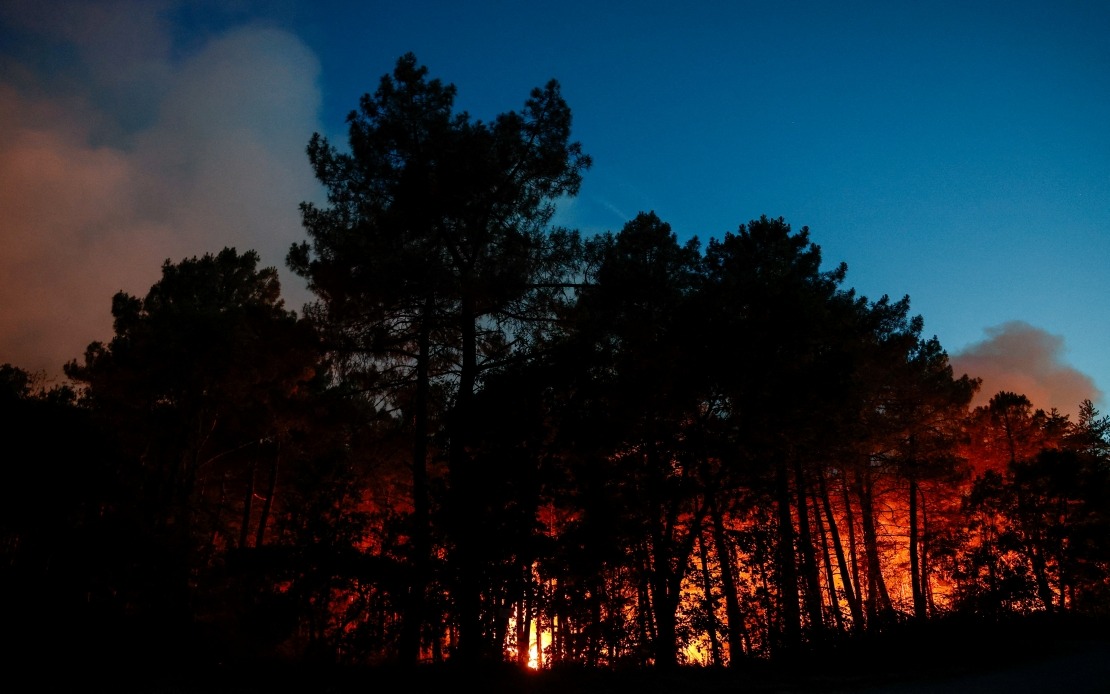
A massive wildfire ravaging the renowned Fontainebleau forest south of Paris has mobilized approximately 400 firefighters and drawn water-bombing aircraft into the battle against the spreading flames. The blaze, which ignited late Sunday near a motorway, had charred 800 hectares of pristine woodland by Monday as emergency responders worked frantically to contain the conflagration across one of Western Europe's most significant continuous forested regions.
The scale of the emergency prompted French authorities to deploy exceptional resources, with water-bombing aircraft drawing reserves from the Seine river to supplement ground-based firefighting operations. Government spokeswoman Maud Bregeon characterized the situation as "exceptional," emphasizing that the magnitude of the crisis necessitated mobilizing every available asset to prevent further catastrophic losses. The statement underscores how unusual such large-scale forest fires remain in northern France, where climatic conditions traditionally provide some protection against the devastating wildfires that plague Mediterranean regions.
French Interior Minister Laurent Nuñez visited the fire zone and delivered a troubling assessment: the blaze appeared to have been intentionally set. His suspicion rests on a compelling pattern of multiple fire outbreaks clustered within a mere 1,000-metre radius, a configuration that strongly suggests coordinated arson rather than natural ignition or accident. This revelation prompted the gendarmerie to initiate a formal investigation into the fire's origins, adding a criminal dimension to an already dire environmental catastrophe.
The human cost of the disaster extended beyond the destroyed forest itself. Authorities evacuated more than 1,000 residents and tourists from surrounding communities as the inferno advanced with terrifying speed. The mayor of Le Vaudoué provided harrowing testimony, describing "a wall of flames" moving relentlessly toward inhabited areas and reaching the perimeter homes of his village. This dramatic imagery captures the visceral terror experienced by those fleeing the advancing fire line and underscores the immediate threat posed to human life and property in proximity to the forest.
Fontainebleau holds profound historical and ecological significance far beyond its immediate region. The forest serves as home to the magnificent Château de Fontainebleau, a royal residence of immense cultural importance to French heritage. Beyond its historical treasures, the woodland represents one of the continent's largest unbroken forested expanses, making its destruction a matter of concern for European biodiversity and ecosystem health. The loss of 800 hectares represents an incalculable damage to both tangible and intangible cultural assets.
The fire emerges within a broader context of climatic stress affecting France. The nation was experiencing its third significant heatwave during the year, with meteorological conditions creating dangerously dry circumstances and elevated temperatures ideal for wildfire propagation. The national weather service Météo-France had placed 37 departments under the highest red heat alert category at the beginning of the week, indicating widespread conditions favourable to fire spread across vast swathes of the country. This regional climate pattern helps explain why firefighting resources faced such severe challenges in containing the Fontainebleau blaze.
The timing and placement of the fire highlights concerning vulnerabilities in France's preparedness for large-scale wildfire emergencies. While such catastrophic forest fires have historically been less frequent in northern France compared to southern Mediterranean regions, climate change appears to be shifting these patterns dangerously. The emergence of multiple fire outbreaks in rapid succession across the same general area raises profound questions about whether arsonists are exploiting heightened fire conditions to maximize destructive impact, or whether this represents an isolated criminal incident capitalizing on temporary climatic circumstances.
From a Southeast Asian perspective, the Fontainebleau fire offers instructive parallels to the transboundary haze crises that periodically affect Malaysia and neighbouring nations. While the immediate causes differ—deliberate arson in France versus agricultural burning and natural conditions in Southeast Asia—both phenomena underscore how wildfires transcend individual municipalities and demand coordinated regional responses. The French mobilization of aerial assets and cross-departmental resources mirrors the sophisticated firefighting coordination required during Southeast Asia's most severe haze episodes, where international cooperation proves essential for effective response.
The investigation into arson claims adds complexity to disaster response and raises questions about public safety and forest management. If deliberate fire-setting is confirmed, it would represent a serious criminal act during circumstances of maximum vulnerability, a scenario that demands swift law enforcement action alongside continued firefighting efforts. The gendarmerie's investigation will likely focus on identifying perpetrators, understanding their motives, and implementing preventive measures to deter similar attacks during future periods of elevated fire risk.
Looking forward, the Fontainebleau incident will almost certainly prompt French policymakers to reassess wildfire preparedness strategies and forest management protocols. The combination of climate-driven vulnerability and potential human malice creates a particularly troubling scenario that governments struggle to anticipate and prevent. Enhanced monitoring, increased staffing during high-risk periods, and improved emergency communication systems may emerge as policy responses to prevent recurrence of such devastating events.

