President Ferdinand Marcos Jr has reaffirmed his trust in the Armed Forces of the Philippines, even as the National Bureau of Investigation (NBI) has identified active uniformed personnel as persons of interest in connection with an alleged assassination plot against the sitting president. The revelation emerged during the impeachment trial of Vice President Sara Duterte on Wednesday, July 22, when NBI Director Melvin Matibag disclosed the investigation's early findings to the court.
Matibag's disclosure adds a troubling dimension to the ongoing political turmoil gripping the Philippines. The fact that individuals within the military establishment itself may be implicated in such a scheme underscores the deep institutional tensions that have surfaced in recent months. Beyond active-duty military officers, the NBI has also identified a member of the Vice President's security detail as a person of interest, suggesting that the alleged plot may have connections extending into Duterte's immediate protective circle.
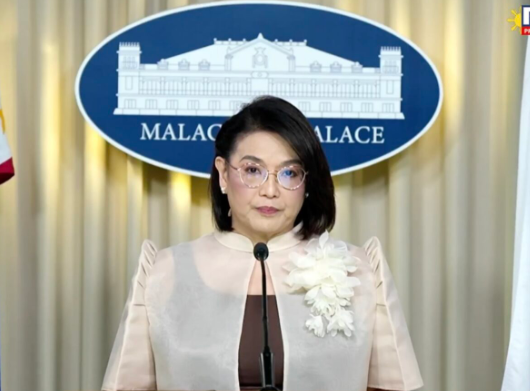
Despite these serious allegations, Marcos has chosen to publicly maintain his confidence in the armed forces as an institution. Through Palace Press Officer Claire Castro, the president signaled that while he trusts the military broadly, he recognises that individual officers may deviate from their proper duties. Castro's statement during a press briefing struck a careful balance: affirming institutional faith while leaving room for investigation and accountability where necessary. This approach reflects the delicate political situation facing any sitting president who must navigate security concerns without appearing to launch wholesale purges of the security establishment.
Castro emphasised that the President's concern extends beyond his personal safety to encompassing potential violations of law by those seeking to protect or advance narrow individual interests. This framing attempts to position the security investigation as a matter of institutional integrity rather than political retribution. The Palace spokesperson suggested that identifying and removing individuals who might weaponise state security apparatus for personal gain serves the broader cause of protecting presidential authority and the rule of law itself.
Notably, Castro indicated that no loyalty checks or systematic vetting processes are currently underway across the armed forces. This statement may be intended to reassure military leadership that the administration is not embarking on a purge based on political allegiance, though it also suggests that investigation procedures remain compartmentalised within security agencies. The spokesperson acknowledged that determining whom the President can trust represents a living security decision rather than an institutional overhaul, and that such matters properly fall under the purview of the security sector and military leadership rather than the civilian executive's direct manipulation.
The alleged assassination plot has become entangled with the broader political conflict between Marcos and Vice President Duterte, whose relationship has deteriorated dramatically over the past year. Duterte herself made extraordinary public statements during her impeachment trial, claiming she had instructed someone that if she were killed, they should also target Marcos, Liza Araneta, and Martin Romualdez. These dramatic declarations, made in Filipino, underscore the level of mutual distrust and perceived existential threat that now characterises the relationship between the country's top two elected officials.
For Malaysian observers, the situation in the Philippines illustrates the risks that emerge when institutional oversight mechanisms and security sector governance lack sufficient independence and transparency. The involvement of active military and security personnel in alleged plots against state officials points to fundamental questions about professionalism, chain of command, and the civilian control of armed forces—issues relevant across Southeast Asia. When security services become politicised or factionalized, they can transform from instruments of state protection into weapons of internal conflict.
The NBI subsequently issued a subpoena to Vice President Duterte requiring her appearance for questioning, but she declined to comply. Her non-compliance further complicates the investigation and deepens the institutional crisis, as it suggests the Vice President views the investigation as politically motivated rather than as a legitimate security matter. This dynamic creates a troubling precedent wherein allegations of assassination plots remain contested and uninvestigated at the highest levels of government.
The situation also raises questions about institutional capacity and political will to conduct impartial investigations into serious national security threats. When key witnesses refuse to cooperate and allegations remain shrouded in competing political narratives, the public cannot easily assess the credibility or severity of the claimed threat. This uncertainty itself generates instability, as it leaves the security establishment uncertain about its mandate and the civilian leadership uncertain about where institutional loyalties truly lie.
Castro's careful statements reveal the administration's awareness that it must walk a narrow line between taking assassination allegations seriously and avoiding actions that could appear as a military crackdown or political witch-hunt. The emphasis on trusting the armed forces while investigating individuals echoes similar balancing acts performed by governments worldwide when facing internal security threats. However, the Philippines' particular political context—with competing centres of power, regional security concerns, and a history of military intervention in politics—makes such balance exceptionally difficult to maintain.
Looking forward, the credibility of Philippine institutions may well depend on how transparently and thoroughly these allegations are investigated, and whether key figures including the Vice President ultimately cooperate with investigators. The armed forces themselves face questions about their institutional integrity and whether their leadership can effectively discipline or investigate their own members when political implications arise. For regional stability, the resolution of this crisis matters considerably, as uncertainty regarding Philippine political stability affects broader Southeast Asian security dynamics.

