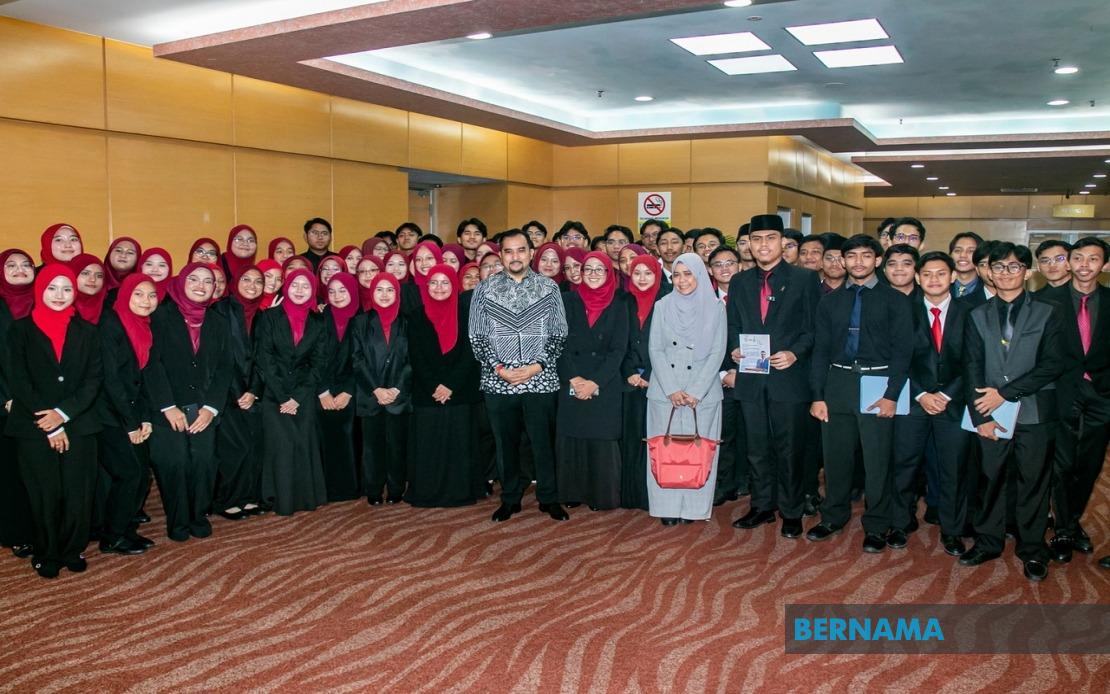
Malaysia's Majlis Amanah Rakyat (MARA) has formally reinstated its medical scholarship pathway to Al-Azhar University in Egypt, welcoming an inaugural cohort of 78 students to the five-year programme following a seven-year suspension. The resumption marks a strategic pivot in the agency's overseas education strategy and reflects policymaker confidence in leveraging international partnerships to expand access to professional training for qualified Malaysian scholars.
The decision to resurrect the medical track at Al-Azhar gained formal approval through the Malaysian Cabinet, signalling high-level political endorsement for the initiative. MARA chairman Datuk Dr Asyraf Wajdi Dusuki outlined the financial architecture underpinning the programme, indicating that the per-student investment—encompassing tuition, accommodation, and living costs across the full five-year medical degree—has been established at RM350,000. This figure represents a considerable reduction from the initial negotiations, attributable to a 50 per cent concession extended by Al-Azhar University itself, a development that substantially improves the value proposition for the Malaysian government and participating families.
The cost differential between pursuing medicine through MARA's Al-Azhar pathway and obtaining medical training within Malaysia's domestic ecosystem illustrates the fiscal logic motivating the programme's reinstatement. Local medical degrees command fees ranging between RM700,000 and RM800,000 per student when all direct costs are factored in, meaning the Egyptian option delivers comparable education at less than half the expense. For a developing nation managing finite public education budgets while attempting to expand the medical workforce pipeline, this arithmetic proves compelling, particularly as Malaysia faces persistent shortages of locally trained physicians in rural and underserved regions.
Datuk Seri Anwar Ibrahim, the Prime Minister, granted the foundational endorsement permitting this first cohort to proceed, a gesture that underscores the administration's commitment to expanding educational opportunities through strategic international partnerships. MARA leadership framed the Cabinet approval as instrumental to programme viability, emphasizing the collaborative spirit between the agency and the national executive in advancing tertiary education access. The symbolic weight of securing prime ministerial backing reflects broader governmental priorities around human capital development and professional skills cultivation.
Beyond the Al-Azhar medical initiative, MARA disclosed a more expansive mobility programme encompassing 600 sponsored students departing for overseas universities across multiple continents. These scholars, who have completed preparatory coursework at MARA's residential colleges in Seremban, Banting, and Kuala Nerang, will disperse in staggered waves commencing the following week toward destinations spanning the Anglosphere, continental Europe, and East Asia. The geographic diversity of receiving institutions—encompassing New Zealand, Canada, Australia, South Korea, the United Kingdom, and Egypt—reflects MARA's multi-regional sourcing strategy and suggests the agency maintains sophisticated institutional networks across the globe's premier tertiary ecosystems.
The broader scholarship cohort's composition reveals impressive placement success among elite research universities. MARA reported that eleven of its 600 current beneficiaries have secured admission to Imperial College London for the current academic year, a particularly competitive achievement given the institution's rigorous selection standards. More broadly, 40 sponsored students gained places at universities consistently ranked within the world's top ten by major global assessment frameworks, whilst 107 received acceptances from institutions occupying the top twenty echelon. These metrics suggest MARA's selection processes and preparatory training effectively equip scholars for admission competition at the highest institutional tiers.
For Malaysian higher education policy, the reinstatement of the Al-Azhar medical track carries implications beyond immediate enrollment numbers. It signals official confidence in partnerships with non-Western medical schools and tacitly endorses the academic standing of Egyptian institutions despite historical tensions or perceptual hierarchies that might privilege Anglophone destinations. This positioning matters for Southeast Asian regional dynamics, as it demonstrates willingness by a major ASEAN economy to diversify educational sourcing geographically and ideologically, potentially creating space for comparable initiatives with other non-traditional partner nations in the region or beyond.
The programme discontinuation in 2019 and subsequent seven-year hiatus warrant examination, though the source material provides no explicit rationale for the original cessation. Possible contributing factors might include budgetary constraints during the COVID-19 pandemic, shifts in educational policy priorities, or administrative restructuring within MARA. The decision to reactivate the track now, after the pandemic emergency phase has subsided and Malaysian economic conditions have stabilized, suggests confidence in sustainable programme delivery and institutional capacity to manage large-scale overseas scholarship administration.
From a student and family perspective, the restoration of the Al-Azhar pathway expands choice for aspiring physicians from middle-income backgrounds who might otherwise face prohibitive costs pursuing medicine locally or in premium Western jurisdictions. Al-Azhar's historical prominence as an Islamic institution and its geographic location in Cairo provides cultural and religious continuity for many Malaysian students, potentially easing the transition abroad while maintaining connection to educational traditions familiar within Malaysian Islamic circles. The institution's longstanding reputation in medical education, while distinct from the research-intensive profile of Western universities, provides rigorous professional training and qualifications recognized across the Arab world and increasingly through international credential frameworks.
Looking forward, the success of this 2024 medical cohort will likely shape MARA's appetite for expanding or replicating the partnership. If outcomes prove positive—measurable through licensing examination success rates, career placement trajectories, and student satisfaction—the agency might consider increasing annual intake numbers or extending similar partnerships with other prestigious institutions in Egypt or comparable nations offering quality education at favorable cost structures. Conversely, implementation challenges would inform strategic recalibration. For Malaysian policymakers tracking demographic trends in medical workforce development, the programme represents a pragmatic mechanism for scaling professional training without straining domestic institutional capacity or requiring massive capital investment in new domestic facilities.

