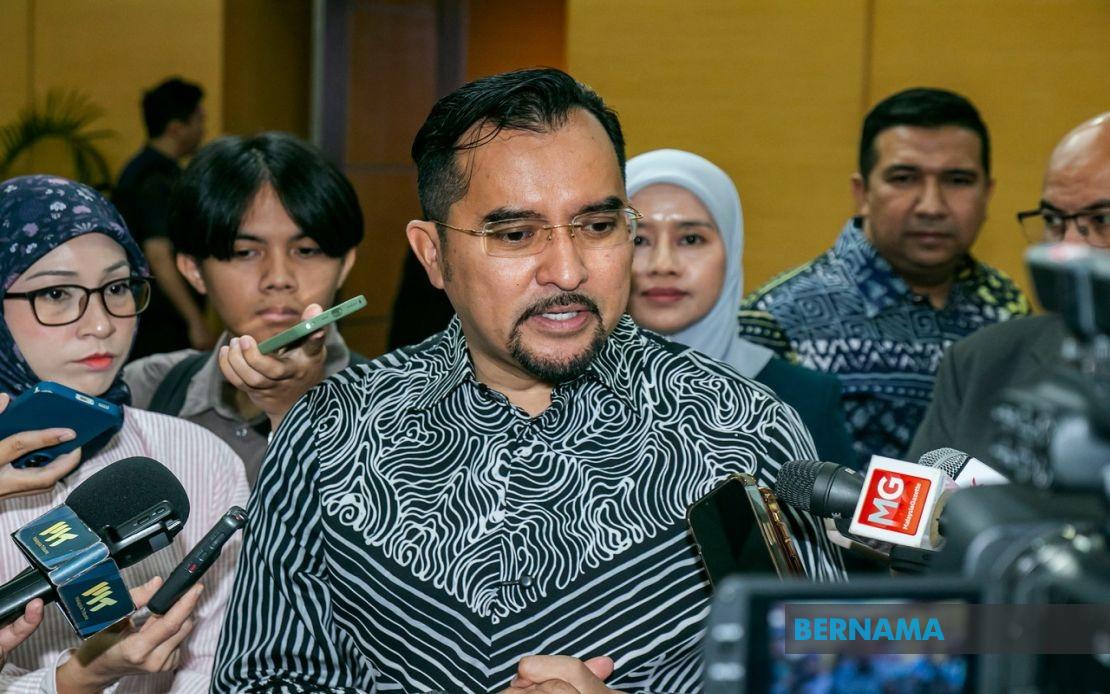
The Malaysian government is poised to introduce comprehensive legislative reform of Majlis Amanah Rakyat (MARA) when Parliament reconvenes in November, marking a significant shift in how the Bumiputera development agency operates. The proposed MARA Bill 2026 represents the culmination of lengthy deliberation within the institution and has already secured Cabinet policy approval, positioning it for imminent legislative consideration. According to MARA chairman Datuk Asyraf Wajdi Dusuki, the legislation is in its final developmental stages, with institutional input now consolidated into draft form ready for formal parliamentary presentation.
The modernisation initiative addresses a critical governance gap that has persisted for nearly six decades. The existing MARA Act 1966 was designed for a fundamentally different operating environment, with regulatory expectations and corporate accountability standards that bear little resemblance to contemporary best practices. Datuk Asyraf Wajdi articulated this temporal disconnect candidly, noting that governance frameworks appropriate in the 1960s became obsolete as decades progressed, and that today's standards will similarly require updating within a generation. This philosophical acknowledgement underscores the legislation's ambitious scope: the bill does not represent merely technical amendments but rather a wholesale recalibration of institutional architecture.
Central to the reform agenda is a deliberate weakening of the chairman's executive authority, a controversial but strategically important realignment. Under the current framework derived from 1966 legislation, the chairman wielded expansive administrative control that facilitated rapid decision-making but simultaneously created concentrations of power vulnerable to abuse. The new bill restricts the chairman's role to board leadership and policy direction, explicitly removing administrative prerogatives that previously enabled unilateral institutional management. Datuk Asyraf Wajdi emphasised that this restructuring was not a personal initiative but rather an institutional imperative, framing his individual tenure as temporary while positioning governance strengthening as a permanent institutional legacy.
Governance improvements constitute approximately 80 percent of the bill's substantive content, reflecting the government's prioritisation of institutional integrity and compliance frameworks. These provisions are calibrated against international corporate governance standards and sound business practices widely recognised across developed and emerging economies. The emphasis on international benchmarking is particularly significant for MARA, which manages substantial resources directed toward Bumiputera economic development and therefore must operate with transparency and efficiency befitting its public trust. By anchoring reforms to internationally recognised standards, the legislation also positions MARA for potential collaborative engagements with foreign development institutions and capacity-building initiatives.
The catalyst for this comprehensive reform apparatus is the accumulated weight of institutional vulnerabilities that have periodically surfaced in public scrutiny. Prior to announcing the bill's parliamentary timeline, Datuk Asyraf Wajdi explicitly identified the governance problems the legislation aims to eliminate: abuse of power, inconsistent governance practices, misappropriation of funds, administrative irregularities, resource leakage, and wastage. These challenges are not theoretical abstractions but rather documented historical problems that have damaged MARA's credibility and undermined its effectiveness in advancing Bumiputera interests. The bill therefore functions as a comprehensive institutional remediation strategy, establishing structural safeguards against the precise vulnerabilities that have plagued the agency.
For Malaysian readers, the MARA reform initiative carries broader significance beyond administrative reorganisation. MARA represents one of the primary institutional mechanisms through which Malaysia pursues its constitutional commitment to Bumiputera economic empowerment, directing resources toward business development, education, and skills training for Malay and Bumiputera communities. Any substantial governance failure at MARA therefore represents not merely institutional dysfunction but a practical impediment to constitutionally mandated development objectives. By strengthening MARA's governance framework, the legislation simultaneously reinforces the credibility and effectiveness of Bumiputera advancement initiatives, addressing both accountability concerns and practical developmental capacity.
The timing of this legislative initiative reflects broader governmental recognition of governance reform as an institutional priority. The November tabling in Parliament occurs within a political context where transparency, institutional accountability, and anti-corruption frameworks command heightened public attention and legislative focus. Situating MARA reform within this broader governance agenda enhances legislative prospects, positioning the bill as part of comprehensive institutional modernisation rather than a discrete agency-level adjustment. This contextualisation also signals to international observers and development partners that Malaysian institutions are actively addressing governance vulnerabilities through legislative means.
The bill's emphasis on limiting chairman authority simultaneously promotes distributed decision-making authority, presumably among board members and organisational committees with defined mandates and accountability structures. This diffusion of power creates multiple institutional checks on unilateral decision-making, substantially increasing transparency and reducing opportunities for concentrated authority abuse. Such structural arrangements are consistent with modern corporate governance principles emphasising separation of authority, defined oversight mechanisms, and institutional checks and balances that prevent power concentration regardless of individual leadership integrity.
For Southeast Asian context, Malaysia's governance reform of a major developmental institution provides instructive precedent for neighbouring economies managing comparable institutional challenges. Many Southeast Asian nations maintain statutory authorities and development agencies operating under legislative frameworks derived from colonial-era or early post-independence periods, creating governance vulnerabilities analogous to those MARA experienced. Malaysia's proactive legislative response to these challenges, articulated through comprehensive institutional restructuring rather than ad hoc remediation, offers a potential model for regional peers confronting similar governance modernisation requirements.
The November parliamentary tabling represents merely the commencement of the formal legislative process, with subsequent parliamentary debate, committee examination, and potentially amendments before final enactment. The legislation's successful passage, however, appears probable given existing Cabinet policy approval and the broadly consensual nature of governance strengthening objectives. Once enacted, MARA Bill 2026 will establish a new institutional framework shaping the agency's operations for decades, with implications extending across Bumiputera development programming, institutional resource management, and the broader regulatory environment governing Malaysian statutory authorities.

