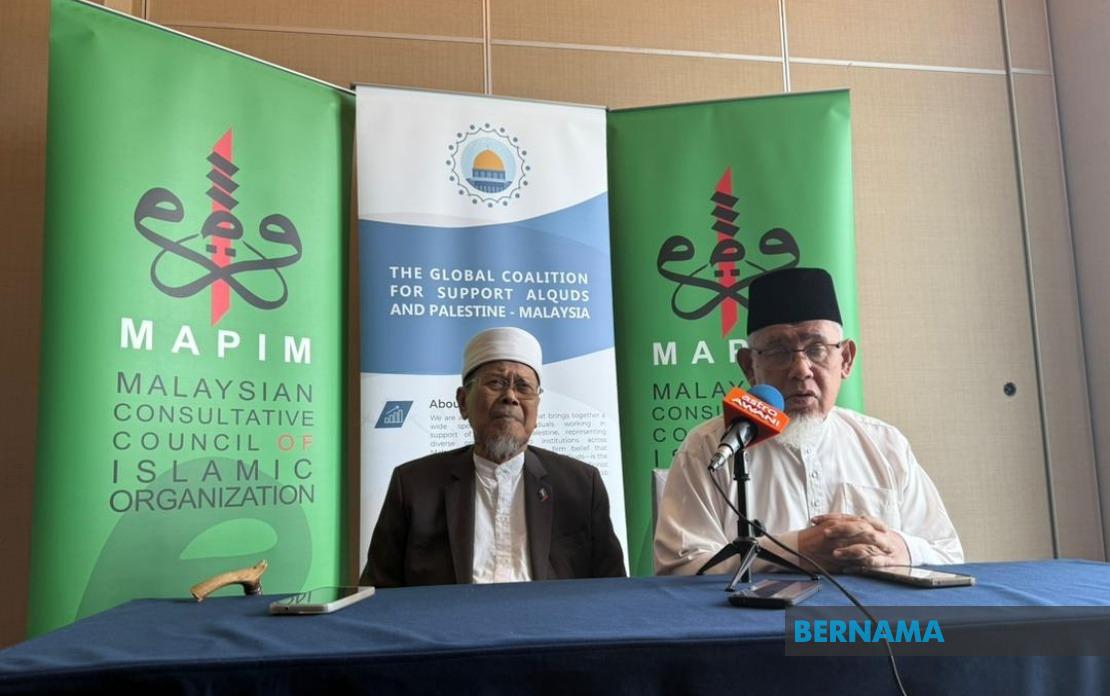
The Malaysian Consultative Council of Islamic Organisations (MAPIM) is preparing to convene a significant gathering of Islamic institutional leaders across Southeast Asia and beyond. Held in partnership with the Perak Islamic Religious Department, the Regional Mosque Conference 2026 will take place over two days at a major hotel in Ipoh, beginning August 29. The assembly represents an ambitious attempt to unite mosque leadership across the Muslim world's diverse regions and strengthen collaborative frameworks at a moment when religious institutions face evolving challenges in community engagement.
The conference will draw approximately 400 representatives from mosques spanning Malaysia and eight neighbouring nations: Indonesia, Singapore, Brunei, Timor-Leste, Myanmar, Cambodia, Thailand and Vietnam. This geographical scope underscores MAPIM's vision of establishing cross-border institutional networks within Southeast Asia, a region where Islam has deep historical roots and where mosque communities continue to shape social cohesion. Additionally, the gathering will host special delegations from Turkiye, Iran and Pakistan, extending the dialogue beyond the regional framework and introducing perspectives from major Islamic centres with distinct theological and institutional traditions.
According to MAPIM president Mohd Azmi Abdul Hamid, the timing of the conference carries symbolic significance. The gathering is organised to coincide with World Mosque Day, annually observed on August 21 to commemorate the 1969 arson attack on Al-Aqsa Mosque in Jerusalem. This connection to a specific historical trauma—and an ongoing geopolitical dispute—indicates that MAPIM views the conference as more than a routine professional gathering. Rather, the organisation positions the event as an occasion for substantive reflection on the mosque's contemporary role and relevance.
Mohd Azmi articulated a critical distinction in MAPIM's approach to such commemorations. He stressed that merely observing World Mosque Day as an annual ritual would fall short of the conference's deeper purpose. Instead, the gathering aims to catalyse renewed thinking about mosques as community anchors and sources of institutional strength for Muslims across the region. This framing acknowledges a broader concern within Islamic communities: the perception that traditional religious institutions require revitalisation to remain relevant amid rapid urbanisation, digital communication, and shifting social structures.
The conference has established seven principal objectives that reveal its multifaceted agenda. These include constructing a lasting network for regional mosque cooperation, actively incorporating youth leadership in mosque governance and decision-making, and facilitating economic involvement by mosque communities in broader development initiatives. The agenda also prioritises strengthened partnerships between mosques and Islamic non-governmental organisations, recognising that religious institutions increasingly operate within a broader ecosystem of civil society actors. This institutional networking approach reflects contemporary trends in how religious bodies seek to amplify their influence through coalition-building.
Beyond networking, MAPIM envisions the conference producing tangible outputs with post-event implementation potential. The gathering will generate a formal declaration and a comprehensive action plan that participating mosque organisations can adopt and adapt to their local contexts. This emphasis on documentation and strategic planning signals MAPIM's intention to move beyond symbolic gestures toward institutional change with measurable outcomes.
The conference programme itself demonstrates intellectual and diplomatic ambition. Structured around academic presentations and international dialogues, the schedule will feature dedicated discussions on Palestine and the Al-Aqsa Mosque. For Malaysian and Southeast Asian Muslim communities, Palestine represents both a geopolitical concern and a touchstone of Islamic solidarity. By creating dedicated conference space for these discussions, MAPIM provides a platform for structured engagement with issues that often generate strong emotional responses but may receive limited substantive institutional analysis.
Three major initiatives will be formally launched during the conference, each addressing different aspects of MAPIM's vision. A regional mosque coalition focused on Palestine will institutionalise advocacy around this cause within mosque networks across Southeast Asia. A comprehensive book documenting the mosque's evolving role will contribute to the intellectual foundation for institutional renewal. Most innovatively, MAPIM will introduce the MAPIM Gold Dinar, a financial instrument designed to facilitate public contributions toward the Al-Aqsa Mosque Fund. This cryptocurrency or precious metals-backed mechanism represents an attempt to modernise fundraising methods while maintaining religious significance.
Mohd Azmi positioned these initiatives within a broader framework of global humanitarian concern. He emphasised that MAPIM's primary purpose extends beyond institutional strengthening to include advocacy on humanitarian issues, particularly those affecting Muslim populations. Palestine and Al-Aqsa Mosque occupy central positions within this advocacy agenda, reflecting longstanding Muslim institutional concerns and providing a unifying cause across the diverse participating countries.
For the Malaysian context specifically, the conference reflects ongoing efforts by Islamic institutions to demonstrate relevance and organisational sophistication. As Malaysia navigates questions about the role of Islam in a plural society and the governance of Islamic institutions, MAPIM's initiative signals that mosque-centred leadership remains engaged with regional and global concerns. The involvement of the Perak Islamic Religious Department also illustrates coordination between state Islamic bureaucracies and independent Islamic organisations, a pattern increasingly common in Malaysian Islamic governance.
The regional dimension of the gathering carries particular significance for Southeast Asia. The participating countries represent diverse Islamic demographic positions: Indonesia as the world's largest Muslim-majority nation, Singapore and Brunei as Muslim minorities, and others as nations where Islam holds varying institutional and political positions. By bringing these varied contexts into dialogue, the conference potentially creates space for exchanging governance models and institutional practices adapted to different social environments.
Looking forward, the success of the Regional Mosque Conference 2026 will depend partly on whether the declaration and action plan generated during the gathering translate into sustained institutional change. The enthusiasm surrounding the launching of new initiatives suggests MAPIM's determination to move beyond episodic events toward creating enduring collaborative structures. For observers of Islamic institutional development in Southeast Asia, this conference represents a significant attempt to strengthen mosque networks at a regional scale, addressing both internal institutional concerns and external geopolitical issues that Muslim communities consider vital to their identity and witness.

