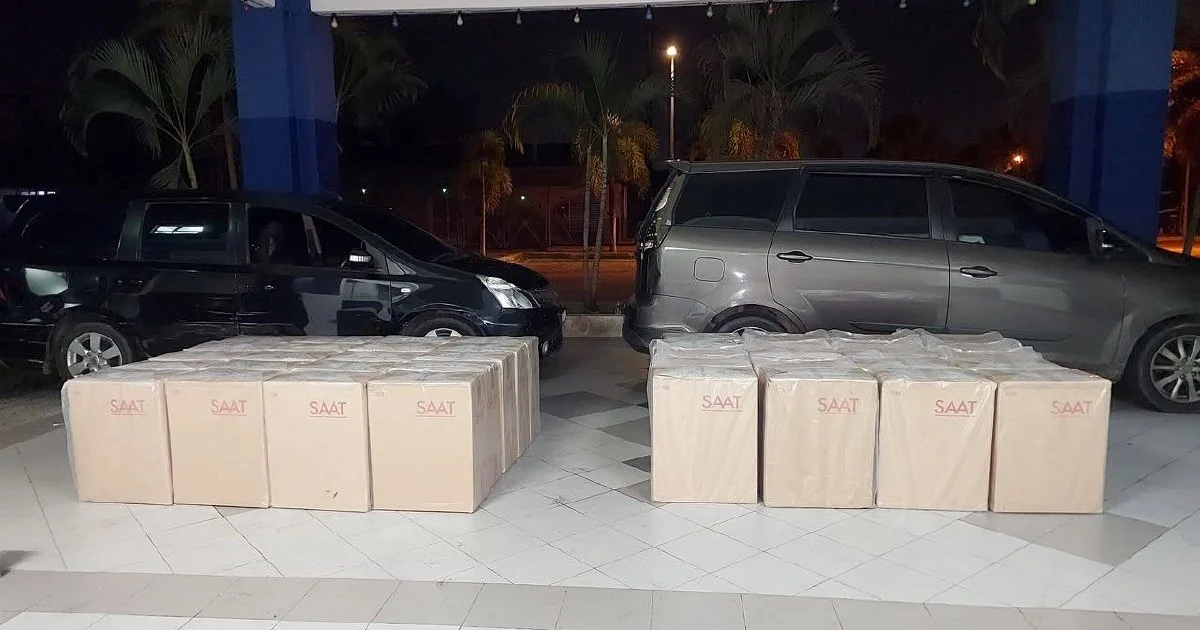
A sustained crackdown on the illicit tobacco trade in Kelantan has yielded significant results, with enforcement agencies apprehending a 29-year-old suspect and seizing a substantial cache of contraband cigarettes following a dramatic nighttime pursuit in the Kota Baru area. The operation, which unfolded at Kampung Pulau Panjang, netted approximately 400,000 sticks of suspected smuggled cigarettes with an estimated street value of RM813,000—underscoring the scale and profitability of underground cigarette distribution networks operating across the peninsula.
The arrest reflects intensifying law enforcement efforts targeting smuggling operations that have long plagued Malaysia's tobacco market. Government Agencies Function teams, commonly referred to as GOF units, orchestrated the chase that culminated in the suspect's detention. Such enforcement interventions have become increasingly critical as authorities grapple with the economic impact of lost excise revenues and the broader challenges posed by unregulated trade.
The seizure of 400,000 cigarette sticks in a single operation demonstrates the organizational sophistication of smuggling rings, which often employ elaborate supply chains spanning multiple jurisdictions. These networks typically source contraband from high-excise jurisdictions and distribute them through secondary markets where they undercut legitimate retailers and government-regulated pricing structures. The scale of the Kota Baru haul suggests the suspect's operation was not merely a small-scale enterprise but rather a node within a more expansive distribution framework.
Kelantan's geographical position on Malaysia's northeastern coast has long made it a critical transit zone for smuggling activities. Proximity to international maritime routes and land borders facilitates the movement of illicit goods, creating particular challenges for revenue authorities attempting to police the extensive coastline and porous terrestrial boundaries. The nighttime timing of the chase in Kampung Pulau Panjang indicates enforcement agencies are now actively patrolling traditional smuggling corridors during hours when such operations typically intensify.
The RM813,000 valuation attached to the seized cache reflects the differential between legal retail prices and black-market rates. This substantial price gap creates powerful economic incentives for trafficking operations and explains why such networks persist despite repeated enforcement actions. For consumers seeking cheaper cigarettes, the underground market offers price reductions that can exceed fifty percent compared to legitimate commercial channels, fueling persistent demand that sustains the smuggling ecosystem.
The financial implications for the Malaysian government extend beyond this singular seizure. Annual tobacco tax evasion through smuggling operations costs the treasury hundreds of millions of ringgit in foregone excise revenues. These diverted funds represent resources that could otherwise support public health initiatives, infrastructure development, and social programmes. The tobacco industry's susceptibility to smuggling therefore creates indirect fiscal consequences that ripple across broader budgetary allocations.
Malaysia's commitment to combating cigarette smuggling aligns with regional and international efforts to strengthen excise collection and curb illegal trade in regulated commodities. Neighbouring countries face comparable challenges, with Southeast Asian governments increasingly recognizing that coordinated transnational approaches yield better enforcement outcomes than unilateral measures. Intelligence sharing between Malaysia, Thailand, and other regional partners has gradually improved interdiction capacity, though determined smuggling networks continue adapting their operational methods.
The 29-year-old suspect now faces prosecution under relevant customs and excise legislation, which carries substantial penalties including fines and custodial sentences. Such prosecutions serve dual purposes: removing active smuggling operators from circulation while simultaneously generating deterrent effects throughout trafficking networks. However, enforcement specialists acknowledge that supply-side interventions alone prove insufficient without complementary demand-reduction strategies targeting retail retailers complicit in distributing contraband stocks.
Beyond criminal proceedings, the seizure underscores the necessity for enhanced monitoring of supply chains supplying informal retail outlets—convenience shops, petrol stations, and night markets where illicit cigarettes frequently surface. Revenue authorities are progressively implementing track-and-trace technologies enabling officials to verify legitimacy of tobacco stocks throughout distribution channels. These systemic approaches, combined with traditional enforcement operations, represent Malaysia's multifaceted strategy for reversing the erosion of excise revenues.
The Kota Baru operation reflects broader enforcement priorities established by Malaysia's revenue and customs authority, which has substantially augmented resources allocated to tobacco smuggling investigations. Personnel increases, improved intelligence capabilities, and expanded inter-agency coordination have collectively strengthened interdiction effectiveness. Nevertheless, the continuing viability of operations like the one disrupted in Kampung Pulau Panjang suggests smuggling networks possess sufficient scale and resilience to replace seized stocks and continue operations despite periodic enforcement successes.
Looking forward, sustained commitment to addressing cigarette smuggling requires balancing enforcement with longer-term market stabilization efforts. Policymakers must consider whether current excise taxation levels inadvertently create excessive price differentials that fuel smuggling incentives, whilst simultaneously recognizing legitimate public health objectives underlying tobacco taxation regimes. This analytical complexity ensures that cigarette smuggling will remain a persistent policy challenge requiring continuous refinement of enforcement strategies and supporting legislative frameworks.

