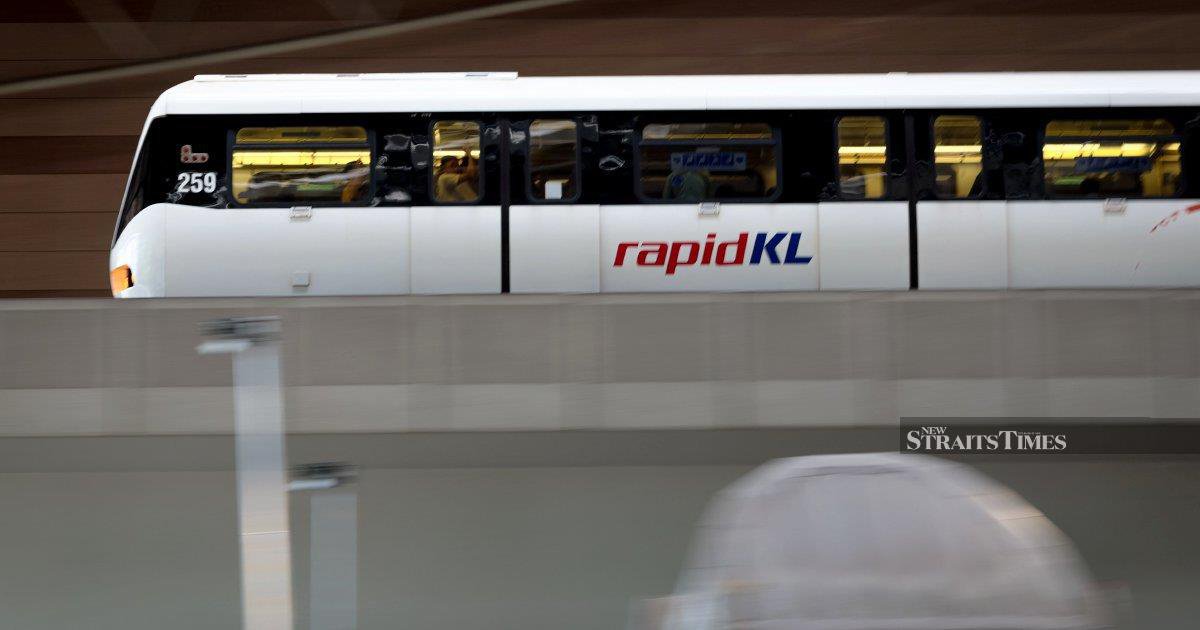
A trespassing incident at a major Kuala Lumpur transport hub resulted in the arrest of a man and temporary disruptions to rail services serving thousands of daily passengers. The breach occurred at Jalan Meru Station on Rapid KL's Shah Alam Line, one of the capital's key public transport arteries connecting the central business district with satellite towns in Selangor.
The intruder entered restricted railway corridor areas without authorization, prompting immediate intervention by station staff and security personnel. Such incidents highlight persistent challenges facing the rapid transit system, where unauthorized access to operational areas poses both safety hazards and potential service disruptions. Authorities responded swiftly to prevent further complications and restore normal operations.
The Shah Alam Line forms a critical link in Kuala Lumpur's integrated transport network, serving hundreds of thousands of commuters daily across its extended route. Service interruptions, even brief ones, ripple across the broader public transport ecosystem and can have significant impacts on business operations, employment commutes, and economic activity throughout the Klang Valley. Rapid KL, the operator managing this network, faces ongoing pressure to maintain reliable schedules and security protocols.
Trespassing on railway infrastructure represents a serious violation with multiple dimensions of risk. Beyond personal safety hazards—including the possibility of electrocution from overhead lines and collision with moving trains—such unauthorized access threatens operational integrity and creates cascading delays that affect thousands of dependent passengers. Railway systems across Southeast Asia have faced similar challenges, necessitating enhanced security measures and public awareness campaigns.
Jalan Meru Station serves as a connection point for multiple commuter flows and represents infrastructure investment aimed at reducing reliance on private vehicles. Incidents that compromise service reliability undermine the value proposition of public transport and may push passengers toward alternative modes, contributing to traffic congestion and environmental concerns that planners seek to mitigate.
The circumstances motivating the individual's track access remain under investigation. Various factors could drive such behavior, from mental health crises to attempts to retrieve lost items to deliberate disruption. Understanding root causes enables authorities to develop more targeted prevention strategies, whether enhanced mental health support services, improved communication channels for emergencies, or heightened perimeter security.
Securing railway environments presents operational challenges distinct from conventional public spaces. Tracks must remain accessible for maintenance crews, emergency responders, and authorized personnel while remaining secured against unauthorized entry. This balance between access and security requires investment in both physical infrastructure—fencing, gates, surveillance—and human monitoring resources.
Rapid KL has implemented various security enhancement initiatives across its network in recent years, reflecting growing sophistication in managing these challenges. Station staff training, closed-circuit television deployment, and coordination with law enforcement have improved response capabilities. Yet the open nature of many stations and the extensive track networks create ongoing vulnerability to determined intruders.
Public education campaigns have attempted to discourage such behavior by emphasizing the dangers and legal consequences. Trespassing on railway property carries criminal penalties under Malaysian law, protecting both individuals from harm and systems from disruption. Courts take such violations seriously, particularly when they endanger public infrastructure and affect large commuter populations.
The arrest and processing of the individual through the criminal justice system will likely include safety assessments to determine whether mental health factors contributed to the incident. This intersectional approach—combining law enforcement responses with social support—increasingly shapes policy across transport agencies and authorities concerned with both security and public welfare.
Transport operators throughout Malaysia and the wider region view such incidents as important data points for assessing security protocols and identifying infrastructure vulnerabilities. Each disruption, regardless of duration, prompts reviews of response procedures and consideration of additional preventive measures. The cumulative impact of multiple incidents influences budget allocations and strategic planning for public transport systems.
Commuters dependent on the Shah Alam Line represent diverse populations—students, office workers, low-income service sector employees—whose schedules and economic circumstances make reliable rail service essential. Disruptions, even lasting only minutes or hours, can trigger professional consequences, missed employment opportunities, and broader frustration with public infrastructure, undermining confidence in transit-oriented urban development models that Malaysian planners increasingly emphasize.
Moving forward, this incident contributes to ongoing conversations about balancing public access to transport infrastructure with security imperatives, improving mental health resources and emergency response capabilities, and maintaining service reliability that justifies public investment and makes urban rail systems a preferred alternative to private vehicle dependence.

