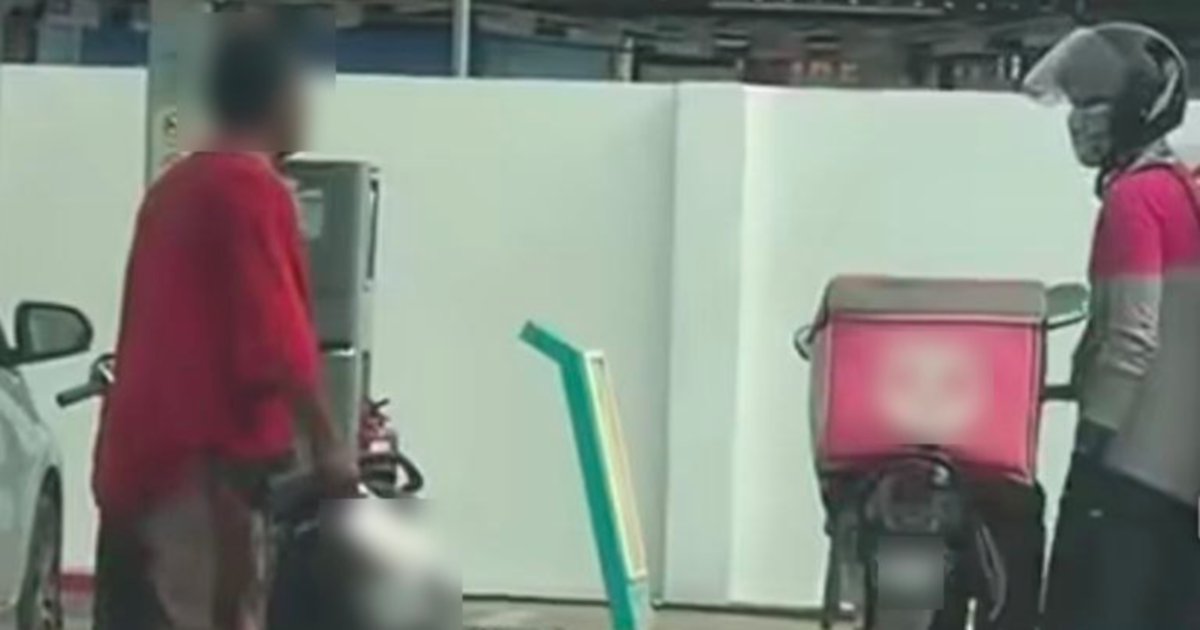
A man is now in police custody following an aggressive confrontation at a petrol station in Kuala Terengganu yesterday, where he allegedly threatened a ride-hailing worker with a meat cleaver. The incident unfolded in the afternoon at a fuel outlet located on Jalan Pasir Panjang, a major thoroughfare in the state capital.
Officers from the Kuala Terengganu police contingent responded swiftly to reports of the disturbance and apprehended the suspect at the scene. The arrest came after the man engaged in what witnesses describe as erratic and threatening behaviour towards the p-hailing driver, escalating the situation when he produced what authorities have identified as a meat cleaver.
Incidents involving weapons in public spaces, particularly at commercial venues frequented by both civilians and service workers, underscore ongoing concerns about public safety in major town centres across Malaysia. Petrol stations, being open throughout the day and night with constant foot traffic, represent particularly vulnerable locations for altercations and confrontations that can quickly turn dangerous.
The use of improvised or kitchen implements as weapons in disputes reflects a troubling trend observed in several states, where ordinary disagreements escalate into physical threats. The involvement of a p-hailing worker is particularly significant, as ride-hailing professionals have become increasingly exposed to security risks in their line of work, operating in varied locations and encountering diverse passengers and individuals throughout their shifts.
Authorities have not yet disclosed the exact circumstances that precipitated the confrontation or what motivated the alleged aggression. Understanding the underlying cause—whether the incident stemmed from a fare dispute, personal grievance, or random act of aggression—remains crucial for assessing the broader security landscape and determining appropriate preventive measures.
For the p-hailing industry, which has grown exponentially across Malaysia in recent years, such incidents highlight the need for enhanced safety protocols and better coordination between transportation companies and law enforcement. Many ride-hailing platforms have begun implementing features such as panic buttons, ride sharing with friends notifications, and real-time tracking to protect their workforce, though enforcement and adoption of these safety measures remains inconsistent.
The arrest in Kuala Terengganu serves as a reminder of the potential dangers that service workers face daily. P-hailing drivers often work irregular hours and interact with strangers in unfamiliar locations, making them statistically more vulnerable to confrontation than many other professions. While the majority of interactions proceed without incident, those that do turn violent can result in serious injury or trauma.
Police investigations will likely focus on determining whether the suspect had any prior grievances with the victim, or whether this represented a random act of aggression. If the latter proves true, it would underscore the unpredictable nature of public violence and the importance of vigilance in commercial spaces. The discovery of weapons during such incidents also raises questions about how ordinary items can be weaponised and what additional security measures might prevent or mitigate such occurrences.
Community safety in urban areas depends on swift police response and effective deterrents. The Kuala Terengganu authorities' rapid apprehension of the suspect demonstrates operational efficiency, though longer-term solutions require broader engagement with the public regarding conflict resolution and anger management, alongside sustained law enforcement presence in commercial zones.
The case also resonates with Malaysian ride-hailing workers who have become increasingly vocal about safety concerns on social media and through industry associations. Several incidents over recent years have prompted calls for stronger vetting procedures for passengers, better lighting at pickup and drop-off points, and improved communication channels with police when workers feel threatened.
As investigations proceed, the Kuala Terengganu Police will determine what charges the suspect will face. Depending on the severity of the threat and whether any contact or injury occurred, charges could range from criminal intimidation to possession of an offensive weapon or aggravated assault, each carrying different sentencing guidelines under Malaysian law.

