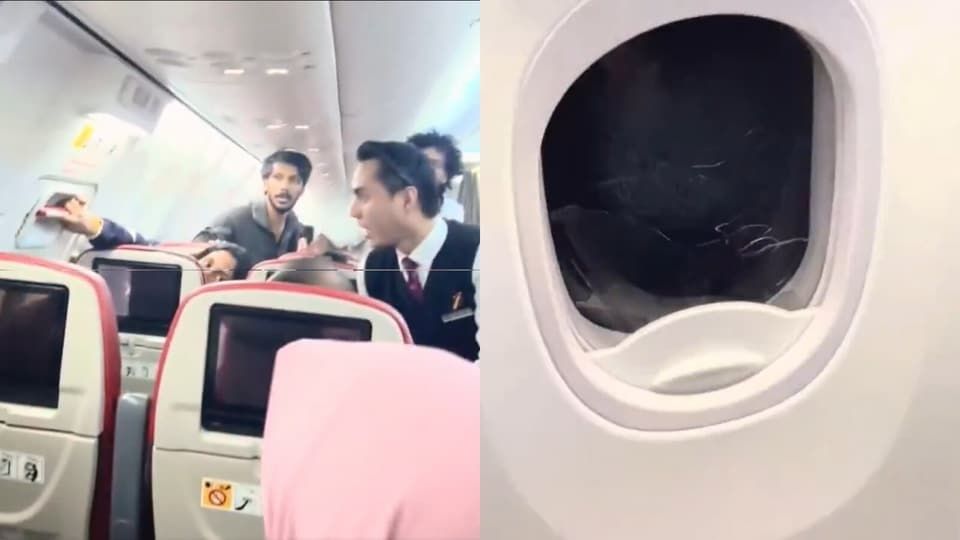
A 36-year-old Kerala resident was arrested by police on Thursday following an alarming incident aboard a Batik Air Boeing 737 travelling from Kuala Lumpur to Kochi on Wednesday evening. The man, identified as Jamsheer Athanikkal from Palakkad who was residing in Sreemoolanagaram at the time, allegedly attempted to force open the aircraft's emergency exit while the plane was in flight, triggering panic among the sleeping passengers and prompting crew intervention.
The dangerous attempt unfolded between 9.30pm and 11.05pm during the overnight service on flight OD231. According to the police First Information Report, Jamsheer deliberately kicked and damaged the inner window panel of the emergency exit door whilst simultaneously threatening other passengers and flight attendants. The incident posed an extraordinary risk given that the aircraft was cruising at altitude with 137 people aboard, yet the outcome was not catastrophic due to the aircraft's engineered safety features and the rapid response of those on board.
The structural integrity of modern commercial aircraft proved crucial in preventing disaster. The emergency exit door remained firmly sealed due to the pressurised cabin environment and the aircraft's design specifications, which prevent doors from opening when internal cabin pressure exceeds external atmospheric pressure. This fundamental engineering principle, whilst protecting the flight, could have created a false sense of security for the perpetrator, who may have underestimated these mechanical safeguards.
Passengers and Batik Air crew members acted decisively upon realising the gravity of the situation. Several travellers and flight attendants quickly restrained Jamsheer, preventing him from causing further damage or attempting alternative dangerous actions. According to accounts shared on social media by fellow passenger Matty Mathew, most travellers were asleep when a loud sound of rushing air jolted them awake. Mathew's video documentation of the immediate aftermath shows the tense moments following the incident, with the passenger emphasising that the swift collective response of crew and fellow travellers averted what could have escalated into a far more serious emergency.
The severity of the alleged conduct is reflected in the multiple charges levelled against Jamsheer by Kerala Police. He has been prosecuted under Section 351(3) of the Bharatiya Nyaya Sanhita for criminal intimidation, Section 11A of the Aircraft Act for violating aviation safety and security protocols, and Section 118(e) of the Kerala Police Act for endangering public safety. These provisions carry substantial penalties, reflecting the gravity with which Indian authorities treat incidents that jeopardise flight safety and the welfare of passengers and crew. The case was registered following a complaint filed by Batik Air's Security In-Charge at Kochi upon the aircraft's arrival early Thursday morning.
This frightening episode comes amid heightened scrutiny of in-flight safety incidents across South Asian aviation routes. Just two days prior, Air India experienced another mid-air emergency when flight AI2379 from Phuket, Thailand to Delhi encountered a sudden and unexplained loss of altitude during cruise operations. The Airbus aircraft, carrying 137 passengers and eight crew members, managed to land safely in Delhi despite the alarming incident, but the episode left its mark on those aboard. Subsequently, 13 passengers and four crew members required hospital admission for treatment, indicating the physical and psychological toll such events inflict on aviation users.
The Air India incident, whilst distinct in nature from the Batik Air emergency exit attempt, underscores the vulnerability passengers experience when aboard aircraft. The airline indicated it had immediately notified relevant aviation regulators and aircraft manufacturer Airbus, and maintained close coordination with affected individuals and their families. Such transparency in reporting and passenger support represents international best practice, though it offers cold comfort to those traumatised by the experience. The seven-year-old aircraft involved in the Air India incident raised questions about maintenance and technical factors, though investigators have not yet established causation.
The clustering of these aviation incidents within a 48-hour window has intensified concerns among passengers and industry observers across Southeast Asia and beyond. Regular travellers on regional routes, particularly those connecting Malaysia, Thailand, and India, may find their confidence in aviation safety tested by such occurrences. Airlines and aviation authorities must balance transparency in reporting such incidents with maintaining public confidence in the safety systems that govern modern air travel, systems that in both recent cases functioned as intended despite the extraordinary circumstances presented.
The response protocols demonstrated during both incidents highlight the importance of rigorous crew training and passenger awareness programs. Batik Air's crew, like most commercial aviation operators, undergoes regular safety and emergency response training, which proved instrumental in containing the situation aboard flight OD231. The intervention by fellow passengers also reflects how collective vigilance and immediate action can mitigate risks, though relying on passenger response in emergency scenarios underscores the need for robust crew capacity to manage such situations independently.
For Malaysian travellers and those transiting through the region, these incidents reinforce why aviation remains statistically the safest form of mass transportation. The security protocols that prevented the emergency exit from being opened, the structural engineering that withstands pressure differentials, and the trained personnel present on every commercial flight constitute multiple layers of protection. Nevertheless, individual incidents of this nature inevitably prompt reflection on whether existing safety measures, security screening, and mental health assessment protocols require strengthening to identify and manage individuals who may pose risks to flight safety before boarding occurs.

