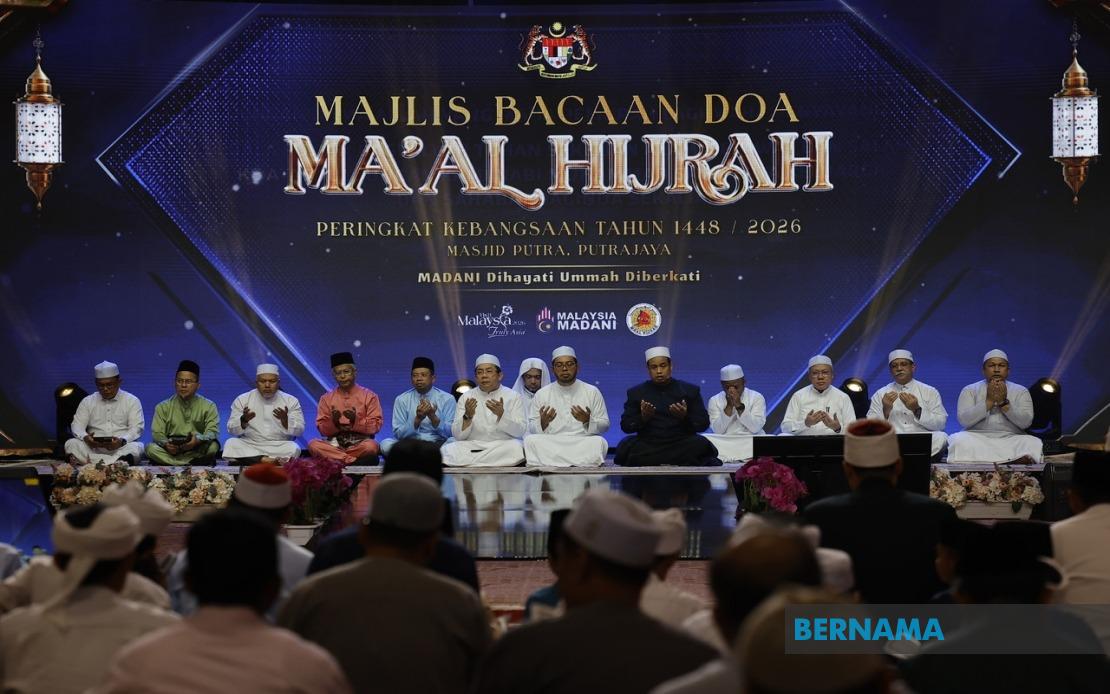
Malaysia's youth have been called upon to channel the spiritual lessons of Prophet Muhammad's migration—known as Hijrah—as a framework for bringing constructive transformation to the nation. Datuk Dr Zulkifli Hasan, Minister in the Prime Minister's Department (Religious Affairs), made the appeal during remarks at the national Maal Hijrah 1448H/2026M celebration preparations in Putrajaya, emphasizing that the country's young people possess the capability and capacity to drive meaningful progress if they internalize the values embodied in this pivotal historical event.
The concept of Hijrah, which marks Prophet Muhammad's journey from Makkah to Madinah in the Islamic calendar, carries profound significance beyond its historical narrative. For contemporary audiences, particularly young Malaysians, the migration represents a deliberate transition toward establishing new foundations for community life and societal structures. Zulkifli framed this year's commemoration as an opportunity for reflection, encouraging the nation's youth to extract actionable principles from the Prophet's experience that could inform their own contributions to Malaysia's development trajectory.
Recognizing the symbolic weight of institutional beginnings, organizers have deliberately structured this year's main celebration to commence at a place of worship. The decision to launch proceedings at Putra Mosque carries intentional messaging: the selection underscores how the Prophet's first act upon arrival in Madinah was establishing a mosque, which subsequently became the institutional nucleus for social organization and civilization building. By mirroring this sequence, planners aim to reconnect contemporary participants with the foundational principle that spiritual and community institutions form the bedrock upon which broader societal development rests.
Zulkifli explained that Putra Mosque was chosen specifically to kindle a fresh remembrance of the Prophet's struggles and achievements, positioning the venue as a location where cultural advancement and collective progress originate. This approach diverges from conventional celebration formats by grounding the observance in a physical space laden with symbolic resonance rather than abstract commemoration. The messaging implicit in this venue selection speaks to Malaysian audiences about the interconnection between spiritual commitment, institutional development, and communal welfare—themes particularly relevant for youth navigating their roles in an increasingly complex society.
Practical considerations have also shaped the celebration's design. Organizers have opted for a scaled-down approach to the festivities, consciously factoring in the imperative for energy conservation at a time when global supply chain disruptions persist. This decision reflects a broader alignment between the celebration's spiritual message and environmental stewardship, suggesting that authentic engagement with Hijrah principles extends beyond ceremonial observance to encompass responsible resource management and sustainability awareness.
The commemorative program incorporates a substantial educational component designed to deepen public understanding of Hijrah's contemporary relevance. A keynote lecture featuring nationally and internationally recognized figures in Islamic scholarship is scheduled for June 18 at the JAKIM Auditorium, with anticipation of approximately 1,000 attendees. This session will provide participants exposure to perspectives and lived experiences of prominent voices in interpreting how Hijrah principles can be meaningfully embraced in modern contexts, offering diverse viewpoints on translating historical lessons into present-day action.
The principal ceremonial event is timed for June 17 in conjunction with 1 Muharam 1448H, commencing at Putra Mosque from 7 am. The occasion will feature the conferment of national and international Maal Hijrah Figure awards, recognizing individuals whose contributions exemplify the values associated with purposeful migration and transformation. The Sultan of Perak, Sultan Nazrin Shah, will preside over the proceedings, lending formal governmental sanction and ceremonial weight to the recognition of these exemplary figures.
For Malaysian readers, particularly those invested in youth development and social cohesion, this celebration carries implications extending beyond religious observance. The emphasis on Hijrah as a model for positive change resonates with broader national conversations about youth engagement, social responsibility, and community participation. By framing the commemoration around institutional foundations and collective development, authorities are subtly positioning young Malaysians as agents capable of constructing meaningful change within their communities, provided they draw upon the wisdom embedded in historical Islamic precedent.
The geographic and institutional centerpiece of Putra Mosque also situates the celebration within Malaysia's federal administrative heartland, signaling that these values of transformation and community building carry governmental endorsement and institutional priority. The involvement of the Sultan underscores the integration of this observance within Malaysia's constitutional and ceremonial frameworks, bridging religious significance with state recognition in a manner that potentially amplifies the message's reach across diverse audiences.
For Southeast Asian observers, Malaysia's approach to leveraging historical Islamic narratives as catalysts for contemporary youth mobilization offers an instructive model. Rather than treating religious commemoration as purely ceremonial or nostalgic, the framing here emphasizes actionable principles and practical institutional development, suggesting that spiritual tradition and pragmatic social progress need not exist in tension. This orientation may resonate particularly with younger demographics seeking frameworks that honor cultural and religious heritage while addressing modern challenges.
The scaling of the celebration to accommodate energy conservation needs demonstrates awareness that authentic engagement with values of responsible stewardship must extend into the operational dimensions of formal observance. This attention to consistency between message and method—ensuring that how the celebration is conducted aligns with the principles being celebrated—potentially strengthens the credibility of the exhortation directed toward Malaysia's youth to embrace transformative change grounded in Islamic principles.