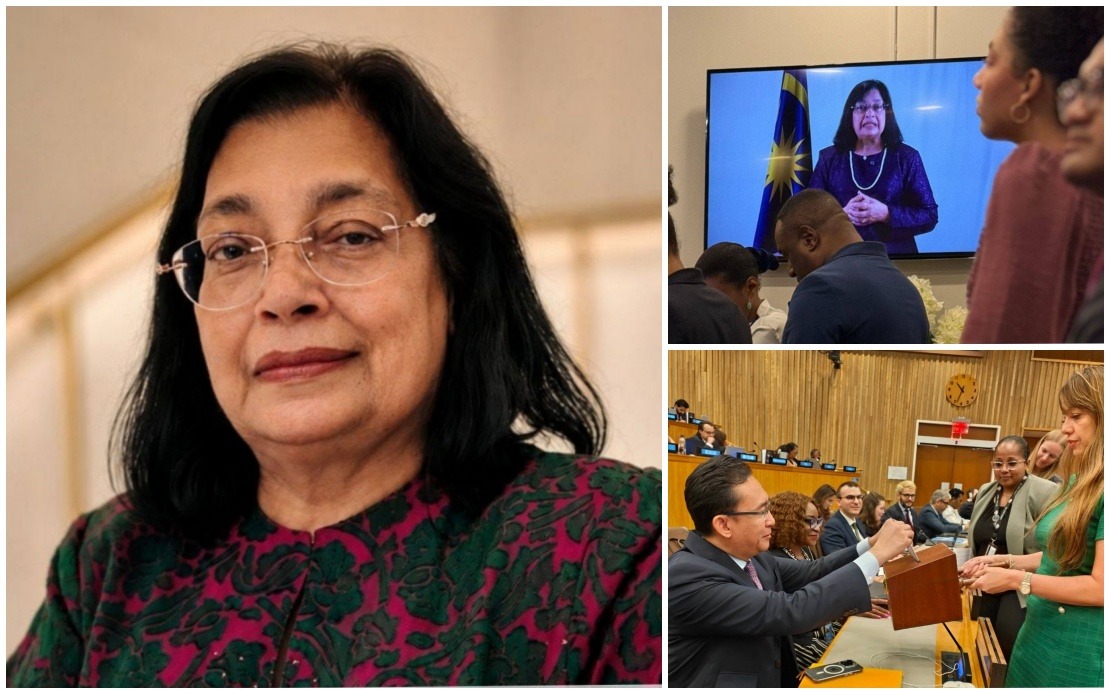
Datuk Yasmeen Muhamad Shariff has secured her second appointment to the United Nations Committee on the Rights of the Child, winning election for the 2027–2031 term during voting at UN Headquarters in New York on Tuesday. The Malaysian expert garnered 136 votes from the 189 States Parties present and voting at the 21st Meeting of States Parties to the Convention on the Rights of the Child, emerging as the highest vote-getter in the selection process. Her return to this influential international body underscores the esteem in which she is held by the global community and Malaysia's continued advocacy for children's welfare on the world stage.
Yasmeen's election represents a notable achievement for Malaysia's diplomatic efforts and reinforces the nation's standing as a credible voice in international children's rights advocacy. The fact that she topped the voting demonstrates that her previous work on the committee from 2013 to 2017 left a substantive mark on her peers and the broader UN membership. Her reappointment suggests that the quality of her contributions during that first term earned sufficient respect to warrant another mandate to shape policy discussions around child protection globally.
As a committee member, Yasmeen will function as an independent expert serving in her personal capacity, a crucial distinction that allows her to operate free from direct governmental instruction whilst representing broader Malaysian interests and values. The committee's responsibilities extend beyond symbolic oversight; members actively monitor how individual nations implement the Convention on the Rights of the Child, engage in substantive dialogues with governments about their child welfare policies, and advocate for a rights-based framework in addressing challenges that affect young populations worldwide. This hands-on engagement means Yasmeen will participate in critical assessments of state compliance and can influence international standards for child protection.
The significance of this appointment for Malaysia extends beyond individual recognition. The Foreign Ministry has characterised the election outcome as validation of Malaysia's commitment to advancing children's rights through concrete domestic measures, including policy development, legal reforms, and targeted programmes designed to help every child fulfil their potential. Southeast Asian nations, including Malaysia, face distinct challenges in child welfare ranging from poverty and education access to child labour and exploitation. Having representation on this committee provides Malaysia with a platform to ensure that regional concerns and contexts inform the committee's global advocacy and recommendations.
The committee's role has acquired heightened importance in an increasingly complex international environment. Children across the world face mounting pressures from climate change, digital technology disruption, conflict, migration, and economic displacement. Committee members like Yasmeen must grapple with how traditional child rights frameworks apply to contemporary challenges whilst ensuring that responses remain practical and culturally sensitive. The committee serves as a bridge between international human rights standards and the messy realities of implementation in diverse national contexts.
Malaysia's track record on children's issues has been mixed, with notable progress in areas like education access and healthcare, yet persistent concerns regarding child labour in certain sectors and the treatment of vulnerable populations including migrant children. By maintaining representation on this global oversight body, Malaysia positions itself to both absorb international best practices and demonstrate its own evolving standards. Yasmeen's presence allows Malaysian officials and civil society organisations to access insider perspectives on where global standards are moving and what gaps exist in domestic protections.
The Foreign Ministry's statement emphasised the contribution of the Ministry of Women, Family and Community Development in supporting the nomination campaign. This inter-agency coordination reflects how Malaysia's diplomatic successes in international bodies increasingly depend on alignment between foreign policy objectives and domestic portfolio ministries. The women's and family affairs ministry's backing was instrumental in building the case for Yasmeen's candidacy and demonstrates that children's rights advocacy in Malaysia now has institutional champions beyond the diplomatic corps.
Yasmeen's election also carries implications for how Malaysia positions itself within the broader context of ASEAN and the Global South. Many developing nations view participation in UN committees as both a source of soft power and an opportunity to shape international norms in directions that reflect their development priorities and values. Malaysia's successful placement of a candidate reflects diplomatic groundwork, bilateral relationships, and the credibility Yasmeen herself brings to the endeavour. In a region where children's welfare remains deeply affected by economic inequality, migration patterns, and transnational challenges, having voices like hers involved in international standard-setting carries practical importance.
The committee's work will intersect with several Malaysian policy priorities over the next four years. Digital safety for children, addressing child trafficking networks that span Southeast Asia, ensuring inclusive education for marginalised groups, and protecting children in humanitarian emergencies are all areas where committee advocacy can amplify or complement Malaysia's domestic efforts. Yasmeen's expertise and position will allow her to contribute Malaysian perspectives to these global conversations whilst bringing international experience and insights back to inform domestic deliberations.
Looking ahead, Malaysia faces the challenge of translating this international appointment into tangible improvements in child welfare across the country. The UN committee can provide valuable external validation of best practices and can help mobilise international attention around specific issues, but lasting change requires sustained political will and resource allocation at home. Yasmeen's return to the committee should serve as a catalyst for renewed focus on implementation gaps and for dialogue between Malaysia's government, civil society, and international partners about how to strengthen protections for all Malaysian children, particularly the most vulnerable.