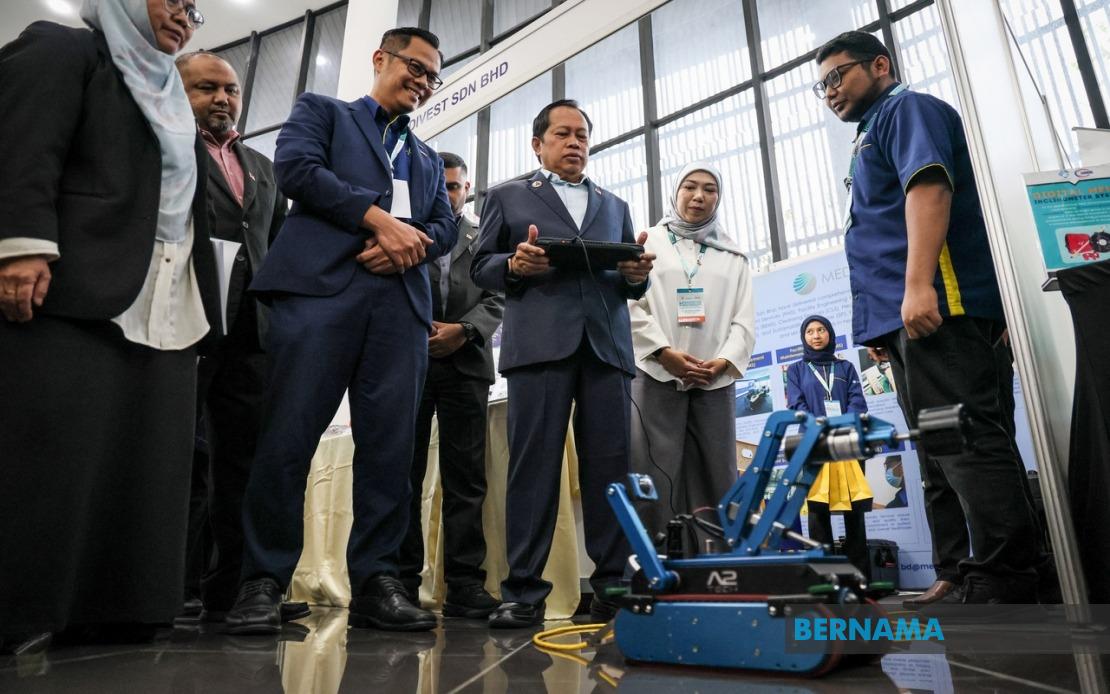
Malaysia's Works Ministry is making a strategic push to reshape how the construction industry approaches long-term asset care, with senior officials now directly calling on contractors to pivot toward facility management and maintenance services. Deputy Works Minister Datuk Seri Dr Ahmad Maslan delivered this message at the Contractors Convention 2026: NexGen Builders in Butterworth, highlighting a significant market opportunity that remains underexploited despite robust financial fundamentals.
The numbers tell a compelling story about market readiness. Between 2023 and 2025, the facility management and maintenance sector attracted RM39.59 billion in declared projects across Malaysia, according to data compiled by the Construction Industry Development Board (CIDB). This three-year figure demonstrates sustained demand for FM services as infrastructure ages and maintenance demands intensify throughout the nation's expanding asset base. Yet the contractor base remains surprisingly lean for such a sizable market.
Currently, only 468 contractors maintain active registration under the F01 and F02 specialisations designated for FM work, despite 1,541 FM and maintenance projects being formally declared during the same period. This gap between project volume and contractor availability creates what ministry officials characterize as a substantial business opening for companies willing to obtain proper credentials and enter this subsector. The disparity suggests either project consolidation among existing players or persistent market barriers preventing new entrants from establishing themselves.
Dr Ahmad Maslan's remarks reflect a fundamental shift in how Malaysian policymakers view the construction sector's economic value chain. For decades, the industry's prestige and financial rewards have concentrated on the design-and-build phase, leaving maintenance as an afterthought relegated to minimal budgets and lower-skilled operations. This cultural bias has inadvertently created market inefficiencies, with maintenance often performed reactively rather than strategically, leading to premature infrastructure deterioration and inflated lifecycle costs for asset owners.
The ministry's reasoning extends beyond simple profit opportunity. Preventive and systematic facility management directly influences how long Malaysia's roads, buildings, bridges and public infrastructure function effectively before requiring expensive rehabilitation or replacement. Buildings and transportation networks represent enormous public investment that can either appreciate or depreciate based on maintenance discipline. Without adequate FM practices, these assets degrade faster, reducing their functional lifespan and requiring earlier capital expenditure for reconstruction—an inefficient pattern the ministry now seeks to reverse.
To institutionalize better FM practices across the industry, CIDB has developed and launched CIS 33:2026, a Facility Management Good Practice Guide designed to provide standardized, systematic and sustainable frameworks for all sector participants. This guidance document serves as a common reference point for asset owners, facility managers, contractors and other industry stakeholders, establishing benchmarks for service quality and best practices. By creating this technical standard, the ministry aims to professionalize FM work and make it an attractive career path for contractors seeking to diversify revenue streams beyond traditional construction.
The guide's development reflects international trends in the construction and built environment sectors, where facility management has increasingly become recognized as a specialized discipline requiring distinct skillsets and professional credentials. Countries with mature FM industries have found that systematic asset management extends infrastructure lifespan, reduces emergency repairs, improves user satisfaction and delivers superior long-term value compared to ad-hoc maintenance approaches. Malaysia's adoption of CIS 33:2026 suggests policymakers want the construction industry to achieve similar professional standards and market maturity.
For Malaysian contractors, the timing merits attention. The sector's growth over the past three years indicates sustained client demand, while the low contractor registration count means relatively modest competition for companies entering the market. Established builders with equipment, workforce relationships and client connections could transition portions of their operations toward FM without requiring entirely new skill development. Smaller, specialized firms might also find niches in particular FM domains—building services maintenance, landscape management, or infrastructure inspections—without competing directly against large generalists.
The ministry's push also carries implications for employment and professional development within Malaysia's construction workforce. FM operations typically employ higher proportions of semi-skilled and skilled workers compared to pure construction, potentially creating more stable, year-round employment relative to project-based construction cycles. Workers trained in systematic maintenance procedures and asset management systems can command better compensation and career progression than general laborers, indirectly addressing workforce quality concerns within the broader industry.
For Malaysian businesses and investors tracking infrastructure spending trends, the Works Ministry's emphasis on FM represents an important signal about government priorities for the coming years. The explicit endorsement of facility management as a legitimate business opportunity, backed by RM39.59 billion in demonstrated market demand, suggests that infrastructure maintenance budgets will likely remain robust even if new construction spending fluctuates. This stability could appeal to contractors seeking more predictable revenue streams than the cyclical construction market typically offers.
The path forward requires both industry adaptation and regulatory support. Contractors must invest in FM-specific training, certification and operational systems to meet CIS 33:2026 standards and compete professionally. The ministry, meanwhile, must ensure that government asset management practices align with the new standards, creating anchor demand that demonstrates FM practices' financial returns. When public agencies themselves become exemplars of systematic facility management, private-sector adoption typically accelerates, as business leaders witness reduced maintenance emergencies and extended asset lifecycles.
Ultimately, the Works Ministry's Butterworth announcement reflects a maturing perspective on how infrastructure creates lasting public value. Construction marks the beginning, not the conclusion, of an asset's utility. Only through disciplined, systematic maintenance can Malaysia ensure its roads, public buildings, bridges and utilities continue delivering optimal service throughout their intended lifespan. For contractors prepared to professionalize their operations and embrace facility management, the RM39.59 billion opportunity awaiting in this overlooked subsector could represent the next major growth frontier for Malaysia's construction industry.

