Malaysia's higher education sector is establishing a structured approach to managing generative artificial intelligence following guidelines introduced by the Ministry of Higher Education in 2024. The framework has enabled universities to develop institutional policies that balance innovation with academic integrity, addressing growing concerns about how students and staff deploy these powerful tools in their scholarly work.
At a ceremony in Melaka, Deputy Minister Adam Adli Abdul Halim highlighted how the ministry's guidelines have provided a practical foundation for institutions to create their own procedures and standard operating procedures tailored to their specific contexts. Rather than imposing a one-size-fits-all approach, the framework empowers universities to translate national principles into institutional rules that reflect their academic values and operational realities. This decentralised approach recognises that different disciplines and learning environments require different safeguards when deploying generative AI technologies.
The guidelines address a critical challenge facing higher education globally: how to harness the productivity and learning benefits of generative AI without compromising academic standards or enabling widespread cheating. Universities have responded by establishing clear mechanisms to identify and respond to misuse cases, with defined roles and escalation procedures that give both students and faculty confidence that violations will be handled consistently and fairly. The existence of such frameworks represents progress in managing an emerging technology that caught many institutions unprepared just two years ago.
One significant requirement emerging from the guidelines is mandatory disclosure: students must now declare their use of generative AI in academic assignments. This transparency requirement allows educators to understand the extent and nature of AI involvement in student work, enabling them to assess whether the tool was used appropriately to support learning or inappropriately to circumvent it. The declaration system creates an audit trail that deters misuse while normalising legitimate use, fundamentally shifting the conversation from whether students use AI to how they use it.
The guidelines maintain that generative AI should function as a supplementary resource rather than a replacement for core academic skills and disciplines. Students must still demonstrate command of proper research methodologies, maintain rigorous citation practices, and engage critically with source material rather than accepting AI-generated content uncritically. This framing preserves the learning objectives that assignments are designed to achieve while acknowledging that students will increasingly encounter and potentially use these tools in their professional lives.
Consequences for violations appear designed to be proportionate yet significant. The Deputy Minister outlined that misuse of generative AI in academic assignments without proper acknowledgment or adherence to ethical standards can constitute a breach of academic integrity, with potential penalties ranging from assignment rejection to more serious disciplinary action including academic qualification revocation. The severity of possible sanctions reflects how seriously institutions are treating this issue, particularly given that academic credentials carry lifelong weight in professional contexts.
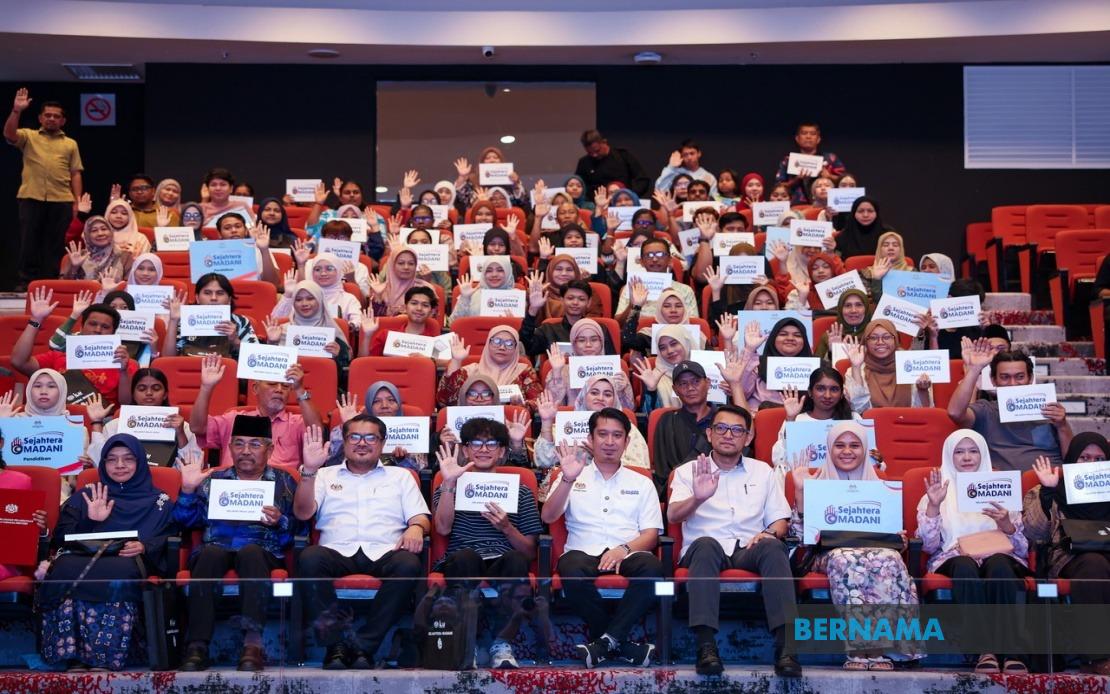
Beyond policy frameworks, the government has also moved to support disadvantaged students' access to technology more broadly. The ceremony saw the distribution of laptops to four outstanding SPM students and tablets to 100 university students from lower-income backgrounds, reflecting recognition that equitable access to devices and digital tools remains essential in an increasingly technology-dependent educational landscape. These initiatives operate under the Sejahtera MADANI initiative, targeting students from eKasih registered households who have achieved academic excellence.
The intersection of AI governance and educational equity raises important considerations for Malaysia's higher education sector. While guidelines protect academic integrity, they must also avoid creating scenarios where only students with resources to understand and navigate these complex rules can deploy AI responsibly, while disadvantaged students either avoid the technology or use it improperly. The dual emphasis on governance frameworks and device distribution suggests policy makers are considering these tensions, though implementation gaps will likely emerge as institutions operationalise these principles across diverse student populations.
For regional context, Malaysia's structured approach to generative AI governance in education stands out in Southeast Asia, where many neighbouring countries are still developing initial responses to the technology. The 2024 guidelines represent relatively sophisticated thinking about how to maintain academic standards while preparing students for a workforce increasingly shaped by AI tools. However, ongoing effectiveness will depend on consistent enforcement across institutions and updating guidance as the technology itself evolves rapidly.
Universities face the challenging task of explaining these rules to existing student cohorts mid-course while implementing them for new students from orientation onwards. The guidelines' success ultimately rests not just on their technical soundness but on whether institutions can cultivate a culture where students understand that declaring AI use is not an admission of laziness but rather responsible academic citizenship. Building this cultural shift requires sustained communication and consistent leadership modelling from faculty and administrators.
The framework also implicitly raises questions about assessment design that universities will need to address in coming years. If generative AI can produce coherent essays or code in seconds, assignment structures that simply require such outputs become problematic. Forward-thinking institutions may need to redesign assessments toward skills that genuinely require human judgment and creativity—synthesis across diverse sources, original argumentation, complex problem-solving in ambiguous contexts—rather than rote production of text or code.
As implementation proceeds, the actual test of these guidelines will come not from policy documents but from how universities navigate real situations: the student who used AI without declaring it, the faculty member unsure whether a student's work reflects genuine learning or AI generation, the institution balancing inclusivity with integrity. The framework provides structure, but institutional culture and leadership commitment will ultimately determine whether Malaysian higher education successfully steers between technological Luddism and naive adoption of tools that, while powerful, cannot replace genuine academic development.

