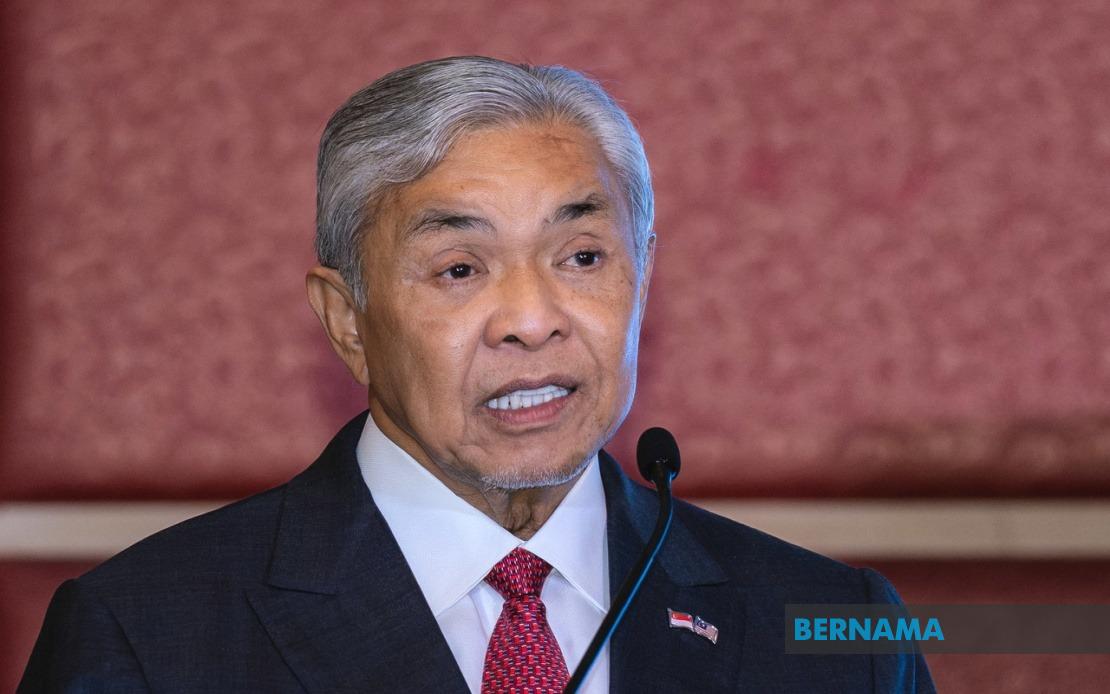
Malaysia's technical and vocational education system is moving toward a model where employment is virtually assured before graduates even leave the classroom. Deputy Prime Minister Datuk Seri Dr Ahmad Zahid Hamidi underlined this commitment while addressing the contingent preparing to represent the nation at WorldSkills Shanghai 2026, emphasizing that strategic partnerships between TVET providers and industry have transformed the employment landscape for vocational graduates.
The deputy prime minister attributed the claimed 100 per cent employability rate among TVET graduates to a fundamentally different approach to curriculum design and institutional management. Rather than institutions developing courses in isolation and hoping graduates will fit into existing job vacancies, the government now mandates early consultation between vocational schools and employers. This reverse-engineering of the education system means course content, teaching methods and skill priorities are determined by what companies actually need, creating a direct pipeline from classroom to workplace.
Ahmad Zahid, who chairs the National TVET Council alongside his portfolio as Rural and Regional Development Minister, explained that this collaborative framework eliminates several longstanding problems plaguing vocational education globally. The traditional mismatch between qualifications offered and labour market demands—a chronic issue that has plagued developing economies—is addressed through continuous dialogue. Furthermore, by securing job commitments before graduation, the system addresses wage stagnation and underemployment that frequently affect technical graduates who enter oversaturated entry-level markets.
The mechanism operates through structured engagement wherein industry representatives work with TVET institutions to shape programmes at foundational stages. This ensures that teaching facilities align with actual workplace technology, that practical training reflects real-world scenarios, and that soft skills development responds to employer feedback. The approach essentially transforms vocational institutions from educational silos into genuine industry extensions, blurring traditional boundaries between training providers and employers.
Beyond immediate employment assurance, the government is also prioritising the development of High TVET courses designed to produce graduates with advanced technical competencies that match sophisticated industry requirements. This stratification of vocational offerings acknowledges that modern economies demand workers capable of more than basic technical execution—they require problem-solving ability, adaptability and specialised knowledge in emerging fields. By creating advanced pathways within vocational education, Malaysia positions TVET not as a second-tier alternative to university education but as a legitimate and prestigious avenue for technical excellence.
The timing of these initiatives reflects Malaysia's broader push to compete in skills-intensive sectors. As manufacturing increasingly requires technical sophistication and service industries demand higher qualification standards, the nation cannot rely solely on university graduates to fill technical roles. TVET expansion and quality improvement become essential national competitiveness factors. Countries that excel in vocational education—Switzerland, Germany and Singapore offer proven examples—typically maintain stronger technical workforces and lower structural unemployment rates than peers with university-centric education systems.
WorldSkills Shanghai 2026 serves as both practical opportunity and symbolic validation for Malaysia's TVET commitment. The nine competitors representing the nation through the TVET@KKDW contingent will compete across nine skill categories including Fashion Technology, Cyber Security and Electronics. These particular disciplines reflect Malaysia's strategic economic priorities—fashion and technology sectors offer both export potential and domestic job creation across various skill levels. Cyber security especially represents future-facing competencies increasingly critical as digitalisation deepens across all economic sectors.
The contingent draws participants from three major TVET institutions: MARA TVET, Universiti Kuala Lumpur (UniKL) and GIATMARA, representing the diversity of vocational training pathways available to Malaysian students. This institutional breadth suggests that excellence in technical skills is not concentrated in any single institution but distributed across the ecosystem. Ahmad Zahid's appeal for participants to demonstrate mental resilience and emotional fortitude at the international competition reflects understanding that competing globally requires more than technical competence—it demands psychological strength under pressure and capacity to perform outside familiar environments.
For Malaysia's regional position, the TVET excellence initiative carries strategic weight. Southeast Asian economies compete vigorously for foreign direct investment and manufacturing presence, with workforce quality representing a critical differentiator. Thailand, Vietnam and Indonesia all pursue technical education expansion. Malaysia's emphasis on industry-aligned curricula and employment guarantees offers a competitive recruitment narrative for multinational corporations seeking locations for operations requiring skilled but cost-effective labour. Companies evaluating regional investments increasingly prioritise workforce availability and quality, making TVET system strength a genuine economic asset.
The two-month preparation period Ahmad Zahid referenced before WorldSkills Shanghai 2026 underscores the demanding nature of international competition in vocational skills. Participants from dozens of nations will demonstrate technical abilities honed through years of training, with judges evaluating not just end results but processes, efficiency, safety consciousness and innovation. Malaysian representatives must prove that training received through the domestic TVET system meets international benchmarks, indirectly validating the entire government strategy.
Beyond competition success, the broader TVET expansion reflects pragmatic recognition that not every student thrives in academic environments, yet all deserve pathways to productive careers. By creating genuine employment opportunities for vocational graduates and according such careers appropriate social status, the government potentially improves social mobility and reduces wastage of human potential. Students who might languish in unsuitable university programmes or drop out entirely can find meaningful careers through vocational training aligned to real economic needs.
The government's assurance of 100 per cent employability, while aspirational in its absoluteness, reflects an earnest commitment to transforming TVET from peripheral to central in Malaysia's human capital strategy. Whether the system sustains this performance as it scales remains to be tested, but the underlying logic—that education must respond to economic reality rather than abstract ideals—represents sound policy direction for a nation pursuing middle-to-high income status.

