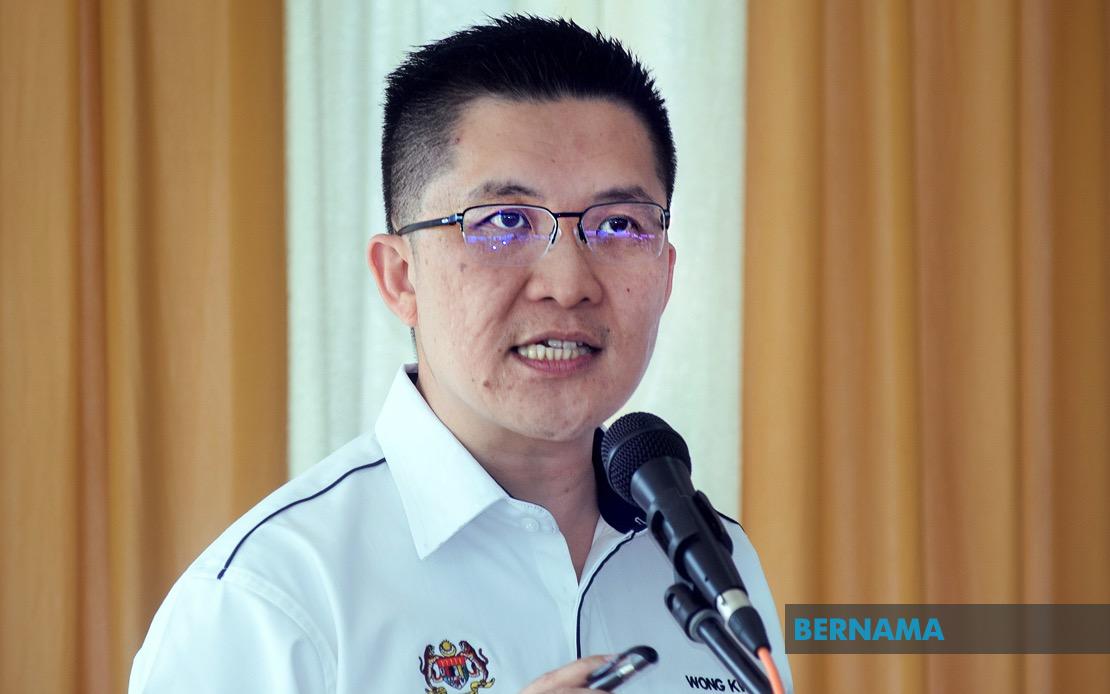
Malaysia's Tamil language education system encompasses 528 national-type schools serving a combined pupil population of 78,501 as of May this year, Deputy Education Minister Wong Kah Woh disclosed during parliamentary proceedings in Kuala Lumpur. The statement comes as the government reaffirms its commitment to preserving Tamil medium education despite demographic pressures reflected in gradually shrinking examination entry figures across recent years.
The trajectory of Tamil-medium students progressing to senior secondary examinations reveals a subtle but consistent downward pattern. In 2023, a total of 8,023 candidates registered for the Sijil Pelajaran Malaysia examination in Tamil, declining to 7,925 the following year, further contracting to 7,693 in 2025, and reaching 7,494 registrations in the current year. While the year-on-year decreases remain modest, the cumulative trend raises questions about the long-term viability of individual schools and the broader appeal of Tamil-medium education within Malaysia's diverse educational landscape.
The ministry has responded to these enrolment pressures through a comprehensive strategic approach centred on both preserving linguistic heritage and modernising educational infrastructure. Tamil remains positioned as an officially supported language subject within the SPM examination framework, with the Examinations Syndicate maintaining its commitment to continued provision. Significantly, the ministry has clarified that students attending schools which do not offer Tamil medium instruction retain full eligibility to sit the Tamil language subject examination, provided they meet standard registration protocols—a flexibility designed to expand access beyond the traditional SJKT network.
Johor emerges as a critical case study in Tamil education distribution. The state operates 71 SJKT establishments accommodating 12,906 pupils, with Johor Bahru district alone accounting for 15 schools serving 7,840 students. Within Johor Bahru, four institutions demonstrate notably robust enrolment: SJKT Taman Tun Aminah leading with 1,529 pupils, SJKT Ladang Rini with 1,055 pupils, SJKT Jalan Yahya Awal serving 890 students, and SJKT Masai enrolling 768 pupils. This concentration in a handful of schools contrasts sharply with other establishments in the district where under-enrolment presents structural and operational challenges.
Infrastructural investment constitutes a primary pillar of the ministry's strategy to sustain and strengthen Tamil education. The government has allocated RM4.3 million respectively to SJKT Ladang Rini and SJKT Kulai Besar for new construction projects, with each expansion anticipated to accommodate an additional 200 to 300 pupils. These capital commitments signal ministerial determination to enhance physical learning environments and expand capacity in identified growth zones, though the emphasis on specific districts also suggests a geographic concentration of development resources.
The challenge of under-enrolment has prompted the ministry to implement a dedicated operational roadmap addressing schools with persistently low pupil numbers. Across Malaysia, 135 under-enrolled SJKT institutions have implemented multi-grade teaching arrangements, allowing schools to continue operating despite insufficient pupils to populate separate grade-level cohorts. Additionally, 36 schools have received formal approval for relocation to areas with stronger demographic demand, representing a pragmatic rebalancing of educational infrastructure aligned with population distribution patterns. Two Johor Bahru schools exemplify the acute under-enrolment problem: SJKT Ladang Sungai Plentong and SJKT Ladang Mados both operate with fewer than 30 pupils, creating questions about sustainability and pedagogical effectiveness.
Teacher supply has been substantially strengthened relative to documented requirements. For Tamil-medium primary schools, the requirement stands at 1,334 qualified option teachers, while current staffing has reached 1,733—a surplus of approximately 399 educators representing 30 percent above minimum establishment levels. At secondary level, 584 teachers are deemed necessary, against a current complement of 648, again exceeding prescribed needs by 64 positions. This favourable staffing ratio reflects deliberate ministry policy to ensure adequate linguistic expertise while creating capacity for quality improvement initiatives and professional development programmes.
The ministry's commitment extends to curricular modernisation through the 2027 School Curriculum framework, which integrates updated pedagogical approaches while maintaining Tamil language prominence within the broader language studies ecosystem. Alongside curriculum reform, the ministry emphasises strengthening Tamil literature offerings, recognising that engagement with classical and contemporary Tamil literary traditions enhances language learning authenticity and cultural connection. These initiatives address not merely attendance or examination passage but deeper educational quality considerations affecting student motivation and cultural continuity.
Examination integrity safeguards featured prominently in ministerial responses to parliamentary inquiry, particularly regarding grade boundary determination methodology. The ministry clarified that SPM results are determined through systematic professional assessment rather than predetermined quota systems or target grade percentages. Examination panels comprising subject specialists, curriculum experts, and educational measurement professionals analyse candidate performance against established standards, curriculum requirements, and assessment objectives specific to each subject discipline. This methodology aligns with international examination practice, conferring credibility on Tamil-medium qualifications within competitive academic and professional spheres.
Grade boundaries inherently fluctuate reflecting annual variations in candidate performance cohorts and examination instrument characteristics, consistent with practices adopted internationally. This variability ensures that grade distributions remain authentically representative of demonstrated competency rather than artificially constrained by prior-year quotas or predetermined outcome profiles. For Tamil-medium students, such transparent assessment protocols assume heightened significance, as they guarantee that examination success reflects genuine linguistic and subject mastery rather than differential grading standards applied to minority language streams.
The sustainability of Tamil education in Malaysia ultimately depends upon balancing demographic realities with institutional preservation. While pupil numbers and SPM registration show gentle declining trends, the ministry's multi-pronged approach—combining infrastructure investment, flexible examination access, teacher recruitment, curriculum modernisation, and pragmatic school consolidation strategies—suggests determined commitment to maintaining viable Tamil medium educational pathways. The concentration of robust enrolments in specific institutions and geographic zones, coupled with under-enrolment challenges elsewhere, indicates the system operates with considerable internal variation requiring localised attention. For Malaysian policymakers, Tamil education exemplifies broader questions about minority language preservation within pluralistic educational systems and the resource commitments necessary to sustain heritage language instruction amid shifting demographic patterns.