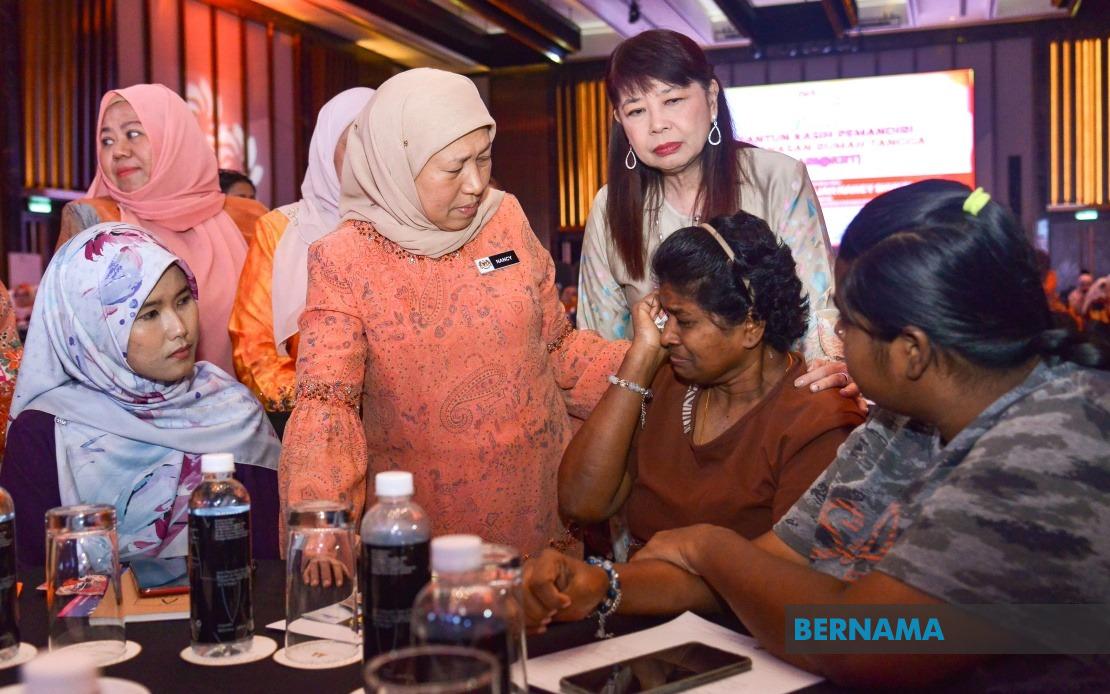
The Ministry of Women, Family and Community Development has launched SARI@KRT: Road to Eliminate Violence Against Women (EVAW) 2026, an ambitious initiative aimed at providing comprehensive support to approximately 1,400 domestic violence survivors across Malaysia. Announced by Minister Datuk Seri Nancy Shukri at an official ceremony in Kuala Lumpur, the programme represents a significant expansion of the government's commitment to tackling one of the nation's persistent social challenges.
The initiative will deploy resources across all Malaysian states, targeting a minimum of 100 participants per state. The multifaceted approach combines three critical intervention pillars: strengthened psychosocial support services, enhanced legal assistance mechanisms, and targeted economic empowerment programmes for affected women. This comprehensive framework acknowledges that domestic violence survivors face interconnected challenges requiring coordinated responses rather than isolated interventions.
According to data from the Royal Malaysia Police, the domestic violence landscape has shifted notably in recent years. Between January and June this year, authorities recorded 4,014 cases, representing a significant increase from 3,678 cases during the identical period in 2023. Johor emerged as the state with the highest concentration of incidents at 721 cases, trailed by Selangor with 614 and Perak with 405. These figures underscore the geographical concentration of the problem, though cases occur nationwide and require tailored regional responses.
The underlying causes of domestic violence remain relatively consistent, offering some insight into prevention strategies. Misunderstandings and communication failures constitute the predominant factor, accounting for 1,967 cases—nearly half of all incidents during the first half of the year. Drug abuse follows as the second leading cause with 444 documented cases, while financial stress features prominently with 378 instances. These statistics suggest that targeted interventions addressing conflict resolution, substance abuse treatment, and financial literacy could potentially reduce incident rates significantly.
Minister Shukri characterised the rising reported cases not merely as a worsening trend but partially as evidence of improved public awareness and growing willingness among survivors to seek official assistance. This reframing carries important implications for how policymakers assess programme effectiveness. Increased reporting may reflect successful awareness campaigns and victim empowerment initiatives that encourage survivors to overcome social stigma and institutional barriers. However, the raw numbers still indicate substantial unmet needs within affected communities.
Financial abuse has emerged as a particularly concerning dimension requiring greater public understanding and policy attention. The minister highlighted situations where spouses with adequate financial means deliberately withhold support, forcing partners to independently manage household and childcare expenses. This form of coercive control operates differently from other violence types, often remaining invisible within families while inflicting severe psychological and economic harm. Recognising financial abuse as a legitimate grounds for intervention represents an evolution in how authorities comprehend domestic violence beyond physical injury.
The SARI@KRT programme incorporates specific provisions designed to remove practical barriers preventing survivors from accessing justice. The ministry provides dedicated financial allowances enabling survivors to attend court proceedings related to child maintenance claims. This measure addresses a concrete obstacle that frequently prevents vulnerable women from pursuing legitimate legal remedies—the inability to afford transportation, childcare, or time away from employment. By subsidising these essential costs, the programme removes a significant constraint on survivors' capacity to secure financial protection for themselves and their children.
Minister Shukri emphasised that the government's role extends beyond raising public consciousness about violence. Instead, the priority centres on rebuilding survivors' confidence and demonstrating that systemic pathways exist for addressing traumatic experiences. This victim-centred approach recognises that recovery from domestic violence involves psychological healing, legal vindication, and social reintegration alongside material support. The programme's integrated design reflects understanding that survivors require coordinated assistance across multiple life domains simultaneously.
The initiative's scope carries implications extending beyond individual households into broader Malaysian society. Successful rehabilitation and economic reintegration of 1,400 survivors potentially reduces downstream social costs associated with untreated trauma, including impacts on children's development and educational outcomes. Evidence from international programmes suggests that comprehensive survivor support generates positive multiplier effects, as empowered individuals often become effective advocates within their communities and family networks, potentially interrupting cycles of intergenerational violence.
Regional context further underscores this programme's significance. Throughout Southeast Asia, domestic violence remains a substantial impediment to gender equality and human development despite increasing policy attention. Malaysia's comprehensive approach combining legal, psychological, and economic interventions provides a model potentially relevant to neighbouring nations facing similar challenges. The emphasis on removing financial barriers, addressing financial abuse specifically, and building survivor agency reflects emerging best practices in post-conflict and trauma-informed programme design.
The ministry has called upon the public to facilitate information-sharing and encourage early intervention-seeking among victims and concerned community members. This appeal reflects recognition that institutional programmes cannot succeed without community participation and awareness. Creating social environments where violence reporting and victim-seeking behaviour become normalised rather than stigmatised constitutes a prerequisite for programme effectiveness. Public engagement campaigns accompanying SARI@KRT's rollout will therefore prove crucial to achieving stated participant targets.
Moving forward, the programme's success will depend substantially on implementation capacity across diverse state contexts, sustainability of funding commitments, and evolution of survivor support services based on field experience. Early monitoring of participant outcomes and programme effectiveness will inform adjustments and help identify additional gaps requiring policy attention. As Malaysia pursues its commitment to eliminating violence against women, initiatives like SARI@KRT represent tangible governmental action translating policy commitments into material support for affected individuals rebuilding lives free from violence.

