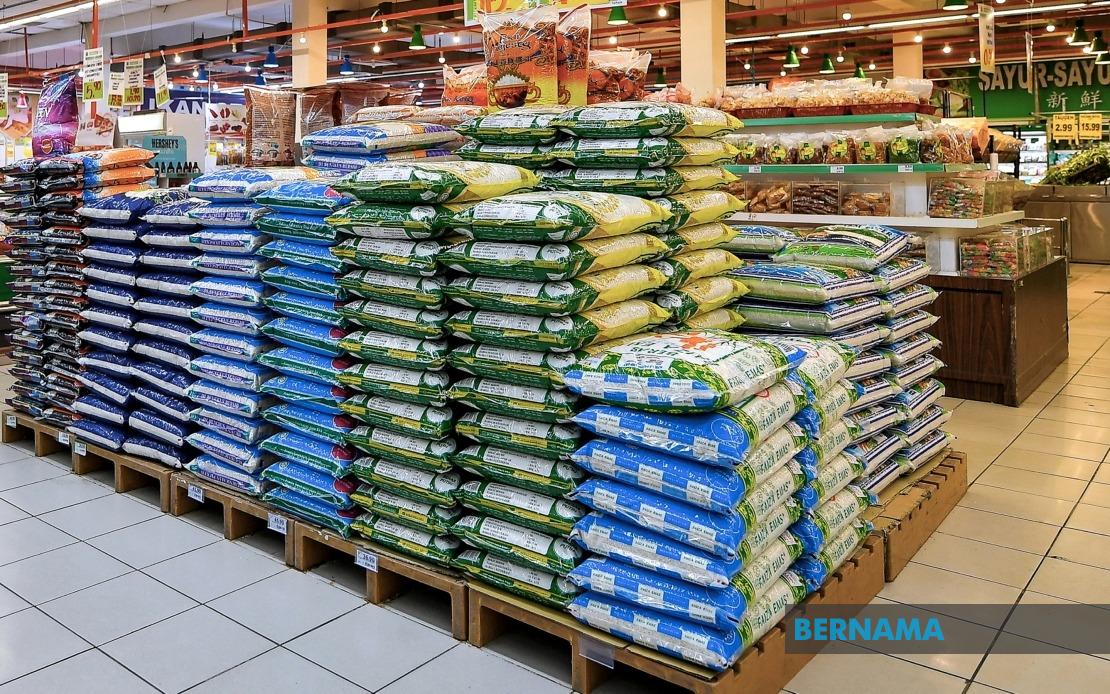
Malaysia's staple food supply remains adequately stocked and secure, with the government confirming that existing rice reserves can sustain the nation's consumption needs for the next six months. Economy Minister Akmal Nasrullah Mohd Nasir made the reassurance during a briefing in Kuala Lumpur on July 13, signalling that despite international economic headwinds and supply chain disruptions affecting multiple nations, domestic food security has been maintained through prudent inventory management and policy planning.
The minister emphasised that the government's overarching commitment centres on protecting ordinary Malaysians from the inflationary pressures gripping global markets. With commodity prices rising internationally and food inflation affecting developing and developed economies alike, the decision to freeze Local White Rice (BPT) pricing represents a deliberate measure to shield household budgets from additional strain. This price ceiling applies across the board, ensuring that both urban and rural populations benefit equally from the government's intervention in the rice market.
These assurances emerged from discussions held during a National Economic Action Council (MTEN) meeting chaired by Prime Minister Datuk Seri Anwar Ibrahim at the Parliament building, underscoring the priority placed on food security at the highest levels of government. The council's deliberations reflect growing recognition across Southeast Asia that stable domestic food supplies and predictable pricing are essential to maintaining social stability and public confidence during periods of global economic uncertainty.
The rice buffer stock mechanism operates as a strategic national reserve specifically calibrated to insulate Malaysia from external supply shocks. By maintaining sufficient quantities to cover six months of consumption, the government creates a buffer that prevents sudden price spikes and ensures supply continuity even if international markets experience disruption. This approach contrasts with countries that operate with minimal reserves and remain vulnerable to rapid price movements driven by global supply constraints or demand surges.
Farmers themselves have been targeted with direct financial support to offset production pressures. Through the Paddy Farmers Plowing Incentive scheme, the government distributed RM45.98 million to 118,908 paddy farmers across Peninsular Malaysia, acknowledging the mounting challenges they face from climate volatility and escalating input costs. This subsidy programme recognises that maintaining stable domestic rice supply fundamentally depends on supporting producers, whose profitability and viability determine aggregate production levels and market participation.
Climate change has emerged as a persistent threat to agricultural productivity throughout the region. Erratic rainfall patterns, prolonged droughts, and seasonal flooding increasingly disrupt planting cycles and reduce yields, forcing Malaysian farmers to invest more in irrigation, pest management, and soil conservation to maintain output. Rising fertiliser costs, themselves driven by global commodity markets and geopolitical factors, further compress profit margins. Without targeted government assistance, many smallholder farmers—who constitute the majority of rice producers—would face economic pressure to exit cultivation, potentially reducing domestic output and increasing reliance on imports.
Malaysia's food security strategy reflects broader Southeast Asian concerns about self-sufficiency in essential commodities. The region's growing population and rising consumption standards have heightened demand for stable food supplies, while climate disruption and geopolitical tensions affecting major grain-exporting nations have highlighted vulnerabilities inherent in heavy import dependence. Countries including Vietnam, Thailand, and Indonesia have similarly invested in domestic production capacity and strategic reserves to reduce external exposure.
The domestic rice market represents a cornerstone of Malaysia's agricultural sector and rural economy. By stabilising prices through a combination of adequate stockpiles and producer incentives, the government aims to support both consumer welfare and farm income simultaneously. This dual objective requires careful calibration: prices must remain remunerative enough to encourage production without becoming unaffordable for low-income households reliant on rice as a dietary staple.
International developments underscore the relevance of Malaysia's domestic-focused approach. Global grain markets have experienced considerable volatility in recent years, driven by supply constraints in major producing regions, heightened export restrictions implemented by certain governments, and shifting demand patterns. Against this backdrop, Malaysia's commitment to maintaining adequate reserves and freezing consumer prices demonstrates a proactive stance on food security rather than reactive crisis management.
The announcement also signals confidence in the sustainability of current production levels and inventory management practices. Regular replenishment of buffer stocks requires consistent harvests and efficient storage facilities, both of which depend on adequate infrastructure investment and coordinated policy implementation across federal and state governments. The visible commitment from the National Economic Action Council suggests that food security remains embedded in the highest economic planning processes.
For ordinary Malaysians, particularly those in lower income brackets for whom food constitutes a significant budget item, price stability in rice supplies offers genuine relief. Combined with frozen pricing, the assured availability creates predictability in household budgeting and reduces anxiety about food access. This psychological confidence in supply stability, alongside actual physical availability, reinforces broader economic and social resilience during uncertain times.

