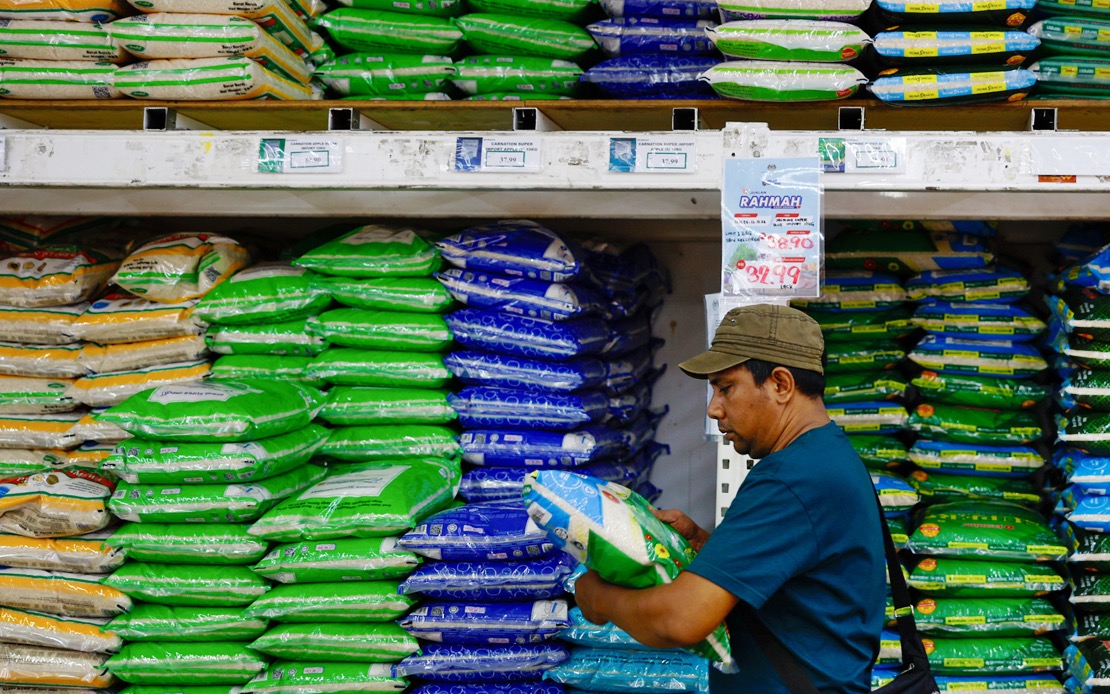
Malaysia's food security apparatus has moved to reassure the public that the nation's rice supplies remain robust despite escalating geopolitical tensions in West Asia. Deputy Agriculture and Food Security Minister Datuk Chan Foong Hin told Parliament that current physical reserves of 1.237 million tonnes are sufficient to sustain domestic consumption for at least half a year, insulating Malaysians from potential supply shocks emanating from international conflicts. This announcement underscores the government's strategic approach to maintaining self-reliance in one of Southeast Asia's most essential commodities.
The reserve composition reflects a dual-pronged storage strategy designed to provide both institutional and market-based buffers. The national rice buffer stock managed by Padiberas Nasional Berhad (BERNAS) accounts for 200,000 tonnes, while commercial inventories held by private suppliers contribute 1.037 million tonnes to the overall reserve pool. This combination ensures that even if supply chains experience disruptions from regional instability, distribution networks can continue functioning through commercially held stocks while the strategic reserve remains preserved for emergencies.
Beyond mere stockpiling, the government has embedded price stabilization mechanisms into its food security framework. Subsidies on locally produced white rice create a pricing floor that insulates consumers from the volatility characterizing international commodity markets. When global rice prices fluctuate due to weather, geopolitical events, or trade restrictions elsewhere, Malaysian consumers enjoy relative price predictability. This approach acknowledges that food security encompasses not just physical availability but also economic accessibility—a critical distinction for lower-income households that allocate significant portions of household budgets to staple foods.
However, Malaysia's long-term sustainability ambitions extend well beyond current reserves. The government has set an ambitious target of achieving 80 percent self-sufficiency in rice production by 2030, a goal that requires addressing structural production challenges accumulated over recent years. Declining yields and the looming threat posed by the El Niño weather phenomenon—which brings extended dry periods to agricultural regions—have prompted the Ministry of Agriculture and Food Security (KPKM) to pivot toward climate-adaptive farming technologies. The promotion of drought-resistant padi varieties including MR 380, MR 381, and MR 382 represents an investment in agricultural innovation designed to maintain yields even under increasingly variable climatic conditions.
Parallel to varietal improvements, the ministry is implementing sophisticated water management protocols intended to optimize irrigation efficiency and reduce vulnerability to rainfall patterns. Alternate Wetting and Drying (AWD) and System of Rice Intensification (SRI) represent methodological shifts that enhance productivity while reducing input requirements. These techniques are particularly valuable in addressing Malaysia's agricultural economics, where input costs—especially fertilizers—have risen substantially, squeezing farmer profitability and potentially discouraging production expansion.
The government's comprehensive response includes both immediate relief measures and medium-term structural interventions. A temporary exemption from Sales and Service Tax on agricultural fertilizers such as rock phosphate and magnesium sulphate, effective from January 1, 2026 through December 31, 2027, directly targets input cost pressures facing producers. Simultaneously, the increased ploughing incentive for the 2026 season—raising per-hectare payments from RM160 to RM300—amounts to additional support worth approximately RM40 million, benefiting nearly 200,000 farmers. These calibrated interventions demonstrate recognition that agricultural investment requires both supply-side support and demand-side encouragement.
The five-season rice cultivation initiative spanning two years within Muda Agricultural Development Authority (MADA) zones reflects concentrated effort to boost production in historically productive regions. MADA's irrigation infrastructure represents one of Malaysia's most significant agricultural assets, and upgrading these systems promises efficiency improvements that could translate directly into yield enhancements. This regional focus acknowledges that certain geographic zones possess comparative advantages in rice production and that targeted investment yields superior returns to dispersed approaches.
From a regional perspective, Malaysia's proactive management of rice security carries implications beyond national borders. Southeast Asia remains vulnerable to price shocks originating from major rice-exporting disruptions elsewhere, and countries demonstrating capacity for self-provisioning reduce collective regional vulnerability. Malaysia's experience could inform policy discussions across ASEAN regarding strategic food reserves, agricultural technology transfer, and coordinated approaches to food system resilience. The emphasis on drought-resistant varieties and water-efficient techniques addresses challenges relevant across the entire region, where climate variability increasingly threatens traditional agricultural productivity.
The intersection of geopolitical risk and food security policy illuminates broader questions about how nations should balance immediate reassurance with long-term structural transformation. While the six-month reserve provides genuine security against near-term disruptions, achieving the 80 percent self-sufficiency target requires sustained investment in rural infrastructure, farmer incomes, and agricultural innovation. The government's simultaneous emphasis on both near-term stability and long-term capacity building suggests recognition that genuine food security transcends short-term stockpiling to encompass durable productive capacity.
Malaysians should understand that the policy framework outlined by Deputy Minister Chan reflects sophisticated appreciation for food security's multidimensional character. Physical reserves provide immediate resilience; government subsidies ensure affordability; improved seeds and techniques enhance productive capacity; and infrastructure investment promises sustainability. Together, these elements constitute a policy response proportionate to the stakes involved—ensuring that Malaysian tables remain adequately supplied regardless of international turbulence, while simultaneously reducing the nation's long-term dependence on imported supplies.

