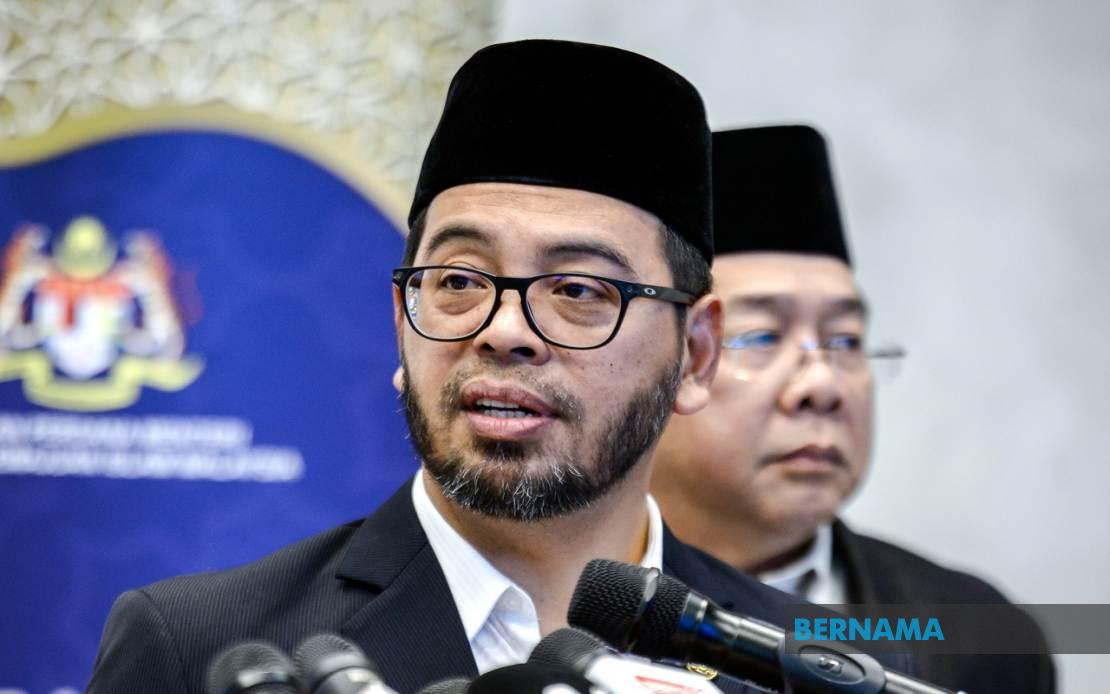
Malaysia's minister overseeing religious affairs has issued a firm rebuke following the brief detention of Sheikh Muhammad Hussein, the Grand Mufti of Jerusalem and custodian of Al-Aqsa Mosque, after last Friday prayers. Senator Dr Zulkifli Hasan, who serves in the Prime Minister's Department (Religious Affairs), characterised the incident as a breach of fundamental religious freedoms and a transgression against one of Islam's most sacred sites. Though the senior cleric was subsequently released, his temporary apprehension while fulfilling his spiritual responsibilities at the holy mosque has drawn sharp criticism from Kuala Lumpur, signalling Malaysia's commitment to championing religious liberty and protecting Islamic institutions in occupied territories.
Dr Zulkifli's formal statement represents a broader Malaysian diplomatic strategy of using multilateral forums to address Palestinian concerns. He specifically called upon the United Nations and the Organisation of Islamic Cooperation to intervene decisively, stressing that both international bodies bear responsibility for safeguarding worship rights, protecting religious leaders from interference, and preserving the sanctity of Al-Aqsa Mosque in accordance with established international law. This appeal reflects Malaysia's positioning as a vocal member of the OIC and its historical role advocating for Muslim causes on the global stage, leveraging both organisations to amplify concerns that might otherwise receive limited international attention from Western-dominated institutions.
The ministry's condemnation extends beyond the immediate incident to reaffirm Malaysia's broader commitment to Palestinian self-determination and the cessation of what it characterises as systematic oppression. Dr Zulkifli pledged continued Malaysian support for initiatives aimed at achieving equitable peace arrangements and securing Palestinian rights, framing the detention as symptomatic of larger patterns requiring international remedy. This positioning aligns Malaysia with numerous developing nations and Muslim-majority states that view the Palestinian question through a lens of anti-colonialism and human rights, though it also reflects genuine domestic Malaysian sentiment shaped by decades of consistent government messaging on the issue.
Parallel to his remarks on Jerusalem, Dr Zulkifli directed attention toward another historical tragedy affecting Muslims, calling upon Malaysians to mark the 31st anniversary of the Srebrenica massacre in Bosnia and Herzegovina. The 1995 atrocity saw Bosnian Serb forces execute more than 8,000 Bosniak Muslim men and boys over several days in July following their military capture of the eastern Bosnian enclave, despite its official designation as a UN-protected safe area. The scale of the killing remains staggering by modern standards, representing one of Europe's worst mass casualties since World War II and a defining moment in contemporary Muslim consciousness regarding the adequacy of international protection mechanisms.
What distinguishes Malaysia's commemoration of Srebrenica from that of many nations lies in the country's direct historical involvement in responding to the Bosnian crisis during the 1990s. Dr Zulkifli highlighted Malaysia's substantial military deployment under the Malaysian Battalion (MALBAT) and later the Implementation Force (IFOR), through which the Malaysian Armed Forces contributed 10,514 personnel to UN peacekeeping operations between 1993 and 1998. This deployment represented a significant commitment of national resources and personnel to a conflict geographically distant from Southeast Asia, underscoring Malaysia's self-perception as a global Muslim power with responsibility to assist co-religionists in distress. The operation demonstrated that Malaysia viewed its international role as transcending regional boundaries when Islamic interests appeared threatened.
Beyond military intervention, Malaysia's engagement with Bosnia extended through multiple channels that Dr Zulkifli enumerated. Former Prime Minister Tun Dr Mahathir Mohamad and the current Prime Minister Datuk Seri Anwar Ibrahim championed the Bosnian cause through diplomatic channels, while the Muslim Youth Movement of Malaysia (ABIM) pioneered humanitarian relief efforts in the crisis's early stages. The International Islamic University Malaysia (IIUM) subsequently opened educational pathways for Bosnian refugees seeking to rebuild their lives through advanced learning. This multifaceted approach—combining military protection, diplomatic advocacy, humanitarian assistance, and educational opportunity—reflected a comprehensive Malaysian strategy for supporting Muslim populations facing existential threats.
Yet the persistence of unaccounted victims underscores the incomplete nature of post-conflict justice in Srebrenica. More than 1,000 individuals remain missing, while ongoing efforts to identify and properly bury recovered remains continue three decades after the massacre. This grim reality serves as a sobering reminder that military intervention and international oversight, however well-intentioned, cannot fully ameliorate the human devastation wrought by ethnic cleansing and systematic killing. The identification process itself has become a drawn-out trauma for surviving families seeking closure and dignified burial for their dead according to Islamic tradition. Malaysia's continued acknowledgment of this ongoing struggle demonstrates recognition that responsibility for atrocity victims extends well beyond the immediate conflict period.
Dr Zulkifli reframed Srebrenica not merely as historical tragedy but as pedagogical crucible for contemporary Malaysian youth. He urged younger generations to extract moral lessons from the massacre, viewing it as imperative evidence for rejecting hatred, division, and all manifestations of oppression in their own contexts. This rhetorical move transforms Srebrenica from distant history into immediate moral instruction, suggesting that Malaysian youth should perceive themselves as inheritors of responsibility to prevent similar atrocities. In a multicultural society occasionally strained by communal tensions, invoking Srebrenica serves as potent reminder of what unchecked sectarian animosity can produce when combined with state power and indifference from international observers.
The minister concluded his remarks with spiritual reflection, invoking prayer for the Srebrenica martyrs and for the resilience of their bereaved families. His invocation of Bosnian suffering within Islamic theological framework—seeking divine mercy and protection—transformed political commentary into devotional practice. By ending with "Allahimanet Bosna" (May Allah protect Bosnia), Dr Zulkifli connected Malaysia's state apparatus to broader Islamic umma, positioning Malaysia not merely as a nation-state pursuing interests but as active participant in an transnational Muslim community bound by spiritual obligation to remember and honour fallen co-religionists. This theological dimension adds emotional resonance beyond diplomatic statement, reinforcing to domestic Malaysian audiences that their government takes seriously its role as guardian of Islamic values internationally.

