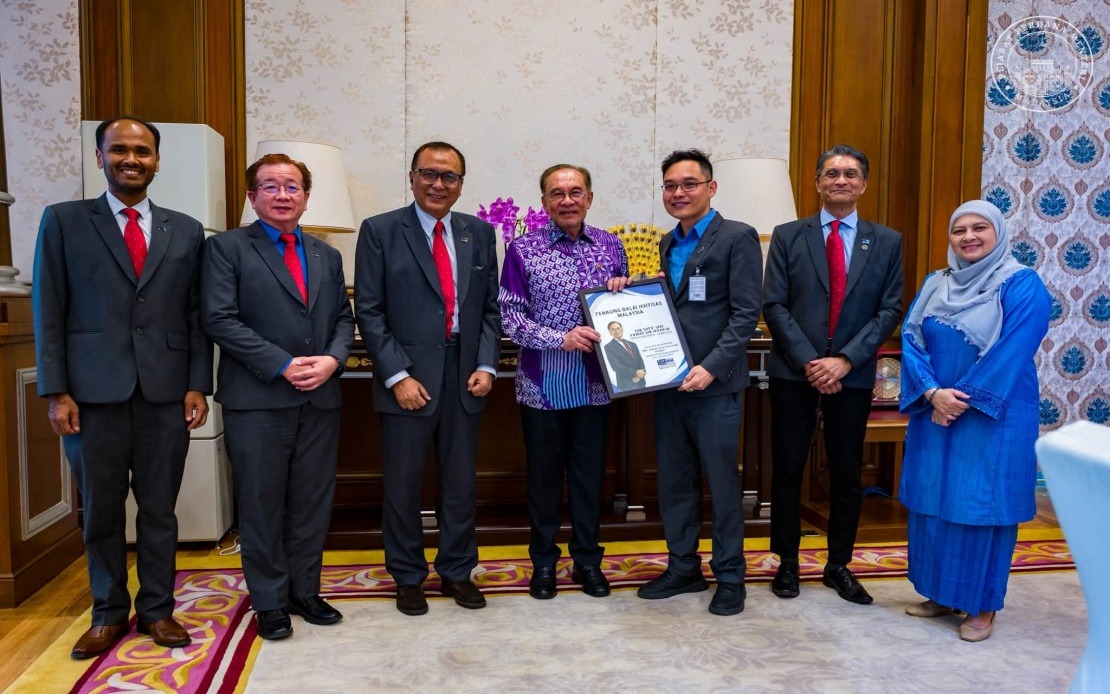
Prime Minister Datuk Seri Anwar Ibrahim has placed talent development and artificial intelligence preparedness at the forefront of the government's engagement with Malaysia's professional community, signalling the administration's commitment to leveraging expertise as a cornerstone of national economic strategy. During a courtesy visit from Balai Ikhtisas Malaysia (BIM), the Malaysian Professional Centre, the premier underscored the critical importance of equipping professionals with future-ready skills to maintain Malaysia's standing in the increasingly competitive regional landscape.
The meeting between Anwar and a BIM delegation led by president Prof ChM Dr Juan Joon Ching reflected a strategic pivot towards recognising professionals not merely as constituents but as essential partners in advancing Malaysia's development agenda. The emphasis on AI readiness is particularly significant given the rapid pace of technological disruption reshaping industries across Southeast Asia. By elevating this issue in high-level government discussions, the administration is signalling that workforce adaptation to emerging technologies will be central to maintaining Malaysia's relevance as a knowledge-based economy.
Anwar's remarks centred on the government's appreciation for professionals as strategic allies capable of driving innovation and bolstering national competitiveness on multiple fronts. This positioning reflects a broader recognition that Malaysia's future economic trajectory depends heavily on retaining and developing high-quality talent capable of competing with regional counterparts. The prime minister characterised the relationship between government and the professional community as symbiotic, with each dependent on the other's success in navigating the complexities of modern economic transformation.
The MADANI agenda, the government's overarching policy framework, featured prominently in Anwar's remarks, with the premier linking professional excellence to the broader objective of enhancing citizen wellbeing. This connection suggests an understanding that professional competitiveness and prosperity are not divorced from social outcomes. Rather, a thriving professional ecosystem that attracts talent, fosters innovation, and creates high-value employment opportunities directly contributes to the improvements in living standards that MADANI seeks to achieve.
Acceptance of an invitation to Hari Ikhtisas Malaysia, an annual celebration of the professional community's contributions to national development, demonstrates institutional commitment to recognising and honouring professional sectors. Such events serve dual purposes: they provide platforms for professionals to showcase their impact and influence policy dialogue, while simultaneously signalling government recognition of professional value. For Malaysia's varied professional communities, from engineers and doctors to architects and accountants, such formal acknowledgement carries practical significance in shaping policy priorities.
The focus on nurturing talent with integrity alongside competitiveness reveals a nuanced approach to professional development that extends beyond purely technical or economic metrics. By emphasising integrity, the government acknowledges that Malaysia's reputation as a reliable regional hub depends not only on technical excellence but on ethical standards and professional conduct. This dual emphasis aligns with broader concerns about governance and institutional credibility that have featured in Malaysian policy discourse in recent years.
The BIM delegation's visit and the resulting government engagement underscore the increasing recognition that Malaysia must compete actively for professional talent in a region where Singapore, Thailand, and other neighbours are simultaneously upgrading their offerings. Investments in professional development and AI readiness are not optional enhancements but necessary conditions for retaining Malaysia's share of regional expertise. The government's openness to such dialogue signals a willingness to engage constructively with organisations representing Malaysia's knowledge worker base.
For Malaysian professionals across sectors, the prime minister's comments carry implications for policy development in areas ranging from education and training to immigration and innovation infrastructure. The articulation of professionals as partners in the national development agenda may translate into concrete policy initiatives around funding for professional development programmes, regulatory frameworks supporting emerging technologies, and incentives for retaining talent that might otherwise migrate to regional competitors.
The convergence of AI readiness and talent development as joint priorities reflects global trends whereby technological advancement and human capital development have become inseparable. Malaysia faces the challenge of ensuring that its professional workforce possesses not only current expertise but the capacity to continuously adapt to technological change. BIM's engagement with government on these issues suggests that professional bodies are stepping into advocacy roles, ensuring that sectoral needs inform national policy formulation.
Looking forward, the substance of government engagement with professional communities will determine whether discussions translate into actionable policy shifts. The acceptance of invitations to professional events and acknowledgement of shared goals represent important symbolic gestures, yet implementation through funding allocation, regulatory reform, and infrastructure investment will ultimately determine whether Malaysia can realise its aspirations to become a leading regional hub for professional excellence and innovation-driven growth.

