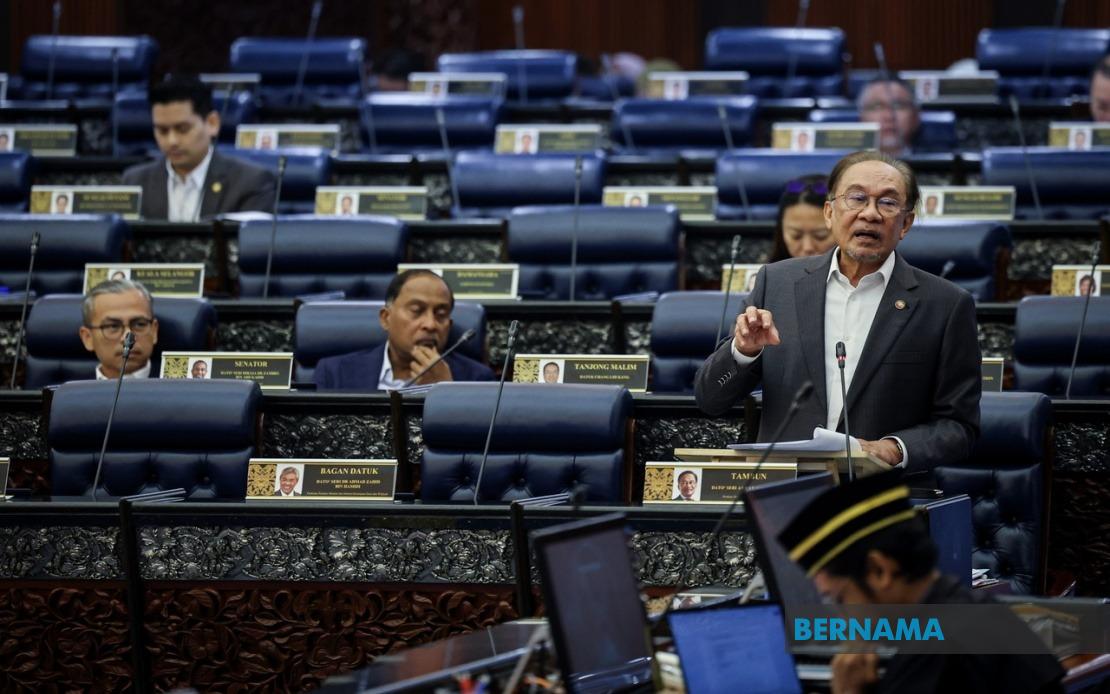
Prime Minister Datuk Seri Anwar Ibrahim has attributed Malaysia's slide in this year's World Press Freedom Index to enforcement measures taken against several news organisations, though he has insisted these actions target specific categories of content rather than legitimate political commentary or factual reporting. Speaking during parliamentary question time in Kuala Lumpur on July 7, the Premier sought to clarify the government's position on media regulation following Malaysia's drop to 95th place in the 2026 World Press Freedom Index, down from 88th the previous year—a movement that has drawn international scrutiny and raised questions about the country's commitment to journalistic independence.
The government's enforcement actions have focused on breaches involving religion, race, and the royal institution, commonly referred to as the 3R framework, alongside content deemed to pose risks to national security. Anwar pointed to two prominent cases that attracted international attention and likely influenced the index assessment: the action taken against Sin Chew Daily for publishing an inaccurate illustration of the Jalur Gemilang, and enforcement measures against Sinar Harian regarding the publication of the Inspector-General of Police's biography. These regulatory interventions were immediately flagged by the international media community as restrictions on press freedom, Anwar acknowledged, though he contended that each case involved substantive concerns extending beyond censorship of dissenting views.
The Sin Chew Daily incident has become emblematic of the tension between Malaysia's regulatory framework and global press freedom standards. While Anwar conceded that international observers perceived the action as a grave infringement on journalistic liberty, he stressed that matters affecting national symbols warrant serious consideration even if other countries treat them differently. This acknowledgment reveals an underlying cultural and legal divergence: what Malaysian authorities regard as appropriate protection of national institutions and sensitivities, foreign press freedom monitors interpret as potentially chilling effects on editorial independence. The distinction highlights how press freedom assessments often reflect different national contexts and values rather than absolute standards.
Crucially, Anwar clarified that the government does not penalise content merely for containing factual inaccuracies or for criticising political leadership. Instead, the administration has opted for public clarification mechanisms, including parliamentary explanations, as a primary response to disputed or misleading reporting. This approach theoretically preserves space for robust political debate while maintaining guardrails around sensitive cultural and institutional matters. However, the practical distinction between enforcement targeting specific content categories and broader suppression remains contested; international press freedom organisations argue that selective application of legal provisions can deter journalists from covering sensitive topics even when factual grounds exist.
The government has also moved to strengthen its legal framework in ways intended to expand press freedom protections. Amendments to Section 233 of the Communications and Multimedia Act 1998 have been introduced to ensure that satirical remarks directed at the Prime Minister or other officials are no longer treated as criminal offences. This legislative modification signals an attempt to recalibrate Malaysia's approach, shifting away from prosecutorial sensitivity around political criticism toward greater tolerance for humour and satire. For Malaysian media practitioners and observers, this represents a meaningful concession to international and domestic pressure regarding political speech, though critics note that other aspects of the legal framework continue to enable regulatory action against journalism.
The Conference of Rulers, Malaysia's highest constitutional body, maintains a significant role in monitoring media content involving the monarchy and institutions of state. Anwar emphasised that government enforcement reflects agreements reached at this constitutional level, framing such action as a matter of institutional governance rather than executive discretion alone. This institutional backstop explains why certain regulatory decisions transcend partisan politics or individual ministerial preferences—they reflect consensus among Malaysia's nine state rulers regarding the boundaries of acceptable public discourse. For regional and international observers, this context illuminates why Malaysian authorities treat breaches involving the royal institution with particular severity compared to other democracies.
The Reporters Without Borders assessment that produced Malaysia's revised ranking considered multiple dimensions beyond direct government censorship. The evaluation factored in the political environment, legal framework, economic conditions, socio-cultural context, and security conditions. This multifaceted approach means that Malaysia's ranking reflects not only explicit enforcement actions but also the broader institutional and cultural landscape affecting journalism. Anwar's reference to these varied indicators suggests that factors beyond the government's direct control, including market conditions affecting media sustainability and social pressures on journalists, contributed to the index movement.
A significant but often-overlooked dimension involves the role of technology platforms themselves in removing content. Anwar highlighted instances where Facebook, Instagram, and other social media operators have deleted posts based on user complaints rather than government directives, effectively constraining speech without formal state involvement. The removal of the Prime Minister's own posts regarding Hamas and other international matters by platform algorithms or moderation teams demonstrates how content removal can occur independent of Malaysian government action. This dynamic complicates the relationship between state responsibility and press freedom; while platforms technically operate as private entities making editorial decisions, their global reach and influence on Malaysian discourse means their moderation policies effectively shape the information environment.
The Malaysian Communications and Multimedia Commission's requests to social media platforms are frequently declined, with final authority resting with the respective platform operators. This reality underscores a structural challenge for Malaysian regulatory authorities: they possess legal instruments to address content within their jurisdiction, yet lack leverage over international technology companies that host much of the country's digital discourse. The divergence between what the MCMC deems necessary for national security or protection of sensitive institutions and what platforms are willing to enforce creates friction and sometimes leaves Malaysian authorities powerless to implement their own policy preferences. For policymakers and industry observers, this gap highlights the need for updated regulatory frameworks addressing the borderless nature of digital communication.
The broader implications for Malaysia's media landscape reflect a complex negotiation between protecting cultural sensitivities and institutional hierarchies while accommodating international standards for press freedom. The 3R framework, while rooted in Malaysian constitutional and cultural values, operates as a constraint that international assessors view as limiting journalistic scope. Anwar's emphasis on clarification over enforcement suggests movement toward less restrictive approaches, yet the regulatory tools remain available and continue to be deployed. For Malaysian newsrooms and journalists, this environment requires careful calibration—pursuing legitimate public interest journalism while remaining cognisant of boundaries around sensitive cultural and institutional matters that carry legal consequences.
Looking forward, Malaysia's trajectory on press freedom indices will likely depend on both formal legal reforms and practical enforcement patterns. The recent amendments to reduce criminal liability for satirical political speech represent incremental progress that international monitors may eventually acknowledge. However, continued application of existing provisions against media organisations—particularly those involving the 3R categories—will likely sustain the tension between Malaysian regulatory frameworks and global press freedom standards. For Southeast Asian media and governance observers, Malaysia's experience exemplifies broader regional tensions between protecting national institutions and accommodating international expectations regarding editorial independence and journalistic pluralism.

