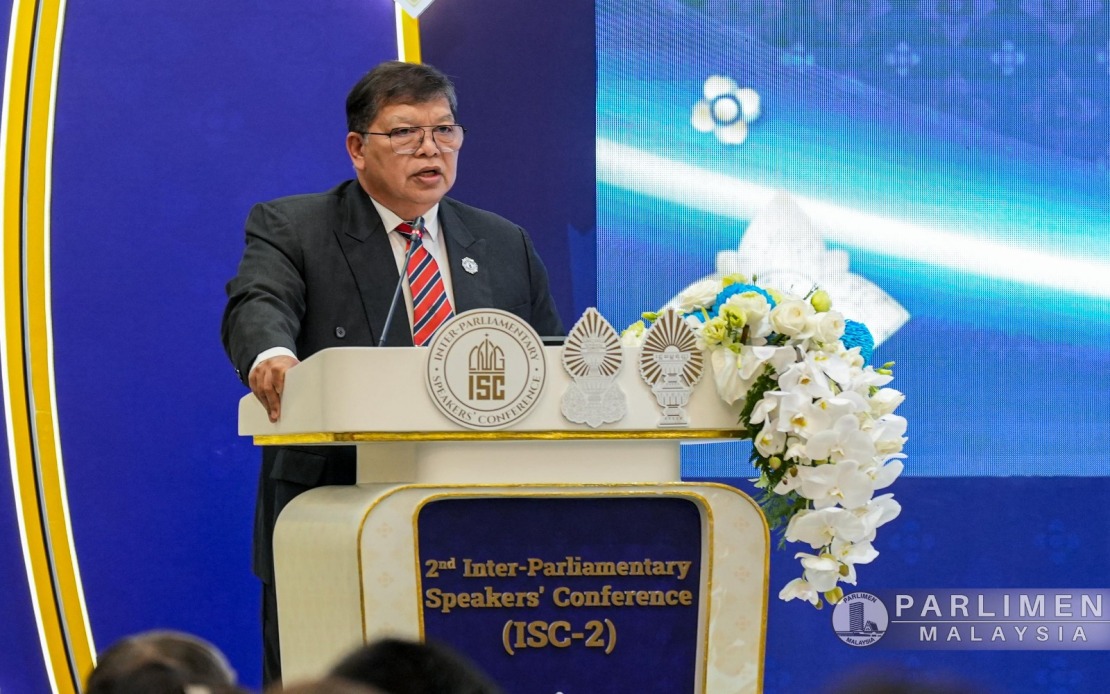
The Dewan Rakyat Speaker Tan Sri Dr Johari Abdul has issued an urgent plea for decisive global action on climate change, asserting that the world's inaction is inflicting severe hardship on defenceless populations and degrading the planet's ecological systems. Speaking from Phnom Penh during the Second Inter-Parliamentary Speakers' Conference held from August 26 to 29, Johari emphasised that climate change has transcended its role as a purely environmental concern and now poses cascading threats to economic stability, public health infrastructure, and the security of food and energy supplies across the region.
Johari's intervention reflects a growing recognition among regional policymakers that climate vulnerability remains dangerously underprioritised in political discourse. He expressed particular frustration that many national leaders have largely sidelined the issue from their public messaging, while numerous elected officials lack foundational knowledge about climate science and mitigation strategies. This knowledge gap is especially problematic given that it directly influences policy decisions ranging from land use and deforestation to energy infrastructure development. The Speaker questioned why governments continue to authorise large-scale tree-felling operations and why investment in established renewable technologies—solar power, wind generation, and ocean wave energy systems—remains comparatively modest across Southeast Asia and South Asia.
Instead of transitioning toward sustainable energy sources, Johari observed, many countries still resort to coal combustion to meet rising electricity demand, perpetuating carbon-intensive development pathways. He contended that reversing this trajectory requires systemic integration of climate science into school curricula, substantially increased government and private sector funding for research and development, and deliberate technology transfer mechanisms to enable developing nations to leapfrog outdated infrastructure. These investments, he argued, must be coupled with political commitment and visionary leadership from elected officials willing to prioritise long-term planetary health over short-term electoral gains.
The timing of Johari's remarks carries particular weight given recent catastrophic climate events ravaging the broader Asian region. Nepal experienced a devastating natural disaster merely days before his speech, triggered by a glacial collapse in the Himalayan mountain range that unleashed torrential flooding across river systems straddling the Nepal-China frontier. The preliminary death toll reached 469 confirmed fatalities, with 2,381 people still reported missing—a figure that includes 644 foreign nationals stranded in affected areas. Several Malaysian nationals remain unaccounted for following the disaster, underscoring how climate-related hazards increasingly threaten citizens even beyond national borders.
This tragedy exemplifies the escalating vulnerability facing mountain and river-dependent communities throughout Asia. From the landlocked valleys of Laos to the densely populated rural regions of Nepal, millions of people inhabit zones perpetually threatened by flash flooding, landslide activity, severe tropical storms, and annual typhoon cycles that routinely obliterate agricultural land and critical infrastructure. The Philippines confronts approximately twenty significant typhoons yearly, each capable of displacing hundreds of thousands and destroying livelihoods across multiple provinces. Bangladesh, Cambodia, Thailand, and Vietnam all face recurrent inundation risks tied to monsoon patterns, glacial melt, and rising sea levels—dynamics that disproportionately harm economically marginalised populations lacking resources to relocate or adapt.
Johari articulated a fundamental paradox underpinning the climate crisis: while climate change represents a genuinely global phenomenon demanding coordinated international response, the actual implementation of solutions remains hampered by inadequate political will and widening inequality between wealthy and disadvantaged nations. Wealthy countries possess capital, technology, and institutional capacity to transition toward sustainable systems, yet many resist assuming financial responsibility for emissions accumulated during centuries of industrialisation. Meanwhile, developing nations bearing the most severe climate impacts often lack the fiscal resources, technical expertise, and infrastructure investment required for meaningful adaptation and mitigation efforts.
To illustrate how strategic governmental commitment can drive green transformation, Johari highlighted China's multifaceted approach to environmental sustainability. The nation has pursued an extensive agenda promoting renewable energy technologies, manufacturing and deploying electric vehicles at scale, expanding urban green spaces, and building eco-friendly infrastructure—initiatives demonstrating that large-scale economic transitions toward sustainability are technically and administratively feasible when backed by sustained policy commitment and substantial capital allocation. Whether driven by environmental concern, industrial strategy, or international competitive positioning, such examples prove that alternative development models exist beyond the coal-dependent trajectory many Asian nations currently follow.
The scientific community continues issuing increasingly urgent warnings about accelerating climate destabilisation. Rising global temperatures are driving measurable sea-level increases, altering precipitation patterns in unpredictable ways, and intensifying extreme weather events across multiple geographic regions. These biophysical changes directly threaten both human communities and natural ecosystems, creating cascading risks to agriculture, fisheries, water availability, and disease dynamics. For Southeast Asia and South Asia—regions characterised by dense populations, extensive coastlines, and economies heavily dependent on climate-sensitive sectors—the implications prove particularly grave.
Regional leaders are beginning to acknowledge these dangers. Cambodian Prime Minister Hun Manet warned days before the parliamentary speakers' conference that elevated Mekong River water levels pose mounting threats to riverine communities, urging vigilance and preparedness among vulnerable populations. His cautionary messaging reflects growing awareness that while governments cannot eliminate natural disaster risks entirely, they bear responsibility for building institutional resilience and establishing responsive systems capable of managing disaster impacts effectively. This represents a subtle yet significant shift from purely reactive disaster response toward proactive risk management frameworks.
For Malaysia specifically, Johari's intervention carries several implications. As a tropical nation vulnerable to flooding, drought, and typhoon activity, Malaysia faces direct climate impacts that demand sustained attention from policymakers and legislators. The country's role as a middle-income economy with technological capabilities positions it to contribute meaningfully to regional climate solutions while managing its own vulnerabilities. Additionally, Malaysia's position within ASEAN gives it influence in shaping collective regional responses to shared climate challenges—a responsibility that extends beyond national borders to encompass broader Southeast Asian resilience.
The parliamentary speakers' conference itself represents an important mechanism for mobilising political attention and building consensus among elected leaders across national boundaries. Such forums enable knowledge-sharing about effective climate policies, facilitate discussion of technology transfer arrangements, and generate political momentum for climate action commitments. By platforming these issues at the highest levels of national legislatures, speakers like Johari signal that climate change transcends technical environmental management to become a fundamental political and governance challenge demanding sustained parliamentary attention.
Moving forward, Johari's call to action will likely resonate with constituencies already experiencing climate impacts, particularly rural and coastal communities where agricultural livelihoods depend on stable climatic conditions. Young voters increasingly prioritise climate action in electoral calculations, potentially creating political incentives for legislators to champion environmental initiatives. However, translating parliamentary rhetoric into concrete policy change remains formidable, particularly given competing development pressures, entrenched energy sector interests, and limited fiscal resources characterising many Asian governments.
Ultimately, the challenge confronting Malaysia and its regional neighbours mirrors the global dilemma: how to mobilise sufficient political will, financial resources, and technological innovation to fundamentally restructure energy systems, land use practices, and development pathways within the narrow window that climate science indicates remains available for meaningful action. Johari's emphasis on education, research investment, and green technology adoption provides a starting point for serious engagement with these questions, though transforming such rhetoric into sustained institutional commitment will require both continued public pressure and genuine political leadership.

