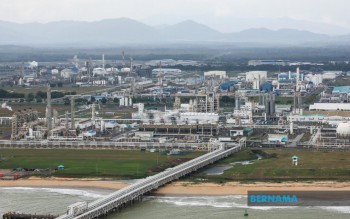
Malaysia is moving at a critical juncture to examine the creation of a national petroleum reserve, a decision that analysts view as increasingly necessary given the persistent instability affecting major global shipping lanes and the country's vulnerability to external supply shocks. Prime Minister Datuk Seri Anwar Ibrahim has instructed government agencies to investigate both the rationale and implementation framework for such a strategic stockpile, framing it as essential to buffer Malaysia against geopolitical upheaval and international supply disruptions that threaten economic stability.
The impetus for this policy shift stems from the reality of modern energy geopolitics, where critical chokepoints have transformed from occasional trouble spots into chronic sources of market volatility. The Strait of Hormuz exemplifies this pattern: approximately 20 million barrels of petroleum liquids traverse this narrow passage daily, representing roughly one-fifth of global crude supply. Rather than serving as a one-time flashpoint triggering isolated price spikes, the waterway now functions as a perpetual flashpoint where competing interests and regional actors maintain constant pressure on shipping flows.
Stephen Innes, managing partner at SPI Asset Management, contends that treating the Strait of Hormuz as a temporary disruption risk fundamentally misreads the current landscape. The structural reality facing energy markets includes sustained shipping delays, elevated insurance premiums for tanker operations, and constrained vessel availability that collectively maintain an embedded risk premium across global crude benchmarks. Rather than dissipating, these pressures will likely persist for years unless substantive infrastructure alternatives emerge—a development requiring extensive capital investment and international coordination that remains largely aspirational at present.
Recent military escalations underscore this volatility. Yemen-based Houthi forces, reportedly aligned with Iranian interests, have executed attacks on maritime vessels in the Red Sea and claimed responsibility for strikes against Saudi-operated oil tankers following intensified United States military operations targeting Iranian military installations. These incidents demonstrate that disruption risks now span multiple maritime corridors simultaneously, expanding the geographic scope of potential supply interruptions well beyond the Persian Gulf region that traditionally dominated energy security discourse.
The convergence of threats across both the Strait of Hormuz and Red Sea transit zones creates a qualitatively different risk environment for Southeast Asian economies heavily dependent on imported energy. Simultaneous disruptions across both corridors could trigger cascading consequences: dramatically elevated crude prices, freight cost increases that ripple through manufacturing supply chains, and extended delays in fuel deliveries that strain regional refineries and storage facilities. For Malaysia specifically, which produces approximately 570,000 barrels of oil daily yet remains a net importer of refined petroleum products, such scenarios pose particular vulnerability given that 69.2 per cent of crude oil imports originated from Strait of Hormuz-linked suppliers as of 2025.
Innes articulates a comprehensive resilience framework that extends beyond simple inventory accumulation. Energy security—ensuring access to supplies—differs fundamentally from energy resilience, which requires systems capable of maintaining function when normal supply channels or transportation routes fail. Achieving genuine resilience demands multiple layers: strategic fuel stockpiles, supplier diversification, alternative shipping corridors, fortified electrical infrastructure, and pre-existing capacity to substitute between fuel sources when crises materialize. Without these overlapping safeguards, even substantial reserve accumulation offers limited protection against multifaceted supply disruptions.
For Malaysia's specific circumstances, Innes characterizes a national petroleum reserve as emergency insurance requiring calibration to complement, not replace, commercial inventory systems maintained by private sector operators. While such reserves cannot address every conceivable supply challenge, they provide government decision-makers crucial temporal flexibility during acute crises—the critical hours and days when market adjustments remain incomplete and physical shortages threaten. Implementation should embed this reserve within a broader strategic architecture encompassing diversified source countries, enhanced storage infrastructure, and transparent governance rules specifying conditions for reserve deployment and subsequent replenishment cycles.
Tariro Chiweza of BMI offers reinforcement from a commercial energy analyst perspective, noting that conventional petroleum inventories serve primarily operational purposes in normal circumstances but demonstrate inadequacy against prolonged external supply disruptions. Malaysia's situation illustrates this vulnerability acutely: the country's dependency on imports from Strait of Hormuz-adjacent regions creates structural exposure to disruptions originating thousands of kilometres away yet delivering immediate consequences for domestic energy access. From this standpoint, the case for a strategic reserve acquires compelling logic as a risk-mitigation instrument.
Beyond immediate petroleum stockpiling, analysts emphasize broader resilience strategies that Malaysia should pursue in parallel. Continuing expansion of domestic gas production, accelerating renewable energy deployment coupled with battery storage systems, developing regional electricity interconnectors, supporting electrification initiatives, and exploring nuclear power options collectively reduce dependence on imported liquid fuels. Malaysia's existing programs—including Solar@PETRA deployment, the Corporate Renewable Energy Supply Scheme serving industrial users, B15 biodiesel blending, and electric public transport infrastructure—already contribute to this diversified resilience architecture.
Chiweza notes that BMI forecasts Malaysia's dry gas production will expand to 82.3 billion cubic metres by 2026, substantially strengthening the domestic energy supply foundation and supporting concurrent energy transition objectives. This domestic gas expansion offers particular value given that Southeast Asian economies have invested inadequately in regional gas interconnection infrastructure, limiting their ability to trade and redistribute supplies during crises. Malaysia's enhanced production capacity, combined with potential future pipeline investments linking ASEAN neighbours, could eventually provide mutual security benefits for the broader region.
Innes additionally emphasizes that government fuel subsidy regimes require fundamental reassessment during periods of sustained elevated oil prices. Broad-based subsidies drain fiscal resources while creating economically inefficient consumption patterns that exacerbate import dependency. Targeted support mechanisms benefiting lower-income households and critical industries—such as transportation and agriculture—would prove more fiscally sustainable while maintaining essential services. This reorientation accepts that sustained high oil prices represent the likely baseline for the foreseeable future, requiring policy adjustment rather than continued subsidy expansion.
The timing of Malaysia's petroleum reserve investigation reflects growing recognition that energy security can no longer rest on assumptions of stable, predictable international markets and uninterrupted maritime commerce. Instead, policymakers must design systems capable of absorbing shocks, preserving critical functions, and maintaining economic momentum despite predictable periodic disruptions. For Malaysia, a well-designed national petroleum reserve integrated within a comprehensive resilience strategy—encompassing supply diversification, renewable transition acceleration, and enhanced regional coordination—represents essential forward-thinking energy governance appropriate to contemporary geopolitical realities.

