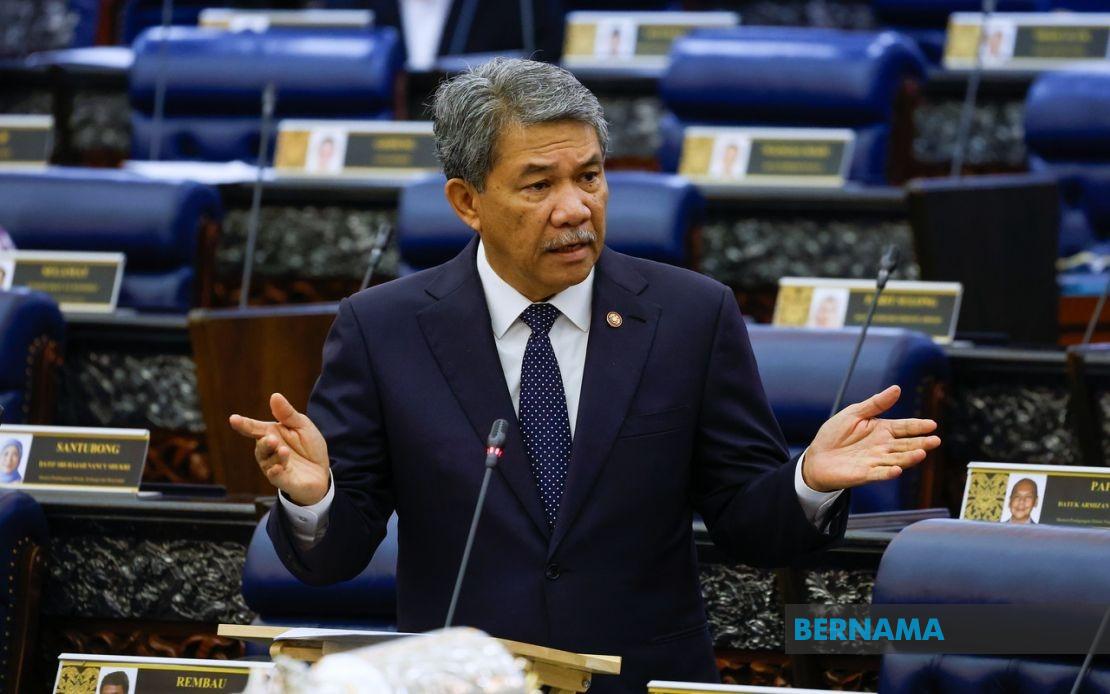
Foreign Minister Datuk Seri Mohamad Hasan has moved to clarify the purpose and implications of Malaysia's diplomatic mission to Myanmar in May, insisting that the engagement reflects ASEAN's broader strategy of constructive dialogue rather than any shift in Malaysia's official position on the military government. Speaking in Parliament on June 25, the Foreign Minister emphasized that Malaysia continues to withhold recognition from the junta while simultaneously refusing to abandon communication channels that could facilitate progress on regional stability issues.
The clarification comes amid sensitivities within ASEAN regarding how member states interact with Myanmar following the military's 2021 takeover of the government. Mohamad stressed that the Malaysian delegation's visit was explicitly mandated by decisions made at the 48th ASEAN Summit, which had directed foreign ministers across the bloc to maintain informal engagement with Naypyidaw. This framing positions Malaysia's actions as consistent with collective ASEAN policy rather than an independent initiative, a distinction that carries weight in regional forums where consensus and unified messaging remain paramount.
During the parliamentary exchange, Mohamad elaborated on the substance of his meeting with Myanmar Foreign Minister Tin Maung Swe, noting that the encounter deliberately took place at a hotel rather than at the Foreign Ministry—a deliberate protocol choice that underscores the informal nature of the engagement. The location selection itself communicates symbolically that Malaysia is engaging with Myanmar officials in a limited, non-formal capacity that stops short of according diplomatic legitimacy to the junta's institutions. In this carefully calibrated encounter, Mohamad conveyed specific Malaysian and ASEAN concerns about the direction of political developments in Myanmar and the conditions required for meaningful change.
A central theme of Mohamad's parliamentary remarks centers on the principles guiding ASEAN's approach to the Myanmar crisis. He articulated that while Myanmar possesses certain rights as a member state of the Association of Southeast Asian Nations, these entitlements come paired with corresponding obligations and responsibilities that the country must honour. This language mirrors ASEAN's traditional emphasis on balancing member state sovereignty with adherence to the bloc's foundational principles and decisions. By framing engagement in terms of reciprocal rights and duties, Mohamad positioned Malaysia's diplomatic efforts as attempts to remind Naypyidaw of its commitments to the region rather than concessions to the military government.
The Five-Point Consensus, which represents ASEAN's collective response to Myanmar's political turmoil, anchors Malaysia's diplomatic framework. The consensus calls for cessation of violence, facilitation of humanitarian assistance, dialogue among Myanmar's political actors, support for ASEAN's mediation efforts, and entry of ASEAN envoys into the country. Mohamad reiterated Malaysia's commitment to pressing for implementation of these benchmarks, suggesting that each interaction with Myanmar officials represents an opportunity to reinforce these regional expectations. The Foreign Minister's invocation of the Five-Point Consensus throughout his parliamentary statement serves to demonstrate continuity between Malaysia's bilateral engagement and the collective ASEAN position.
Mohamad's articulation of ASEAN's rationale for maintaining engagement with Myanmar reveals a strategic calculus about regional geopolitics and great power competition. He warned that isolating Myanmar entirely risks creating a diplomatic vacuum that external powers with competing interests might exploit, potentially undermining ASEAN's unity and regional autonomy. This concern reflects anxieties within Southeast Asian capitals about Chinese and broader Indo-Pacific strategic competition. By keeping Myanmar within the fold through dialogue, ASEAN aims to prevent the country from becoming exclusively dependent on or aligned with powers outside the region, which could fundamentally alter the regional balance that ASEAN members have worked to maintain.
The Foreign Minister indicated that Malaysia plans to convene additional meetings with various Myanmar stakeholders during early to mid-July, suggesting that dialogue efforts are accelerating rather than diminishing. These forthcoming engagements will reportedly encompass a broader range of actors beyond the immediate junta leadership, potentially including representatives of Myanmar's civil society, ethnic armed organizations, and other political factions. The expansion of interlocutors reflects a more nuanced diplomatic approach that seeks to maintain contacts across Myanmar's fractured political landscape while simultaneously avoiding any impression of legitimizing the military government alone.
For Malaysia and other ASEAN members, the Myanmar situation presents a genuine dilemma between principles and pragmatism. Complete disengagement risks ceding influence and allowing the situation to deteriorate further, yet engagement too forthcoming risks appearing to acquiesce to military rule. Mohamad's parliamentary testimony attempts to navigate this narrow passage by emphasizing that dialogue serves ASEAN's interests and regional peace rather than the junta's political survival. The careful language distinguishing between informal engagement and formal recognition reflects how Southeast Asian capitals attempt to maintain moral consistency with their stated opposition to military coups while simultaneously pursuing the practical diplomacy necessary for regional stability.
The Malaysian approach mirrors broader ASEAN strategy of attempting to remain a stabilizing force in Myanmar without appearing complicit in military governance. Unlike some Western governments that have imposed sanctions and diplomatic isolation on the junta, ASEAN members believe that maintaining conversation channels creates opportunities for incremental progress toward the Five-Point Consensus objectives. This philosophy rests on an assumption that isolation hardens positions while engagement creates possibilities for negotiation, though critics argue it risks allowing the junta to consolidate power with minimal international consequences.
Moving forward, Malaysia's diplomatic track will likely continue to balance these competing imperatives. The emphasis on upcoming stakeholder meetings suggests that Kuala Lumpur intends to deepen its engagement architecture with Myanmar across multiple dimensions rather than limiting interaction to junta officials. This approach potentially creates space for Malaysia to demonstrate commitment to Myanmar's democratic constituencies while maintaining channels with the military authorities, though the practical effectiveness of such efforts remains uncertain given Myanmar's ongoing violence and political fragmentation.

