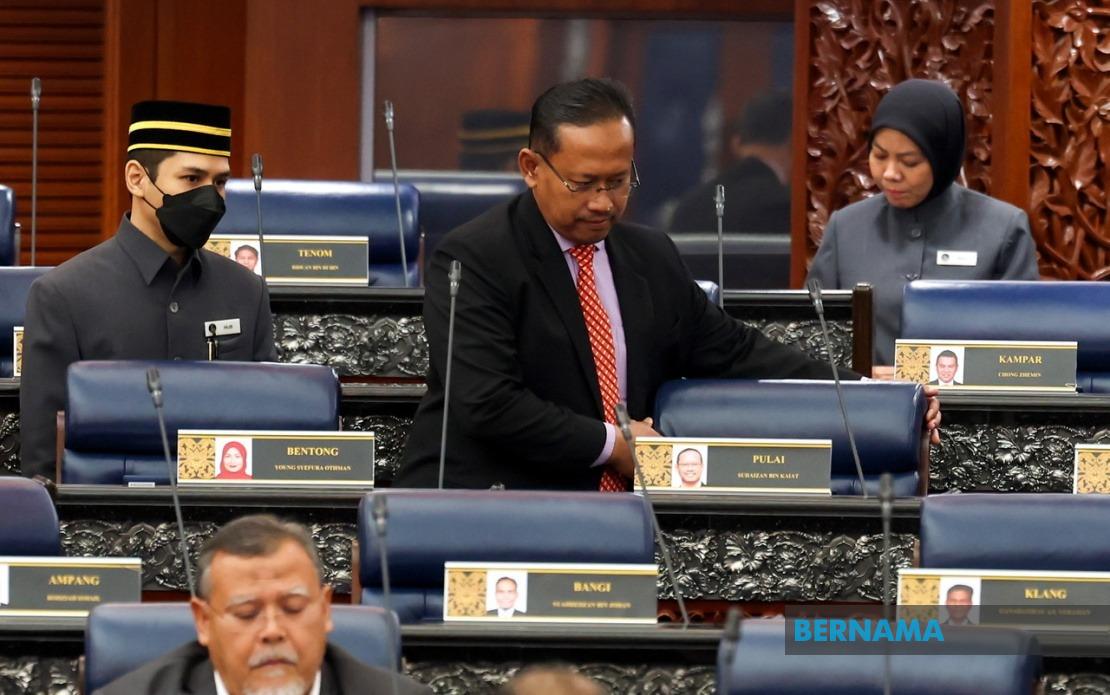
The economic fallout from Malaysia's deteriorating mental health landscape could reach a staggering RM25.3 billion by 2030 unless the government implements comprehensive intervention strategies immediately. This sobering projection has shifted mental health from being viewed purely as a clinical and social matter into a critical economic and productivity concern that demands urgent policy attention. Suhaizan Kaiat, chairman of the Special Select Committee on Health, presented this forecast to Parliament on June 22, emphasizing that the scale of the looming crisis extends far beyond healthcare facilities into the very fabric of the nation's socio-economic development and workforce capacity.
The statistics underpinning this projection paint a particularly troubling picture of a population under increasing psychological strain. Data presented to the committee reveals that depression among Malaysians aged 16 and above has nearly doubled in just four years, climbing from 2.3 per cent in 2019 to 4.6 per cent in 2023. This translates to approximately one million Malaysians now grappling with depression, a figure that masks the deeper human toll beneath the statistics. For policymakers, the numbers represent tangible evidence that economic pressures, social fragmentation, and unaddressed psychological needs are converging to create a mental health emergency that cuts across income groups and geographic boundaries.
What makes the situation even more alarming is the trajectory among younger Malaysians, who face compounding stressors that previous generations did not encounter. Among children, mental health problems have more than doubled from 7.9 per cent to 16.5 per cent over the same four-year period. For adolescents aged 13 to 17, the picture is starker still, with one in four experiencing depression. These figures suggest a generation coming of age amid unprecedented psychological pressure, whether stemming from academic competition, social media influence, economic uncertainty, or a combination thereof. The committee's characterization of these figures as "a reflection of the pressures faced by our younger generation" acknowledges that this is not merely a health statistics problem but a societal warning signal.
Recognizing the gravity of the situation, the Special Select Committee on Health has formulated 12 strategic recommendations designed to fundamentally reform Malaysia's approach to mental health support. These recommendations span three overarching areas of systemic strengthening, targeting both immediate crisis response and longer-term institutional capacity building. Among the priority interventions identified are expanding crisis helpline capacity to reach more people in acute distress, launching large-scale anti-stigma campaigns to reduce barriers to treatment-seeking, and implementing stricter ethical standards for media coverage of mental health issues to prevent sensationalization and further stigmatization of those experiencing psychological difficulties.
The parliamentary debate revealed significant consensus on certain structural gaps that require addressing. Datuk Dr Radzi Jidin highlighted a critical blind spot in current assistance mechanisms by pointing out that support systems often overlook the middle 40 per cent of Malaysia's income distribution. While targeted programmes typically focus on the bottom 40 per cent, a substantial portion of the M40 group is experiencing mounting financial pressures that drive mental health deterioration but disqualify them from existing assistance schemes. His proposal for a one-stop centre that can coordinate services based on accurate data and specific family circumstances addresses the current fragmentation in how mental health support is delivered across government agencies.
Lim Lip Eng's contribution to the debate emphasized the need for concrete implementation frameworks rather than aspirational policy statements. He called for the health ministry to present a detailed implementation roadmap complete with clear timelines and measurable key performance indicators, coupled with accelerated recruitment for critical mental health positions. This reflects a practical concern that many well-intentioned health policies founder on inadequate workforce planning and vague execution timelines. His additional proposals to strengthen early detection in schools and communities, expand the Community Mental Health Centres (Mentari) network, and establish specialized intervention teams for homeless and vulnerable populations address the reality that mental health crises often originate in community settings long before individuals reach hospital care.
Teresa Kok Suh Sim brought forward a distinct perspective emphasizing the need for intermediate care infrastructure between community-based support and hospital-centered treatment. Her proposals for additional community care homes and psychiatric rehabilitation centres acknowledge that Malaysia's mental health system has historically been weighted toward either primary care or institutional hospitalization, with insufficient graduated levels of support for individuals in transition or recovery phases. This gap is particularly significant for individuals discharged from psychiatric hospitals who require ongoing structured support but may not need full hospitalization.
The breadth of parliamentary participation in the debate, encompassing representatives from multiple political parties and constituencies, suggests recognition across the political spectrum that mental health reform has become a national imperative rather than a partisan issue. Parliamentarians from diverse backgrounds and regions submitted proposals that collectively address mental health from prevention through crisis management to long-term community integration, indicating that stakeholders understand the multifaceted nature of the challenge.
For Malaysia, these projections and policy discussions carry particular significance given the country's aspirations to achieve developed nation status by 2030. An economy burdened by RM25.3 billion in mental health-related productivity losses, increased healthcare expenditure, and social services costs would directly undermine economic growth targets and workforce productivity gains that underpin development plans. The intersection of mental health deterioration with Malaysia's demographic dividend also presents a paradox: the nation has invested heavily in educating youth, yet increasing psychological distress threatens to diminish returns on this human capital investment.
The recommendations emerging from parliamentary debate reflect international best practices in mental health systems strengthening while attempting to account for Malaysia's specific institutional structure and resource constraints. However, translating these recommendations into sustainable practice will require not only budgetary allocation but also sustained political commitment across electoral cycles, coordination between federal and state health authorities, and genuine engagement with communities to address the stigma that continues to prevent many Malaysians from accessing help. The RM25.3 billion projection serves as both a fiscal warning and a humanitarian imperative, suggesting that the window for preventive intervention is rapidly closing.