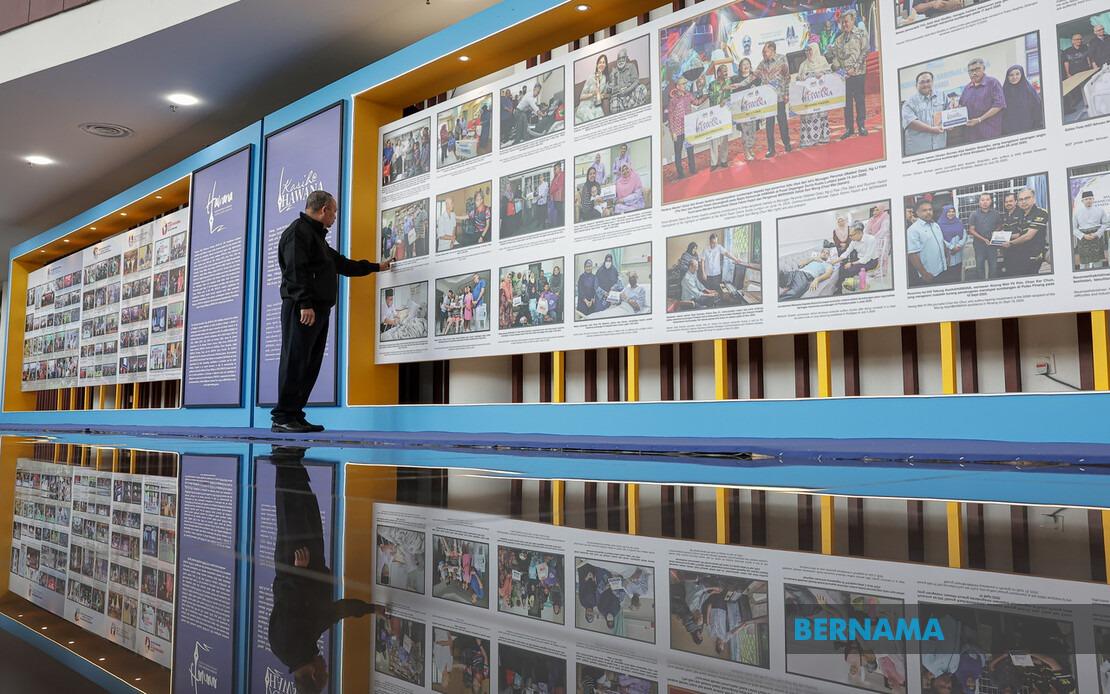
Penang is hosting a significant gathering of Malaysia's media fraternity this week as the National Journalists' Day celebration, known as HAWANA 2026, unfolds in Butterworth with a thematic focus on media integrity as the bedrock of public credibility. The event, scheduled to culminate tomorrow with Prime Minister Datuk Seri Anwar Ibrahim as the principal officiant, represents the nation's premier platform for honouring the contributions and professionalism of journalists and media practitioners across the country and beyond.
The lead-up to the main ceremony has already generated considerable momentum within the industry, with multiple stakeholder organisations deploying strategic programming to advance key conversations about journalism's role and resilience. The Malaysian Federation of Media Clubs (GKMM) convened its Malaysia Media Retreat 2.0 as a centrepiece activity, drawing representatives from 15 media clubs nationwide to strengthen collaborative ties and evaluate institutional development. According to GKMM president Mohamad Fauzi Ishak, the retreat serves dual purposes: consolidating the federation's internal ecosystem while marking a reflective checkpoint on the organisation's progress since its formal registration on October 24, 2022.
The retreat, officiated by Communications Minister Datuk Fahmi Fadzil, carried particular institutional weight given that GKMM's forthcoming third annual general meeting will proceed without competitive elections, suggesting a period of consolidation rather than leadership contestation. Bernama's leadership—Chief Executive Officer Datin Paduka Nur-ul Afida Kamaludin and Editor-in-Chief Arul Rajoo Durar Raj—lent their presence to underscore the state news agency's investment in strengthening cross-industry relationships at this juncture.
Parallel to federation-building efforts, the Malaysian Press Institute (MPI) has positioned itself at the intellectual forefront of industry introspection by organising a substantive town hall discussion at Han Chiang University College of Communication addressing a deceptively simple but profound question: "2035: Will Journalists Still Exist?" The session tackled the multifaceted pressures reshaping journalism's landscape, particularly the ascendancy of artificial intelligence technologies, accelerating digitalisation of news distribution, and fundamental shifts in audience behaviour regarding where and how they consume information. MPI president Datuk Yong Soo Heong, alongside senior editorial figures including New Straits Times Press deputy group managing editor Farrah Naz Abd Karim and Media Prima's Azhari Muhidin, engaged practitioners in examining whether and how journalism as a profession might evolve or transform in response to these structural forces.
The prominence accorded to this future-focused discussion reflects industry recognition that Malaysian media cannot remain insulated from technological disruption reshaping global information ecosystems. The proliferation of generative AI tools, the migration of advertising revenues toward digital platforms, and audience fragmentation present existential questions demanding serious strategic responses. For Malaysian readers and industry observers, such candid deliberation signals that the sector's leadership understands these are not peripheral concerns but central to institutional survival and relevance.
The Malaysian Media Council (MMC) has scheduled engagement sessions and networking activities for tomorrow to foster dialogue between media practitioners and institutional stakeholders, with particular emphasis on strengthening connections within Malaysia's northern region. This geographic specificity matters—the decentralised approach acknowledges that media challenges and opportunities vary across regions, and that solutions require localized understanding and collaboration rather than purely top-down directives.
The main HAWANA 2026 celebration at PICCA @ Butterworth Arena is projected to attract approximately 1,000 media professionals from Malaysia and internationally, creating an unusually large gathering of the sector's key figures. The choice of Prime Minister Anwar Ibrahim as principal officiant signals government recognition of journalism's institutional importance and, symbolically, suggests official commitment to media industry stability and professional standards. The ceremony's stated theme—"Media Integrity, Foundation of Credibility"—positions public trust in news and information as fundamentally dependent on practitioners' ethical conduct and institutional robustness.
Concurrent with formal proceedings, organisers have programmed the three-day RIUH @ HAWANA Carnival at PICCA Convention Centre, indicating an effort to combine industry-focused professional development with broader public engagement and celebration. This hybrid approach—blending serious thematic programming with carnival elements—reflects recognition that the media industry exists within society rather than in isolation, and that public connection to journalistic values requires both expert-level discourse and accessible public visibility.
For Malaysian stakeholders, this convergence carries several implications. First, the visible coordination among multiple industry bodies—GKMM, MPI, MMC, Bernama, and major publishing houses—suggests an emerging ecosystem consciousness that individual media organisations face shared challenges requiring collective responses. Second, the substantive focus on artificial intelligence and technological disruption indicates the industry has moved beyond peripheral concern to central strategic priority. Third, the government's prominent participation through the Communications Ministry signals that media industry development is now framed as a policy matter warranting executive-level attention.
The gathering also occurs within a regional context where Southeast Asian media industries grapple with similar pressures: declining advertising revenues, audience trust deficits, digital competition, and regulatory uncertainty. Malaysia's deliberate focus on integrity and credibility as central themes positions the country as engaged with fundamental questions about journalism's social contract. Whether these discussions translate into concrete institutional reforms, investment in journalist training, or policy adjustments supporting quality journalism remains a question for the months ahead.
The concentration of programming demonstrates that Malaysia's media sector, despite fragmentation and commercial pressures, retains capacity for collective self-reflection and industry-wide conversation. As artificial intelligence, misinformation challenges, and digital disruption accelerate globally, such moments of professional assembly become increasingly valuable for information-sharing, relationship-building, and consensus formation around shared standards and practices. Tomorrow's main ceremony, bringing together a thousand practitioners, will test whether such consensus has begun crystallising around coherent responses to the industry's future.

