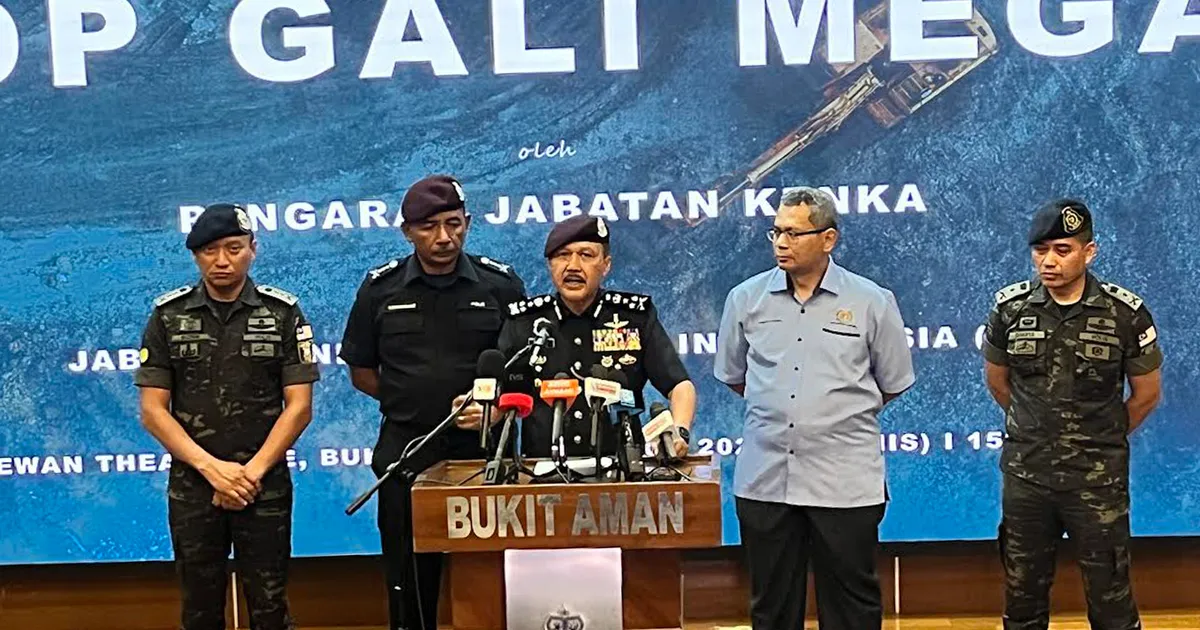
Malaysian authorities have mounted an aggressive enforcement campaign against illegal mining, resulting in the arrest of 99 suspects and the seizure of RM119 million in assets during an intensive five-day operation conducted from August 19 to August 23. The coordinated action represents one of the more substantial takedowns of unlicensed mining activity in recent months, underlining growing government commitment to tackling what has become an increasingly costly environmental and economic problem across the nation.
The scale of material recovered during this enforcement period illustrates the magnitude of illicit extraction happening across Malaysia's mining regions. Authorities confiscated approximately 33,000 tonnes of natural resources, encompassing coal, quarry stone, earth and sand, with the seized materials valued at RM21 million. This quantity alone demonstrates the industrial nature of these operations, which often function with sophisticated equipment and well-organized supply chains feeding materials into legitimate construction, manufacturing, and export markets.
The financial dimension of these seizures extends well beyond the value of raw materials themselves. The RM119 million in total assets taken represents equipment, vehicles, machinery, and other operational infrastructure that illegal miners had accumulated to sustain their extraction activities. These assets typically include heavy excavation equipment, processing machinery, transportation vehicles, and site facilities, all of which represent substantial capital investment in criminal enterprise. The confiscation of such infrastructure significantly disrupts operational capacity and serves as a meaningful economic deterrent to would-be participants.
Illegal mining has emerged as a persistent challenge throughout Southeast Asia, with Malaysia facing particular pressures given its abundant mineral deposits and porous enforcement mechanisms across vast geographical territories. The practice generates enormous environmental damage, including soil degradation, water pollution, habitat destruction, and landscape scarring that can persist for decades. Beyond environmental consequences, these operations frequently operate without safety protocols, creating hazardous conditions that endanger workers whilst depriving the government of legitimate mining royalties and taxation revenue.
The August operation reflects an apparent shift toward more aggressive enforcement tactics involving coordinated multi-agency participation. Such operations require significant resources, intelligence gathering, and interagency coordination between mining authorities, police, environmental agencies, and local enforcement bodies. The concentration of arrests and asset seizures within a defined five-day window suggests pre-planned intelligence-driven operations rather than routine patrols, indicating a more strategic approach to combating the problem.
From an economic perspective, illegal mining directly undermines legitimate mining businesses that comply with regulatory requirements, obtain proper licenses, and pay applicable fees and taxes. Licensed operators face higher operational costs due to environmental compliance, worker safety standards, and government levies, creating competitive disadvantages against unlicensed competitors operating without such constraints. This market distortion incentivizes industry consolidation around larger, capital-intensive operations whilst squeezing small legitimate miners.
The connection between illegal mining and broader criminal networks represents another dimension of concern. Proceeds from illicit extraction frequently feed into money laundering operations, corruption networks, and organized crime ecosystems. The cash-intensive nature of the trade, combined with relatively low detection risks in remote mining areas, makes it attractive for criminal syndicates seeking to launder proceeds from other illicit activities. Breaking these networks requires enforcement approaches extending beyond simple regulatory compliance toward comprehensive financial and organized crime investigations.
Government revenue implications are substantial. Mining royalties represent meaningful income streams for both federal and state governments, with illegal operations directly reducing these revenues. In Peninsular Malaysia alone, millions in annual royalties go uncollected due to unreported extraction. For cash-strapped state governments managing environmental and agricultural land, this revenue loss compounds challenges in funding conservation initiatives and community development programmes in mining-affected areas.
The success of focused enforcement campaigns like the August operation creates momentum for sustained effort. However, illegal mining typically rebounds unless enforcement remains consistent and intelligence networks stay active. Historical patterns suggest that without continuous pressure, operations frequently resume in different locations or under modified organizational structures. The challenge for Malaysian authorities involves maintaining intensity across multiple enforcement agencies whilst managing competing resource demands.
Regional implications extend beyond Malaysia's borders, as illicit minerals extracted domestically sometimes transit through neighbouring countries toward international markets. This creates opportunities for transnational cooperation and information sharing with Indonesian, Thai, and other regional authorities pursuing similar enforcement objectives. Regional coordination mechanisms remain underdeveloped, representing an opportunity for strengthening Southeast Asian responses to organized illegal resource extraction.
Looking forward, sustained progress against illegal mining requires complementary measures extending beyond enforcement operations. These include enhanced intelligence capabilities to identify emerging operations, prosecution mechanisms ensuring legal consequences for offenders, regulatory reform improving licensing transparency, community engagement reducing local participation in illicit extraction, and alternative livelihood initiatives for populations dependent on illegal mining income. Without addressing underlying factors driving participation in illegal mining, enforcement operations alone offer only temporary disruption.
The August crackdown demonstrates government determination to address illegal mining more aggressively. Maintaining this momentum whilst implementing comprehensive complementary strategies represents the pathway toward reducing this costly problem and recovering environmental and economic value being lost to criminal extraction networks.

