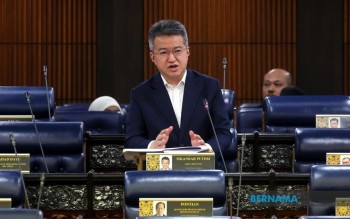
Parliament moved forward yesterday with legislation designed to anchor Malaysia's financial future through the National Trust Fund Bill 2026, which was formally introduced for its first reading in the Dewan Rakyat. Tabled by Deputy Finance Minister Liew Chin Tong, the bill represents a structural commitment to preserving wealth across generations by establishing the National Trust Fund, known locally as KWAN, alongside its governing entity, the National Trust Fund (Incorporated). The government is advancing the measure swiftly, with the second reading already scheduled during the current parliamentary session.
The architectural framework behind KWAN reflects both economic pragmatism and intergenerational responsibility. Rather than relying on discretionary budget allocations, the legislation mandates that Malaysia's Federal Government commit specific revenue streams to the fund each fiscal year. These contributions follow a tiered structure: a baseline minimum of 0.1 per cent derived from projected annual federal revenue, reinforced by at least two per cent of all dividends received from Petronas during the financial year, and no less than two per cent extracted from export duties on depleting natural resources after accounting for any state-level duty allocations. This multi-source approach diversifies the fund's inflows while explicitly linking contributions to Malaysia's hydrocarbon and natural resource economy.
The mandatory contribution mechanism underscores a significant policy shift towards insulating long-term savings from year-to-year political budgetary pressures. By embedding contributions into legislation rather than relying on discretionary government spending, Malaysia aims to prevent diversion of these reserves to immediate expenditures. The amounts contributed will be documented transparently within annual financial statements presented to Parliament, with actual fund transfers required by the conclusion of each financial year. This procedural clarity is essential for maintaining public confidence in sovereign wealth management, particularly important given regional comparisons with successful Norwegian and Singapore models.
Beyond federal government contributions, the bill explicitly opens avenues for state-level participation. State governments deriving royalties from petroleum exploitation or other depleting resources may contribute to KWAN voluntarily. This provision acknowledges Malaysia's federal structure while creating incentive alignment—states with resource wealth can strengthen national long-term reserves while receiving credit for developmental stewardship. The mechanism potentially addresses historical tensions around resource revenue distribution by channelling additional wealth toward perpetual societal benefit rather than year-to-year state budgets.
The National Trust Fund (Incorporated), as the designated administrator, carries substantial fiduciary responsibility. The board must develop and maintain a comprehensive strategic asset allocation framework articulating long-term investment philosophy and asset deployment across various markets and instruments. This requirement moves beyond passive fund accumulation toward active wealth generation, positioning KWAN to compound returns through disciplined capital markets engagement. The governance structure demands regular reporting to the Finance Minister, encompassing detailed accounts of fund assets, investment performance, and operational activities—establishing accountability mechanisms crucial for institutional legitimacy.
The legislation delineates permissible fund deployments with precision. KWAN's resources may fund board member remuneration and officer compensation, cover reimbursable expenses for trustees and administrative staff, and address all costs associated with fund administration, management, and investment operations. This clarity prevents scope creep while ensuring the governing entity maintains operational capacity and attracts qualified personnel. The specificity reflects lessons from international sovereign wealth funds, where transparent operational frameworks enhance institutional credibility and investment decision-making quality.
For Malaysian investors and policy observers, KWAN's establishment represents institutional machinery for long-term wealth accumulation particularly vital given demographics and global economic uncertainties. A dedicated sovereign wealth mechanism enables countercyclical policy flexibility—during economic downturns, policymakers can access reserves rather than impose severe spending cuts, while prosperous periods allow reserve accumulation rather than immediate consumption. This countercyclical capacity becomes increasingly valuable as Malaysia navigates volatile commodity cycles and digital economic transitions.
The timing of KWAN's introduction also reflects evolving Southeast Asian fiscal governance trends. Regional peers increasingly establish dedicated institutional vehicles for wealth preservation, recognising that ad-hoc approaches to surplus management prove insufficient for intergenerational equity. Malaysia's legislation positions the country within this modernisation trajectory, signalling commitment to institutional frameworks supporting long-term development and economic resilience across political cycles.
The fund's operational mechanics hinge substantially on Petronas dividend flows and natural resource export duties—revenue streams inherently volatile and potentially declining as global energy transitions accelerate. The legislation's emphasis on percentage-based contributions rather than fixed amounts provides some flexibility, but the underlying revenue base warrants careful monitoring. Policymakers recognise this dynamic, explaining the baseline 0.1 per cent federal revenue contribution as essential diversification beyond petroleum-dependent revenue sources.
Institutional independence represents another critical dimension embedded within the bill's framework. By establishing the National Trust Fund (Incorporated) as a separate legal entity with statutory reporting obligations, the legislation creates operational distance from year-to-year political pressures while maintaining democratic accountability through Finance Minister oversight and parliamentary transparency requirements. This balance—combining independence from immediate political interference with democratic accountability—mirrors best practices across successful regional sovereign wealth models.
The National Trust Fund Act 2026 will commence operations following a date appointed by the Finance Minister and published in the Gazette, providing administrative runway for institutional establishment and policy clarification. This measured implementation timeline reflects understanding that sovereign wealth fund launch requires careful personnel selection, investment policy development, and stakeholder communication before capital deployment commences. The second reading's imminent scheduling suggests parliamentary consensus around the measure's essential architecture, with substantive debate likely focusing on operational details and long-term investment strategy rather than foundational principles.

