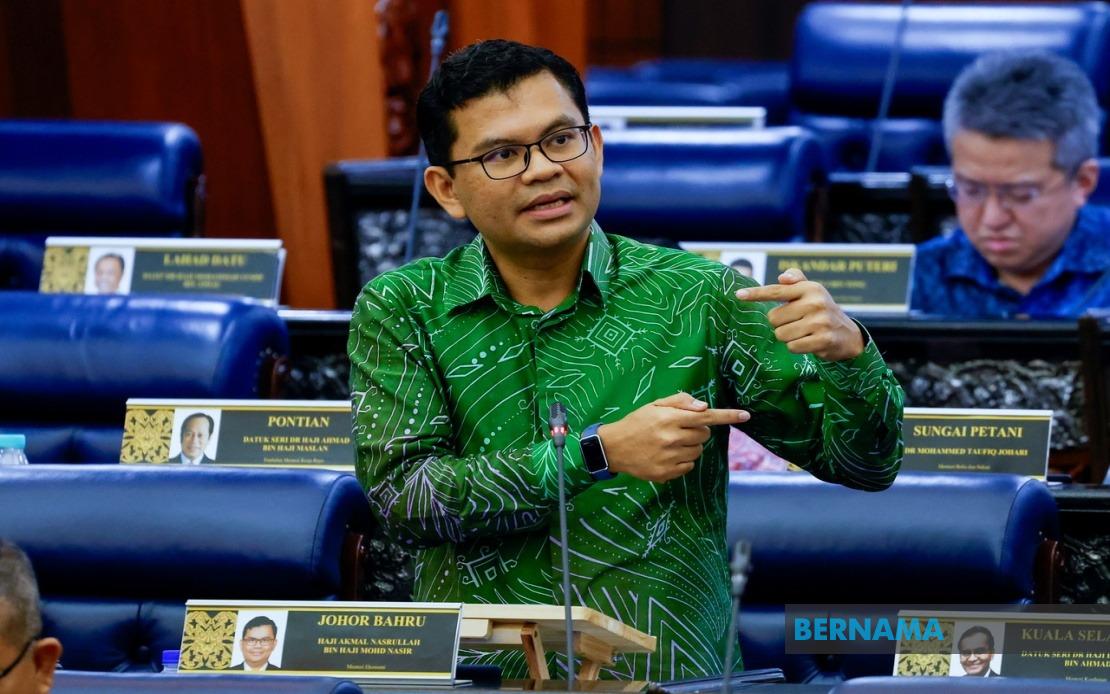
Malaysia's labour market has weathered the first half of 2026 with notable stability, according to Economy Minister Akmal Nasrullah Mohd Nasir, who presented an optimistic assessment of employment conditions during parliamentary questioning this week. Against a backdrop of global economic uncertainty and energy sector pressures, the country has managed to keep job losses at manageable levels, maintaining a far more favourable unemployment picture than many regional peers currently face.
The scale of recent job displacement appears modest by most standards. Only 6,197 individuals were recorded as unemployed as of June 22, constituting just 0.04 per cent of Malaysia's total working population. More encouraging still, this figure represents a substantial 20 per cent improvement compared with May 2026, when 7,766 people had become jobless. The improvement suggests that either employment creation is outpacing losses or that existing workers are returning to positions relatively quickly through active redeployment efforts.
The broader labour force metrics paint a picture of fundamental economic stability. Malaysia's total labour force had expanded to 17.33 million by April 2026, while the number of employed persons climbed to 16.82 million. These increases indicate that the economy continues to generate work, even as some sectors experience contraction. The labour force participation rate held steady at 70.9 per cent month-on-month, a sign that confidence in employment opportunities has not deteriorated sharply, and that citizens are continuing to engage with the job market rather than withdrawing entirely.
Unemployment did creep upward marginally from 3.0 per cent in April, a fractional movement that nonetheless remains well below the four per cent threshold typically associated with full employment in developed economies. At 511.8 thousand people, the total number of jobless individuals, while not insignificant, represents a tiny fraction of the overall workforce and falls comfortably within ranges considered structurally healthy. For Malaysia specifically, these figures suggest that the combination of energy sector challenges and external economic uncertainty has not triggered systemic labour market dysfunction.
A particularly encouraging trend has emerged through the government's active job placement interventions. The MYFutureJobs programme recorded a striking 55 per cent surge in successful placements, climbing from 12,119 in April to 18,756 by mid-June. This acceleration indicates that policy-level responses to employment displacement are gaining momentum and effectiveness. When combined with placements facilitated through the Employment Insurance System, the cumulative total reached 62,644 job matches during 2026 to that point, suggesting that displaced workers are finding new roles with increasing speed.
The significance of these redeployment figures extends beyond mere statistics. They demonstrate that government intervention in labour markets, when properly designed and executed, can significantly reduce the duration of unemployment and ease workers' transitions between roles. Rather than providing only passive income support, programmes like MYFutureJobs appear to function as active matchmaking mechanisms that reconnect displaced workers with employers facing labour shortages. This approach proves more economically efficient than simple welfare provision, as it maintains earning capacity and consumer spending power while helping businesses access needed talent.
The context driving these employment questions warrants closer examination. Akmal Nasrullah was responding to parliamentary concern about potential job losses stemming from energy sector disruptions and mounting global economic headwinds. Energy crises often propagate through supply chains and create cascading employment effects across dependent industries. The fact that unemployment has actually declined rather than spiked suggests either that the energy challenges have proven less severe than feared, or that workforce adjustments have been managed more smoothly than in previous economic cycles through better coordination between government and industry.
For Malaysian businesses and workers, these labour market conditions carry mixed implications. The stability suggests that the broader economic foundation remains sound, providing some reassurance to employers considering expansion plans and to workers assessing career security. However, the existence of any job losses, particularly in energy-intensive sectors, signals that structural adjustments are underway. Companies relying on energy-dependent operations face pressures to improve efficiency or transition toward alternative arrangements. Workers in affected industries should view the current robust redeployment environment as an opportunity window to upskill or pivot toward growing sectors before conditions potentially tighten.
Regionally, Malaysia's employment resilience stands out against broader Southeast Asian trends. Several neighbouring economies have grappled with sharper unemployment spikes in recent months, making Malaysia's controlled approach noteworthy. The emphasis on active labour market policies—particularly the MYFutureJobs platform—offers a model that other countries in the region increasingly observe and attempt to replicate. This creates potential competitive advantages for Malaysia in attracting mobile talent and maintaining investor confidence during uncertain periods.
Looking forward, sustaining this labour market equilibrium will depend on continued attention to several factors. The energy sector situation requires ongoing monitoring; any significant deterioration could cascade through employment more rapidly than current figures suggest. The effectiveness of redeployment programmes will remain crucial, as will private sector hiring sentiment. Additionally, productivity growth becomes increasingly important if Malaysia aims to maintain employment without relying heavily on economic expansion alone. Companies that invest in worker training and modernised operations will prove better positioned to weather disruptions than those attempting to minimise costs through workforce reduction.
The minister's parliamentary statement reflects a measured approach to labour market communication—neither dismissing genuine challenges nor painting an unrealistically rosy picture. This balanced framing should reassure observers that policy responses are grounded in realistic assessment rather than political posturing. For businesses, workers, and investors monitoring Malaysia's economic trajectory, the current employment landscape suggests that while challenges exist, the institutional and policy infrastructure exists to manage transitions relatively smoothly.

