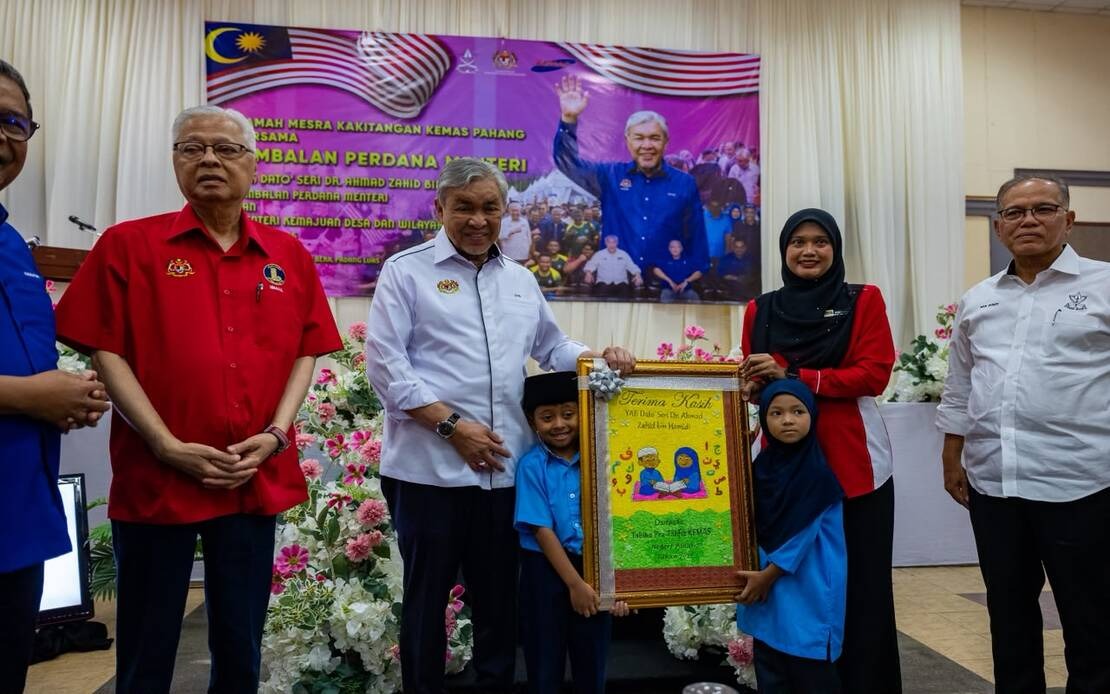
The Rural and Regional Development Ministry is embarking on a comprehensive modernisation of Malaysia's early childhood education system, with the Community Development Department (KEMAS) at the centre of efforts to blend technological advancement with religious and moral instruction. Deputy Prime Minister Datuk Seri Dr Ahmad Zahid Hamidi outlined this strategic direction during the Pahang KEMAS Community Engagement Programme in Bera on August 16, emphasising that the 60-year-old institution must evolve to serve the needs of contemporary Malaysian children while maintaining its foundational commitment to character development.
The urgency of this transformation has been heightened by recent changes to the national education framework. Malaysia's decision to lower school entry age from seven to six years has placed greater emphasis on quality early childhood provision, making KEMAS kindergartens and childcare facilities increasingly critical infrastructure within the public education ecosystem. This policy shift means that more children are entering structured learning environments at younger ages, requiring educators and institutions to be better prepared with both pedagogical expertise and modern resources to support developmental milestones during these formative years.
Technological integration represents the most visible dimension of this modernisation push. Ahmad Zahid highlighted plans for widespread deployment of Smart Class initiatives and smartboard technology across KEMAS kindergartens, reflecting an understanding that digital literacy has become as fundamental to early learning as numeracy and language skills. For Malaysian parents and educators, this signals a commitment to ensuring that children in government-run facilities—which serve predominantly lower and middle-income households—have comparable access to educational technology as their counterparts in private institutions. The emphasis on technology accessibility addresses a persistent equity concern in Malaysian education, where resource disparities between urban and rural areas have historically disadvantaged students in less developed regions.
Equally significant is the proposed expansion of religious and Islamic education within KEMAS programmes. The ministry plans to introduce structured memorisation of additional Quranic chapters beginning next year, moving beyond the existing focus on Juzuk 30 to include Surah Yasin, Al-Waqiah, Al-Mulk, and As-Sajdah. This reflects a deliberate policy choice to deepen Islamic instruction at the earliest stages of formal education, grounded in the conviction that religious values and moral foundations should be established during childhood. For a Muslim-majority nation where Islam is constitutionally enshrined as the federation's religion, such initiatives resonate with broader social expectations regarding education's role in character formation and spiritual development.
The success of this memorisation initiative, however, depends critically on educator capability. Ahmad Zahid stressed that KEMAS teachers must themselves master these Quranic passages before attempting to guide children through structured memorisation programmes. This prerequisite reflects realistic understanding that effective religious education requires not merely curriculum content but also teacher competence and personal example. The implication is that substantial professional development investment will be necessary to ensure instructors possess both the religious knowledge and pedagogical skills to teach these materials effectively to young learners, who require different instructional approaches than older students.
Political coordination and intergovernmental cooperation emerge as essential enablers in this vision. Ahmad Zahid emphasised that federal authorities, state governments, parliamentarians, and state assembly members must work in closer alignment to provide necessary technological infrastructure and secure sustainable funding. This call for multi-level collaboration acknowledges the reality that KEMAS operates across Malaysia's diverse geography, where implementation capacity and resource availability vary significantly between well-developed urban centres and more remote rural locations. Such coordination is particularly important given that state governments hold responsibilities regarding land allocation and property administration for KEMAS facilities.
The Pahang state government's existing support for KEMAS has included initiatives to regularise land titles for kindergarten and childcare premises, in addition to providing grants and funding for facility improvements. Ahmad Zahid's public acknowledgment of this state-level cooperation signals appreciation for efforts that, while potentially routine from an administrative perspective, facilitate KEMAS's operational stability and expansion. These ground-level investments—securing property rights, renovating buildings, providing operational grants—create the physical and financial foundations upon which educational quality ultimately depends. Such recognition may also encourage other state administrations to prioritise similar support measures for KEMAS facilities within their jurisdictions.
The historical context underscores the scale and reach of KEMAS's mission. Since its establishment, KEMAS kindergartens and childcare centres have served approximately 8.4 million children, representing a remarkable accumulation of human engagement across six decades. This figure reflects the programme's deep penetration into Malaysian communities, particularly in rural and lower-income urban areas where private early childhood options may be unavailable or unaffordable. The sheer number of children touched by KEMAS means that decisions about curriculum, teaching methods, and resource allocation have implications affecting millions of Malaysian families across generations.
Ahmad Zahid's framing of KEMAS's future emphasises the balance between preservation and innovation. He articulated that the institution must retain its legacy and identity—rooted in community development and grassroots engagement—whilst simultaneously embracing transformation that prepares children for competitive global environments. This dual orientation recognises that early education serves multiple purposes: transmitting cultural and religious values that anchors Malaysian identity, whilst simultaneously equipping children with contemporary skills necessary for economic participation and technological fluency. The challenge lies in integrating these objectives coherently, ensuring that technological adoption and religious instruction reinforce rather than contradict each other within the learning environment.
The emphasis on political stability as a prerequisite for educational advancement introduces a governance perspective often overlooked in technical discussions of curriculum reform. Ahmad Zahid's assertion that stability and cooperation across government levels are essential for advancing early childhood education acknowledges that sustained policy implementation requires consistent political commitment, adequate budgeting across electoral cycles, and alignment between different tiers of administration. In Malaysia's context, where state elections and federal parliamentary cycles operate on different timelines, achieving such continuity requires deliberate effort to insulate educational initiatives from partisan fluctuations and ensure that investments in KEMAS infrastructure and programmes maintain momentum regardless of political transitions.
For Malaysian stakeholders—parents, educators, policymakers, and civil society—this modernisation agenda represents both opportunity and implementation challenges. The integration of technology and religious education within a national early childhood system serving primarily lower-income populations could substantially enhance educational equity and cultural continuity. However, translating these ambitions into consistent, high-quality practice across hundreds of KEMAS facilities requires sustained resource commitment, serious investment in teacher training and development, and careful monitoring of implementation fidelity to ensure that technological tools and religious instruction programmes operate effectively rather than becoming tokenistic additions to existing structures. The coming years will demonstrate whether Malaysia can achieve this balance.

