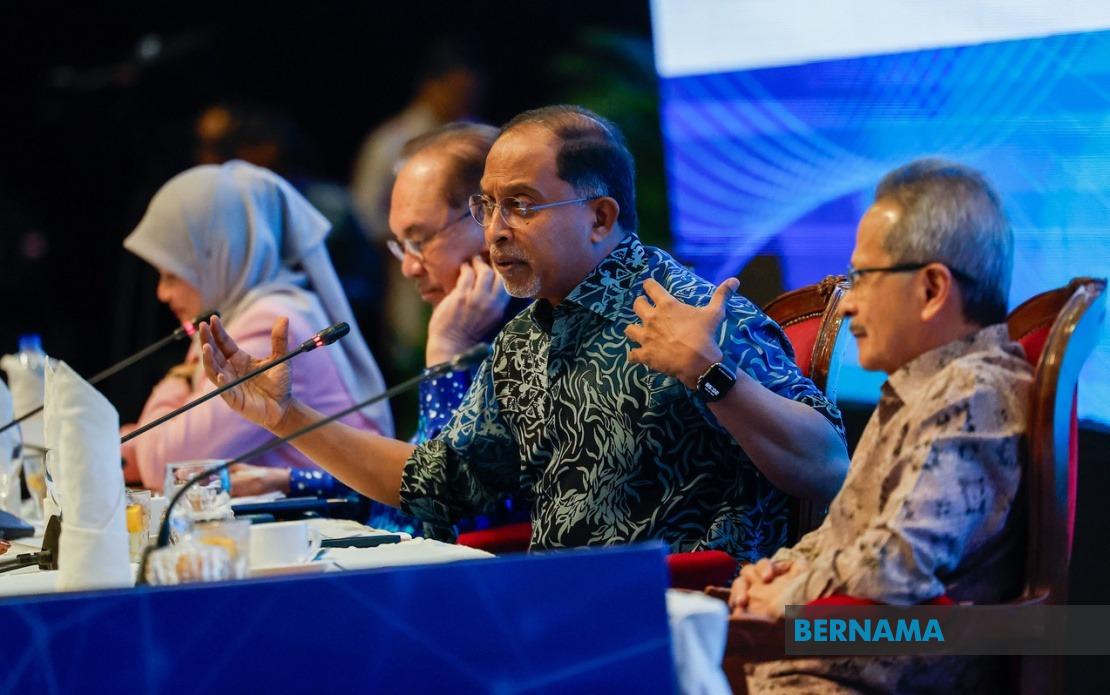
The future of Malaysia's higher education system hinges on a fundamental modernisation of its legal architecture, according to Higher Education Minister Datuk Seri Dr Zambry Abd Kadir, who has thrown his weight behind reviewing the Universities and University Colleges Act 1971 (AUKU) and related legislation that governs the sector. Zambry made the case at the MADANI Malaysian Scholars Forum Series 13, held at Dewan Tunku Chancellor at the University of Malaya, where Prime Minister Datuk Seri Anwar Ibrahim moderated a wide-ranging discussion on the future direction of national education policy.
The call for legislative renewal comes as Malaysian universities face mounting pressure to remain competitive globally whilst navigating a regulatory environment that Zambry himself characterised as outdated. The minister acknowledged that existing legal constraints have hindered institutional flexibility and innovation, prompting the Ministry of Higher Education (KPT) to examine how current laws restrict the autonomy and responsiveness of the nation's universities. This admission represents a significant policy shift, as it places squarely on the table the question of whether AUKU—legislation that has governed university operations for more than five decades—remains fit for purpose in the 21st century.
Zambry outlined a multifaceted reform agenda that extends beyond merely amending AUKU. The ministry is exploring the possibility of drafting an overarching One Higher Education Act designed to consolidate and coordinate the various statutes affecting universities under a single, more coherent regulatory framework. Such consolidation would theoretically streamline governance, eliminate redundancies, and create space for universities to exercise greater institutional autonomy in areas where current law imposes rigid restrictions. The practical benefits of such an approach would be substantial for Malaysian institutions seeking to attract international talent and partnerships, as fragmented legal regimes often deter foreign academics and researchers unfamiliar with navigating multiple, overlapping regulatory requirements.
Central to the minister's reform vision is the explicit protection of academic freedom and freedom of expression within university settings. For decades, AUKU has been criticised by academics, student activists, and civil society groups for restricting these fundamental freedoms through provisions that limit student political activity and impose vague constraints on campus speech. Zambry's emphasis on guaranteeing these freedoms signals recognition that universities function best when scholars and students can engage in robust intellectual debate, challenge established orthodoxies, and contribute meaningfully to the public sphere. Without such protections, Malaysian universities risk brain drain as talented academics migrate to jurisdictions offering greater intellectual liberty.
Student empowerment represents another pillar of the proposed reforms. The minister acknowledged that students themselves must have a stronger voice in shaping university governance and policy, moving away from the paternalistic model that has characterised Malaysian higher education. This shift aligns with international trends in which students are increasingly recognised as stakeholders with legitimate claims to participate in decisions affecting their educational experience and institutional direction. By formalising mechanisms for student input, Malaysia's universities can tap into the energy and perspectives of their student bodies whilst building civic engagement from the ground up.
To translate these aspirations into concrete legislative change, the KPT has established an Independent Committee tasked with collecting and evaluating submissions from academics, student representatives, and other stakeholders. This consultative approach indicates that the ministry recognises reform cannot proceed through top-down decree alone; rather, the credibility and sustainability of any new legal framework depend on incorporating the voices and concerns of those most directly affected by higher education law. The committee's work will likely generate substantive debates about how Malaysian universities should balance institutional autonomy with public accountability, academic freedom with social responsibility, and local relevance with global standing.
In the Malaysian and Southeast Asian context, these debates carry particular weight. The region's universities compete for regional and global standing, with countries including Singapore, Thailand, and Indonesia investing heavily in higher education innovation and infrastructure. If Malaysia's legal framework continues to constrain institutional flexibility and academic freedom, the nation risks falling further behind competitors who have already undertaken or completed similar modernisation efforts. Prospective international partnerships, research collaborations, and student recruitment campaigns all become more challenging when conducted under restrictive legal conditions.
Education Minister Datuk Seri Fadhlina Sidek complemented the higher education discussion by articulating a vision for Malaysia's entire education system centred on "humane education"—an approach prioritising equitable access, holistic development, and student wellbeing over narrow examination-focused metrics. Fadhlina stressed that the Ministry of Education (MOE) remains committed to expanding educational access regardless of geography or circumstance, pointing to innovations such as Schools in Hospital, rehabilitation centre schools, and specialised K9 and K11 models serving Orang Asli students. This expansion of pre-school access on a free basis reflects recognition that educational equity must begin in early childhood and extend throughout the system.
Fadhlina's characterisation of children as possessing intellect, emotions, ambitions, anxieties, and potential shortcomings rather than as mere examination scores or economic units represents a philosophical repositioning of educational purpose. Such framing challenges the instrumentalist view of education as primarily a mechanism for producing workforce-ready graduates, instead advocating for schools as spaces where balanced, resilient, morally grounded individuals develop. This perspective carries implications for how curricula are designed, how teaching is professionalised, and how educational success is measured—topics that inevitably intersect with the higher education reforms under discussion.
The forum itself, bringing together the prime minister as moderator alongside the higher and general education ministers and the president of the Academy of Sciences Malaysia, signalled elevated political commitment to rethinking Malaysia's educational trajectory. That Anwar Ibrahim personally moderated the discussion underscores the administration's view that education policy ranks among the nation's strategic priorities. This level of political engagement may facilitate faster legislative progress, although the complexity of AUKU reform—touching on university autonomy, student rights, academic freedom, and institutional governance—suggests that thorough consultation and careful drafting will remain essential to avoiding unintended consequences.
The push to modernise Malaysia's higher education legal framework ultimately reflects a recognition that rapid technological, social, and economic change has rendered mid-20th-century legislation inadequate for contemporary challenges and opportunities. Whether through targeted amendments to AUKU or adoption of a comprehensive One Higher Education Act, the trajectory appears set toward greater institutional flexibility, enhanced student voice, and firmer protections for academic and expressive freedoms. The coming months will reveal whether the Independent Committee's consultative process can build sufficient consensus to move reform from discussion forums to parliamentary legislative action.

