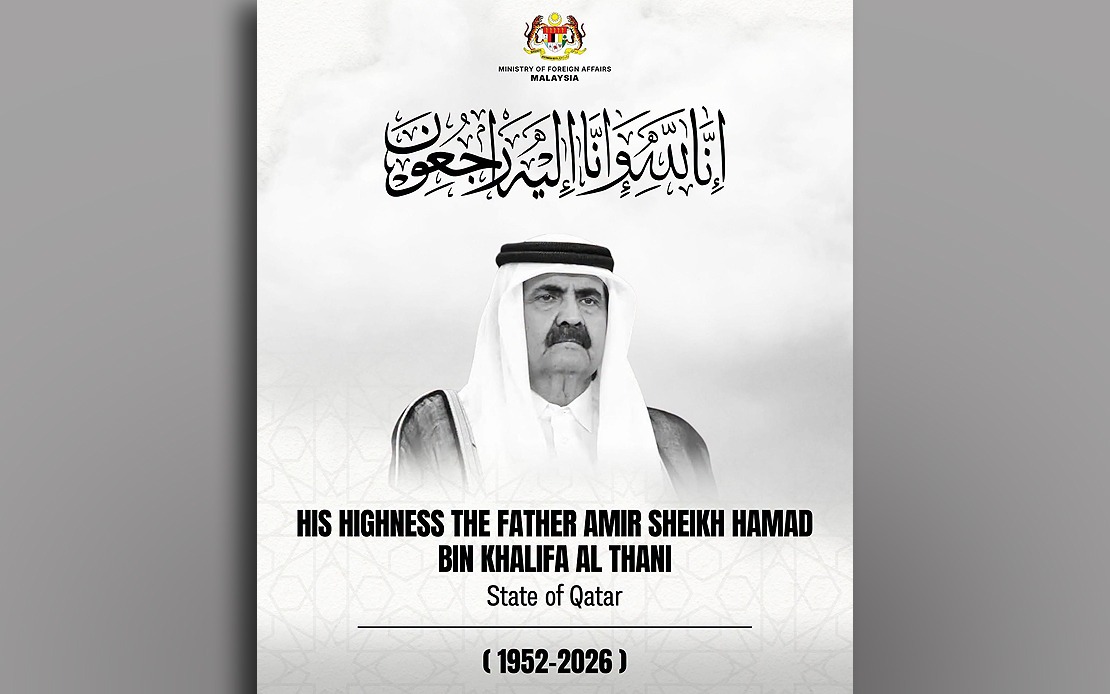
Malaysia has dispatched its Higher Education Minister, Datuk Seri Dr Zambry Abdul Kadir, to Qatar to offer condolences on behalf of the Malaysian government following the death of the late Father Amir, Sheikh Hamad bin Khalifa Al Thani. The minister's attendance at the official mourning ceremonies, scheduled for July 13 and 14, underscores the diplomatic importance that Kuala Lumpur places on its relationship with Qatar, a significant economic and cultural partner in the Middle East.
The death of Sheikh Hamad bin Khalifa Al Thani represents a historic transition for Qatar, marking the passing of a towering figure who shaped the nation's modern development and regional influence. As the Father Amir—a title denoting the revered former leader—his legacy encompasses decades of transformative governance that elevated Qatar from a modest Gulf state to a global economic powerhouse. The current Amir, Sheikh Tamim bin Hamad Al Thani, will preside over four days of official state mourning, during which he will receive delegations of foreign leaders, members of the Qatari ruling family, and distinguished guests at Lusail Palace from July 13 to 15.
The Foreign Ministry's statement conveyed Malaysia's deep respect for Qatar during this solemn period, emphasizing solidarity with both the leadership and people of the State of Qatar. This language reflects not merely ceremonial condolence but genuine partnership rooted in shared interests spanning trade, education, and cultural exchange. The dispatch of a cabinet-level minister rather than a lower-ranking diplomat signals the seriousness with which Malaysia views its obligations to acknowledge significant events in friendly nations' histories.
Qatar's declaration of four days of national mourning, commencing on Sunday, July 12, reflects the profound impact of Sheikh Hamad's passing on Qatari society. All government ministries, entities, and public institutions throughout the country have ceased operations in tribute, effectively placing the nation in a state of collective reflection. This comprehensive shutdown demonstrates how deeply embedded the late Amir remains in Qatar's national consciousness and institutional identity.
The choice of location for the condolence ceremony holds particular significance. Lusail Palace, as the venue for receiving foreign dignitaries, represents the formal seat of Qatari state authority and serves as the symbolic heart of the nation's governance. By welcoming international leaders there, the current Amir ensures that Qatar's mourning process carries global resonance, reaffirming the country's standing as a significant player in international affairs. The three-day window for receiving condolences indicates the scale of expected attendance from around the world.
For Malaysia specifically, Qatar represents more than a distant Middle Eastern neighbor. The two nations have cultivated increasingly warm diplomatic relations, particularly in recent years. Malaysian workers comprise a notable portion of Qatar's expatriate labour force, while Qatari investments in Malaysian infrastructure and finance have grown substantially. Educational exchanges, including Qatari scholarships for Malaysian students and Malaysian technical expertise in Gulf development projects, further cement bilateral ties.
The presence of Dr Zambry Abdul Kadir, who oversees Malaysia's higher education portfolio, carries additional weight given the substantial number of Malaysian students pursuing studies in Qatar's universities and educational institutions. His attendance acknowledges the broader people-to-people connections between the two nations beyond government-to-government relations. This gesture demonstrates Malaysia's recognition that mourning in Qatar affects not only the state apparatus but also the many Malaysians residing, working, and studying there.
From a Southeast Asian perspective, Malaysia's formal participation in Qatar's mourning ceremonies reinforces the region's diplomatic standing in global affairs. It illustrates how ASEAN nations, while geographically distant, maintain active engagement with significant international developments. The decision to send ministerial representation rather than merely offering written condolences through diplomatic channels reflects contemporary expectations of respectful engagement in an interconnected world.
The passing of Sheikh Hamad bin Khalifa Al Thani also marks a generational transition in Gulf leadership. Many observers will scrutinize how the succession unfolds and what policy adjustments, if any, the current Amir might pursue. Malaysia, as a fellow Muslim-majority nation with its own experience of dynastic governance and peaceful power transitions, maintains particular interest in Qatar's stability and continuity during such transitions. The formal mourning period provides time for reflection on the late Amir's achievements while allowing the new leadership to consolidate authority and chart future directions.
The coordinated international response to Sheikh Hamad's death, symbolized by delegations from numerous countries including Malaysia, underscores Qatar's successful integration into the global community despite its relatively small population. This integration has been built deliberately through strategic investments, hosting major international events, and cultivating broad diplomatic networks. Malaysia's participation in these mourning ceremonies represents acknowledgment of Qatar's successful positioning as a bridge between the Arab world, the Islamic world, and the broader international community.
Looking ahead, the mourning period serves as more than ceremonial observance. For Malaysian policymakers and observers of Gulf affairs, it offers an opportunity to assess the trajectory of Malaysia-Qatar relations and consider how the bilateral partnership might evolve under the current Amir's continued leadership. The dispatch of ministerial representation demonstrates Malaysia's commitment to maintaining and strengthening these ties, even as both nations navigate complex regional geopolitical dynamics and global economic challenges in the post-pandemic era.

