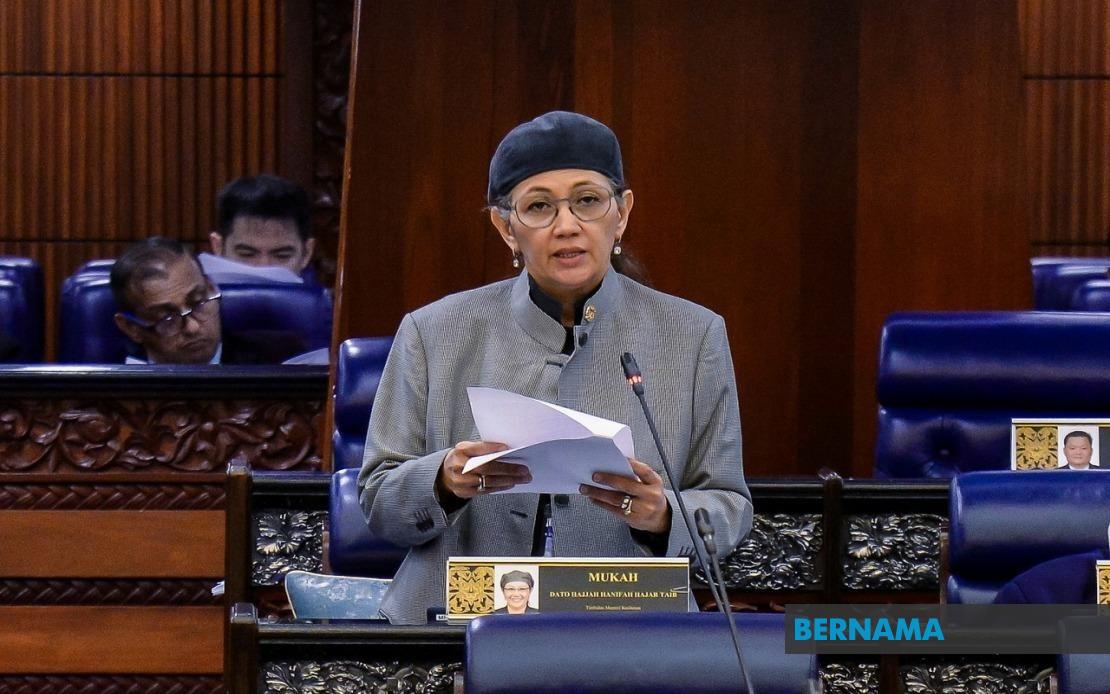
The Ministry of Health has announced an ambitious plan to inject 560 permanent medical officers into Sabah's healthcare system beginning October 2026, representing a significant escalation in efforts to resolve the East Malaysian state's longstanding physician deficit. Deputy Health Minister Datuk Hanifah Hajar Taib disclosed the initiative during parliamentary proceedings in Kuala Lumpur, framing it as part of a nationwide acceleration to fill 4,500 permanent medical positions across two coordinated phases. The announcement signals recognition at the federal level that Sabah's healthcare infrastructure has reached a critical juncture, with the state's medical workforce chronically unable to meet population demands.
Yet the figures reveal a sobering reality lurking beneath the headline commitment. Historical acceptance rates for medical postings in Sabah languish at approximately 50 per cent, meaning the Ministry realistically anticipates only around 280 of the 560 offered positions will be filled. This cautious projection reflects years of pattern data showing physicians declining postings to the state, likely due to concerns about working conditions, geographic isolation, and career advancement opportunities relative to opportunities in peninsular Malaysia. Even if the optimistic scenario materialises, the inflow would fall short of Sabah's documented shortfall of 256 medical officers, suggesting the state will continue operating with structural understaffing regardless of this initiative's success.
The broader context amplifies the challenge. Sabah presently maintains 2,803 established medical officer posts, of which only 1,863 positions—roughly two-thirds—are actively occupied. An additional 366 officers are on study leave, a common practice within Malaysia's medical service, while 570 positions sit vacant. To maintain operational capacity amid these gaps, the Ministry has already deployed 680 contract doctors to Sabah, creating a two-tiered workforce dependent on temporary arrangements rather than stable permanent placements. This reliance on contractual staff creates institutional fragility, as contract officers lack the job security and career progression guarantees attached to permanent appointments, potentially explaining higher turnover and vacancy rates.
The Ministry's tiered approach to nationwide recruitment underscores the magnitude of the challenge beyond Sabah. In the first acceleration phase concluding mid-2026, 328 medical officers received permanent offers, with 39 positions designated for Sabah. However, only 20 of those designated officers reported for duty, while 19 declined their postings—a rejection rate exceeding 48 per cent. This pattern validates the Ministry's conservative 50 per cent assumption and suggests structural factors beyond mere compensation or working conditions may deter placements. Sabah's geographic remoteness from Malaysia's developed medical infrastructure, limited specialist services, and smaller patient populations may discourage officers seeking diverse clinical experience early in their careers.
Sabah's position within regional health disparities requires examination. According to the 2024 Health Indicators report, eight Malaysian states, including Sabah, fall below the national average for doctor-to-population ratio. This places Sabah in a cohort of underserved regions competing nationally for the same pool of qualified medical graduates and experienced practitioners. However, the data also provides encouragement: Sabah achieved a 25.1 per cent improvement in its doctor-to-population ratio between 2020 and 2023, indicating that targeted interventions can produce measurable progress. This trajectory suggests that sustained effort, rather than isolated initiatives, may gradually normalise Sabah's healthcare workforce.
To improve acceptance rates and ensure more equitable distribution of medical talent across Malaysia, the Ministry has introduced institutional mechanisms designed to incentivise Sabah and Sarawak postings. Contract officers transitioning to permanent status must now select at least one placement preference in either Sabah, Sarawak, or Labuan as part of the enhanced e-Placement system implemented in 2025. This represents a subtle but significant policy shift, leveraging officers' desire for permanent appointment status to encourage acceptance of positions in historically underserved regions. Additionally, the Ministry has ringfenced placement quotas specifically for Sabah and Sarawak, allocating 650 permanent posts to Sarawak and 310 to Sabah through the e-Placement system—together representing 42.7 per cent of the total 2,248 nationwide placement quota. This proportionally generous allocation acknowledges that East Malaysia's healthcare systems require structural support unavailable through market mechanisms alone.
The e-Placement system itself merits scrutiny as a policy tool addressing deeper workforce distribution challenges. Rather than leaving placement decisions entirely to officer preference, the system uses quotas and mandatory selection criteria to steer human resources toward regions with the greatest need. This represents a departure from purely market-driven allocation, implicitly recognising that younger, ambitious physicians naturally gravitate toward peninsular Malaysia's larger hospitals, research opportunities, and established specialist networks. By building Sabah and Sarawak placement requirements into the transition to permanent employment, the Ministry attempts to overcome these natural career incentives through institutional design.
For Malaysian healthcare governance, this initiative illustrates the persistent tension between centralised workforce planning and decentralised career preferences. The Ministry can announce posts and allocate quotas, but converting those allocations into actual doctors serving patients in Sabah depends on acceptance rates influenced by factors only partially within ministerial control—personal career aspirations, family considerations, professional networks, and perceptions of regional healthcare systems. The 50 per cent historical acceptance rate suggests a ceiling at current incentive levels, implying that further improvements may require either enhanced compensation packages, career progression guarantees, or addressing deeper infrastructure and working condition concerns in Sabah's health facilities.
Regional implications extend beyond Sabah alone. The Ministry's commitment to Sarawak—with 650 positions representing even larger absolute numbers—indicates that East Malaysian healthcare development has become a federal priority, likely driven by political considerations alongside clinical necessity. For patients and communities across Sabah, this represents a tacit acknowledgment that healthcare equity across Malaysia's diverse geography requires sustained federal intervention. Achieving these placement targets could meaningfully improve access to medical services in underserved areas and reduce pressure on existing staff operating in resource-constrained environments.
Looking forward, the success of this initiative will depend less on the generosity of quota allocation than on whether the Ministry can address underlying factors driving rejection rates. If only 280 of 560 positions are filled as projected, Sabah will gain modest workforce improvement but remain substantially understaffed relative to national standards. The Deputy Health Minister's parliamentary disclosure, while formally responsive to constituent concerns raised by the Kinabatangan MP, candidly acknowledges this gap, suggesting the Ministry recognises current measures, though positive, will not conclusively resolve Sabah's healthcare workforce crisis. Sustained effort, likely requiring either improved incentives or systemic reforms in regional healthcare delivery, will be necessary to achieve equitable physician distribution across Malaysia.

