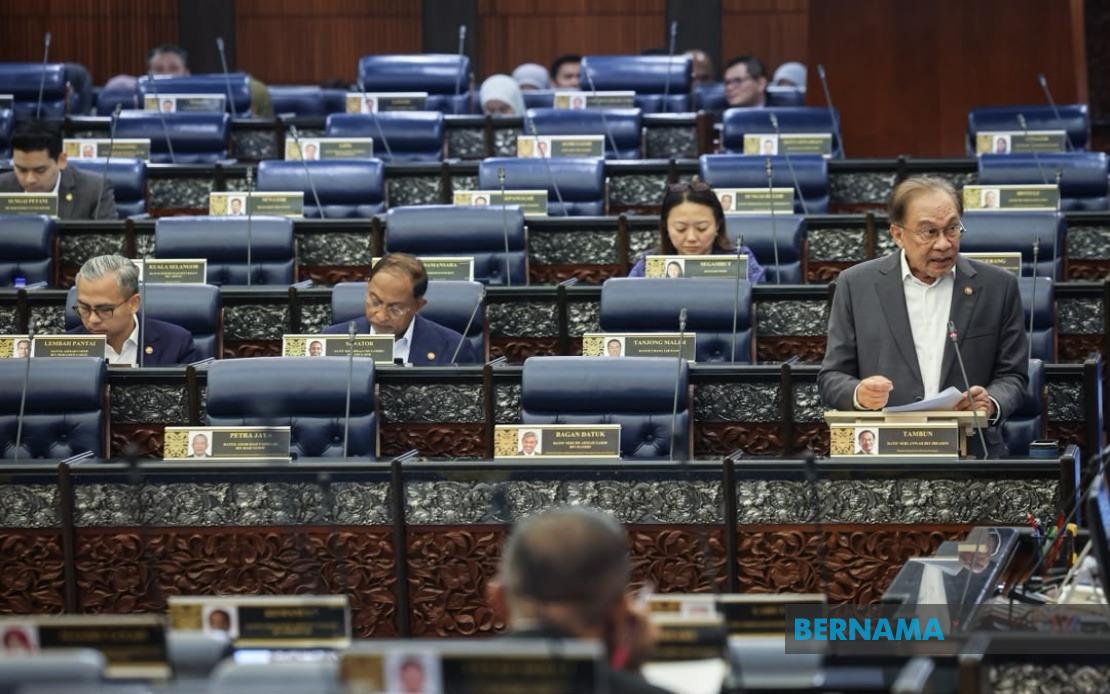
Prime Minister Datuk Seri Anwar Ibrahim has defended Malaysia's fuel pricing framework by highlighting comparative advantages over major global oil producers, countering suggestions that domestic petrol costs have become uncompetitive. Speaking in Parliament, the Premier pointed to the stability of subsidised RON95 petrol under the BUDI MADANI initiative, which continues to hold at RM1.99 per litre—a price point he argued demonstrates government commitment to affordability for ordinary Malaysians.
The Prime Minister's remarks came in response to parliamentary questions about fuel price differentials across different administrations, particularly comparing current conditions to those under former Prime Minister Datuk Seri Najib Razak. This comparison is significant in Malaysian political discourse, as fuel subsidies have long been a contentious issue affecting household budgets and government expenditure. Anwar's emphasis on maintaining competitive pricing reflects broader policy objectives around cost-of-living pressures that continue to shape public sentiment and electoral considerations.
When contextualised against Saudi Arabia's current retail prices exceeding RM2.40 per litre, Malaysia's RM1.99 benchmark illustrates meaningful price differentiation between resource-rich nations. The disparity is particularly notable because Saudi Arabia, as one of the world's largest crude oil exporters with among the lowest production costs globally, typically positions itself as a low-cost producer. That Malaysian consumers pay substantially less than their Saudi counterparts suggests successful policy buffering against international market volatility, though this advantage depends heavily on government subsidy mechanisms.
The Prime Minister also referenced historical context to strengthen his position, noting that when previous political opposition had campaigned for fuel prices to be reduced to RM1.50, Saudi Arabia's comparable price stood around 50 sen per litre. This temporal framing serves multiple rhetorical purposes: it demonstrates how global energy markets have shifted, suggests the impossibility of maintaining extremely low domestic prices indefinitely, and implicitly contextualises Malaysian pricing as pragmatic within a transformed international environment. Such comparisons matter significantly for Malaysian policymakers juggling fiscal sustainability against electoral pressures.
Beyond Saudi Arabia, Anwar highlighted that Qatar and the United Arab Emirates also maintain higher fuel retail prices than Malaysia. The UAE's recent decision to increase petrol prices two months prior to his parliamentary statement carries particular weight in this argument, since the UAE ranks among the world's top oil exporters. That even energy-abundant Gulf states have raised their consumer pump prices underscores the difficult position facing governments attempting to shield domestic populations from global commodity price movements. For Malaysian observers, this suggests the government's current pricing strategy reflects genuine economic constraints rather than arbitrary policy choices.
The government's BUDI MADANI initiative represents a deliberate policy architecture designed to balance multiple competing objectives. By targeting RON95 subsidies specifically, the framework protects lower-income households and small business operators who depend on cheaper fuel, whilst allowing higher-grade petrol products to float closer to market rates. This targeted approach differs markedly from blanket subsidisation models that some neighbouring countries employ, and it reflects lessons learned from Malaysia's historical experience with fuel subsidy reforms. The consistency of the RM1.99 price point signals policy stability—a messaging priority for a government navigating economic uncertainty and inflation concerns.
For the broader Southeast Asian context, Malaysia's positioning becomes instructive. The region encompasses economies with varying resource endowments and fiscal capacities, ranging from major oil exporters like Indonesia and Brunei to resource-importing nations. Malaysia's intermediate status—possessing meaningful hydrocarbon reserves but facing production constraints and global market exposure—creates particular policy challenges. By maintaining pump prices lower than Saudi Arabia and Qatar whilst managing government expenditure, Malaysia attempts to demonstrate that resource management transcends simple abundance; policy discipline matters equally.
The political dimensions of this debate warrant attention. Opposition politicians, including Datuk Rosol Wahid of Perikatan Nasional, have raised questions about price consistency and whether Anwar's pre-election pledges to reduce fuel costs have materialised adequately. These criticisms tap into genuine public concerns about inflation and household purchasing power. Anwar's parliamentary response essentially reframes the narrative: rather than accepting that current prices are high, he repositions them as relatively advantageous by establishing an external benchmark against supposedly wealthier, oil-rich competitors. This rhetorical strategy attempts to reset public expectations about what constitutes reasonable fuel pricing.
The sustainability of Malaysia's current subsidy model remains an underlying concern, though not explicitly addressed in the parliamentary exchange. Government expenditure on fuel subsidies represents a significant fiscal burden, constraining resources available for healthcare, education, and infrastructure development. International financial institutions have periodically recommended subsidy reforms, and opposition remains strong whenever governments propose price increases. The Prime Minister's comparative argument serves partly to build political space for potential future adjustments, by establishing that Malaysia's prices are already objectively reasonable by regional and global standards.
Looking forward, these conversations will likely persist as global energy markets remain volatile. Geopolitical tensions, energy transitions toward renewables, and macroeconomic uncertainties all create variables affecting international fuel prices. Malaysia's ability to maintain RM1.99 depends partly on factors beyond government control, though the strength of currency exchange rates and refinery operational efficiency provide some domestic levers. Anwar's emphasis on comparative affordability establishes a baseline from which future policy adjustments might be justified, should circumstances require them.
For Malaysian consumers navigating household budgets, the reality of RM1.99 per litre petrol represents substantial savings compared to global alternatives. Whether that satisfies growing cost-of-living anxieties depends on broader economic conditions, wage growth, and other inflation pressures beyond fuel. The Prime Minister's parliamentary intervention signals that the government intends to maintain subsidy commitments whilst managing expectations about what remains fiscally feasible. As regional energy markets continue evolving and Malaysia's fiscal position shifts, this comparative framework will likely feature prominently in political debates about fuel pricing for years ahead.

