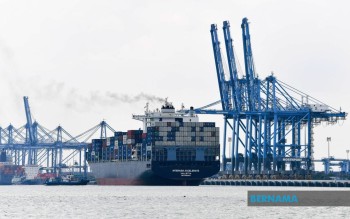
Malaysia's economic outlook for 2026 has brightened considerably, with leading financial institutions raising their export growth projections in response to stronger-than-expected trade performance and accelerating global demand for technology products. RHB Investment Bank Bhd has substantially upgraded its 2026 export forecast to 21.7 per cent, a significant revision upward from its earlier estimate of 15.3 per cent, signalling growing confidence in the resilience of Malaysia's external trade sector. This upgraded projection reflects actual export performance through the middle of the year, which has already expanded by 27.5 per cent year-to-date, demonstrating that Malaysia's trading position remains considerably more robust than previously anticipated.
The cornerstone of this optimistic outlook centres on the electrical and electronics sector, which continues to experience exceptional momentum driven by the global technology upcycle and substantial capital investments in artificial intelligence infrastructure. As major corporations worldwide accelerate their digital transformation and cloud computing expansion, Malaysia's sophisticated semiconductor manufacturing and electronics assembly capabilities have positioned the nation as a crucial node in international supply chains. The ongoing investment in AI-related technologies, spanning from data centre infrastructure to advanced chip production, has created sustained demand for Malaysian exports that shows no immediate signs of abating. This structural shift in global technology spending patterns represents a fundamental tailwind for Malaysia's manufacturing sector, particularly for companies embedded in the high-value segments of the electronics industry.
Financial data from the second quarter of 2026 provides additional evidence supporting the positive assessment. Malaysia's trade surplus reached RM83.9 billion during this period, a dramatic improvement from RM15.3 billion in the corresponding quarter of 2025, demonstrating the substantial widening of the gap between exports and imports. This enlarged surplus will provide meaningful support to Malaysia's overall economic growth calculations, as net exports constitute a significant component of gross domestic product. The strength of the trade balance also reflects improving terms of trade and the successful execution of Malaysia's strategy to position itself as a premium supplier of technology-intensive products rather than competing primarily on cost alone.
Parallel to RHB's assessment, MBSB Investment Bank Bhd has similarly elevated its expectations for 2026 export expansion, projecting growth of 18.9 per cent compared with 6.6 per cent achieved in 2025. Although marginally more conservative than RHB's forecast, MBSB's projection still represents a substantial acceleration from recent performance, underscoring broad consensus among financial analysts regarding Malaysia's economic momentum. MBSB attributes this growth to multifaceted sources of demand, including not only technology products but also commodity-related exports such as petroleum products and liquefied natural gas. This diversification of growth drivers suggests that Malaysia's export resilience extends beyond the technology sector alone, incorporating energy resources and industrial commodities that benefit from regional economic expansion and global energy transition investments.
Beyond export growth itself, both investment banks have adjusted their import forecasts upward, reflecting confidence in domestic economic activity and consumer spending. MBSB now projects 2026 import growth of 13 per cent, doubling its previous forecast of 6.0 per cent, indicating anticipated strength in internal demand and continued capital investment by Malaysian companies. Rising imports typically correlate with business confidence and production expansion, as manufacturers import raw materials and intermediate goods required for manufacturing output destined for export markets. This reciprocal relationship between export and import growth suggests a virtuous cycle wherein expanding international demand supports production capacity increases, which in turn require greater importation of inputs.
However, beneath the optimistic headline figures lurk genuine vulnerabilities that Malaysian policymakers and exporters must monitor with vigilance. Prolonged geopolitical tensions, particularly escalating conflicts or trade disputes involving major economic powers, could undermine the stable rules-based trading environment upon which Malaysia's export-oriented manufacturing depends. Sustained elevation of crude oil prices would transmit through global supply chains as increased production and transportation costs, potentially dampening demand for finished goods and squeezing profit margins for manufacturers. For Malaysia specifically, the risk of elevated energy costs carries particular significance given the energy-intensive nature of semiconductor manufacturing and petrochemical production, both mainstay export sectors.
The relationship between Malaysia's export success and global semiconductor markets warrants particular attention, as this dependency concentrates significant economic risk in a single sector. While artificial intelligence investment and cloud computing expansion provide near-term support, the technology cycle remains inherently volatile and subject to rapid shifts in investment patterns. Supply chain disruptions, whether arising from geopolitical events, natural disasters, or pandemic-related shutdowns, could quickly reverse Malaysia's export momentum given the just-in-time production systems that characterise electronics manufacturing. Additionally, escalating protectionism, particularly potential trade restrictions from the United States or other major trading partners, represents a material downside risk that could fundamentally alter the trade dynamics underpinning these optimistic forecasts.
Recent monthly data from June 2026 provides encouraging near-term evidence supporting the upbeat outlook. Malaysia's total trade volumes surged to RM340.9 billion from RM235.6 billion year-on-year, representing 44.7 per cent expansion, with both export and import components contributing substantially to the increase. Exports specifically climbed 45.4 per cent to RM177.9 billion while imports advanced 43.9 per cent to RM163.0 billion, suggesting broad-based strength across the entire trade spectrum. The trade surplus expanded even more dramatically, increasing 64.9 per cent to RM14.9 billion, indicating that export growth is outpacing import expansion and generating increasingly positive net trade balances.
For Malaysian policymakers and businesses, these developments present both opportunity and imperative. The convergence of technology investment cycles and Malaysia's competitive position in semiconductor manufacturing creates a window for capturing market share and deepening industrial capabilities. However, the acknowledged downside risks require proactive policy responses including portfolio diversification to reduce reliance on any single sector or customer base, continued investment in workforce skills particularly for high-value manufacturing segments, and engagement with international trade forums to safeguard against protectionist measures. The next several quarters will be critical in determining whether this export surge represents a sustainable shift in Malaysia's economic trajectory or a cyclical peak subject to reversal as technology spending normalises.

