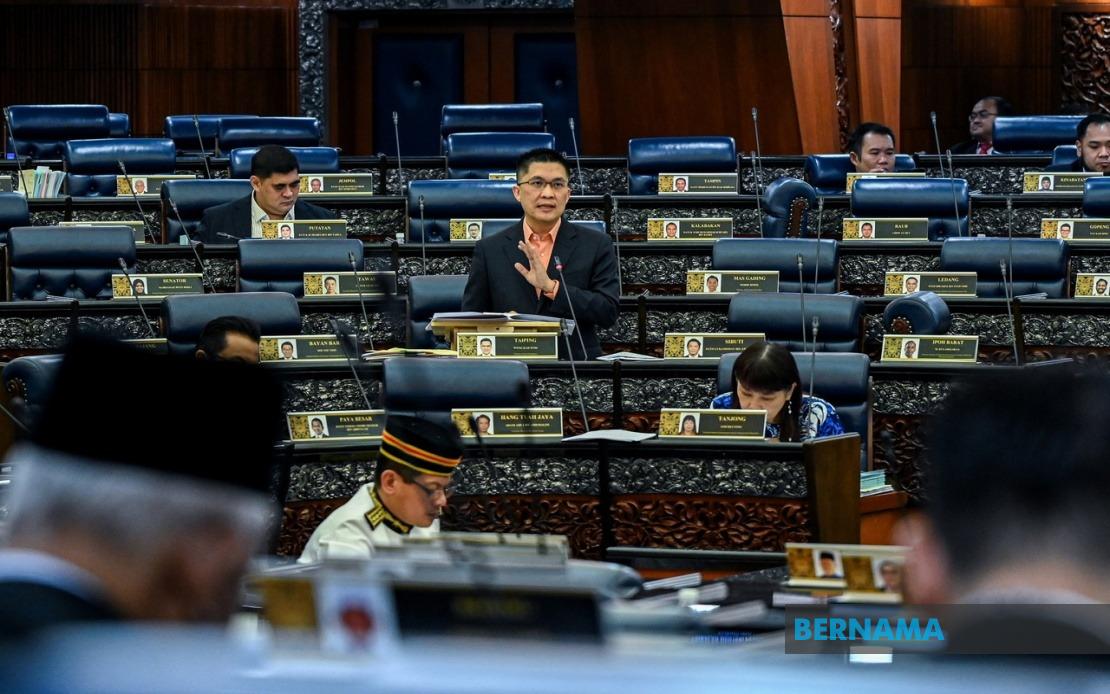
The Ministry of Education has positioned digital equity as a cornerstone of its upcoming Malaysia Education Blueprint (RPM) 2026-2035, signalling a renewed commitment to ensure that technological access does not become another avenue through which rural and urban students diverge in their learning outcomes. Deputy Education Minister Wong Kah Woh outlined the ministry's comprehensive approach during parliamentary proceedings, emphasising that infrastructure development will target every school regardless of geographical location, a significant undertaking given Malaysia's diverse settlement patterns across peninsular and East Malaysian territories.
Central to the ministry's strategy is the deployment of high-speed internet across all educational institutions, a seemingly straightforward objective that carries profound implications for millions of students in remote areas where connectivity has historically lagged. Wong indicated that the approach would remain flexible, employing technology solutions tailored to specific regional contexts rather than imposing a one-size-fits-all model. This recognition of diverse circumstances suggests the ministry has learned from past rollouts where standardised infrastructure projects sometimes failed to account for local geography, population density, and existing network capabilities.
The Digital Educational Learning Initiative Malaysia, or DELIMa platform, serves as the technological backbone for this initiative. The system aggregates digital learning materials accessible to both educators and students, theoretically democratising access to quality educational content that previously may have been concentrated in well-resourced urban schools. By uploading comprehensive digital resources to a centralised platform, the ministry aims to ensure that a student in a Sarawak longhouse or a Pahang highland village can access the same curriculum materials as their counterparts in Kuala Lumpur or Petaling Jaya. However, the platform's effectiveness ultimately depends on the reliability of underlying internet infrastructure, making Wong's emphasis on connectivity expansion logically prior to content deployment.
Wong stressed that achieving at least intermediate-level digital competency across the student population represents a measurable target rather than an aspirational goal. The Digital Competency Score provides a framework for assessing proficiency levels, allowing the ministry to identify gaps and track progress systematically. This metric-driven approach reflects international best practices in digital literacy assessment, though implementation quality will depend on how schools operationalise the scoring system and whether adequate teacher training accompanies its introduction. For Malaysian policymakers, establishing a common competency framework also facilitates comparison across state education systems and enables regional benchmarking against peer nations in Southeast Asia.
Device distribution emerges as another critical lever in the equity equation. Wong confirmed that the ministry intends to distribute digital hardware equitably, a commitment that addresses a longstanding complaint from rural educators regarding procurement delays and unequal allocation. When tablets, laptops, or interactive learning tools arrive months late in remote schools or in insufficient quantities, the pedagogical gains anticipated by curriculum designers fail to materialise. The ministry's explicit focus on fair distribution suggests awareness of this implementation gap, though questions remain regarding maintenance protocols, replacement cycles, and support for schools lacking in-house technical expertise.
The parliamentary exchange revealed measurable progress under the previous Malaysian Education Development Plan spanning 2013-2025, providing baseline data for the incoming blueprint. The 26.23 per cent reduction in average grade score gaps between urban and rural students taking the 2024 Sijil Pelajaran Malaysia examination demonstrates that targeted interventions can narrow, though not eliminate, achievement disparities. Similarly striking were reductions in gender-based gaps at 52.78 per cent and socioeconomic status gaps at 57.75 per cent, suggesting that addressing systemic inequities yields quantifiable results when properly resourced and monitored. These figures offer both encouragement and caution—improvements are possible, yet persistent gaps remain, indicating that the RPM 2026-2035 addresses unfinished business rather than solved problems.
The Digital Education Policy framing this effort signals ministerial intent to embed digital considerations across educational planning rather than treating technology as an ancillary add-on. For Malaysian readers, this shift carries implications for curriculum design, teacher preparation, and examination structures. A policy-level commitment provides institutional weight and budgetary protection that standalone initiatives often lack, particularly when competing against other ministry priorities. Embedding digital education within formal policy also creates accountability mechanisms, as parliamentary oversight—evidenced by the questioning from MPs Ahmad Johnie Zawawi and Kamal Ashaari—can track implementation and demand progress reports.
Infrastructure development beyond digital connectivity remains essential to the ministry's equity agenda. Wong acknowledged that many schools continue operating from dilapidated facilities, and the RPM 2026-2035 prioritises upgrading physical infrastructure based on locally identified needs rather than centralised directives. This approach respects the heterogeneity of school conditions across Malaysia's diverse regions—a boarding school in Kelantan faces different physical challenges than an urban school in Selangor, which differs markedly from schools in Labuan or Sabah's interior districts. Needs-based prioritisation should theoretically allocate resources more efficiently than uniform timelines, though implementation risks remain substantial given Malaysia's historical experience with infrastructure projects encountering delays and cost overruns.
Teacher wellbeing has garnered explicit attention within the ministry's agenda, a development reflecting recognition that digitally-enabled education places additional demands on educators already managing heavy administrative burdens. Wong outlined seven measures introduced since 2023 designed to reduce teacher workload, particularly through elimination of duplicative record-keeping and unnecessary administrative processes. Technology paradoxically can exacerbate teacher workload when poorly implemented—teachers spending hours navigating incompatible systems or duplicating data across platforms experience technology as burden rather than enabler. The ministry's attention to streamlining administrative requirements acknowledges this risk and suggests intention to design digital tools that genuinely ease rather than complicate educator labour.
For Southeast Asian context, Malaysia's approach to digital equity offers relevant lessons given that most regional peers grapple with similar urban-rural divides in technology access. Countries including Indonesia, Thailand, and Philippines have launched comparable digital education initiatives with varying success rates, frequently stumbling on implementation gaps between policy announcement and classroom reality. Malaysia's explicit recognition of these challenges, evidenced by detailed parliamentary questioning and specific reduction percentages from previous plans, suggests the ministry is learning from both domestic experience and regional comparisons. Whether the RPM 2026-2035 proves transformative or merely incremental depends substantially on budgetary commitment, sustained political support, and rigorous monitoring mechanisms—factors that policy announcements alone cannot guarantee.
The timeline through 2035 provides a decade-long implementation window, arguably necessary given the scale of infrastructure and pedagogical changes required. However, extended timelines also risk political discontinuity—changes in ministerial personnel or shifting governmental priorities could dilute momentum. Malaysian stakeholders monitoring this initiative should track annual budget allocations, infrastructure contract awards, and DELIMa platform usage metrics as indicators of genuine ministerial commitment. The digital divide remains a significant barrier to educational equity in Malaysia, and narrowing it requires sustained focus and substantial resources beyond rhetorical endorsement.

